
ENGLISH EDITION · 全球新聞
Bluecore Raises USD 50 Million to Advance Floating Nuclear Power for Port Deployment
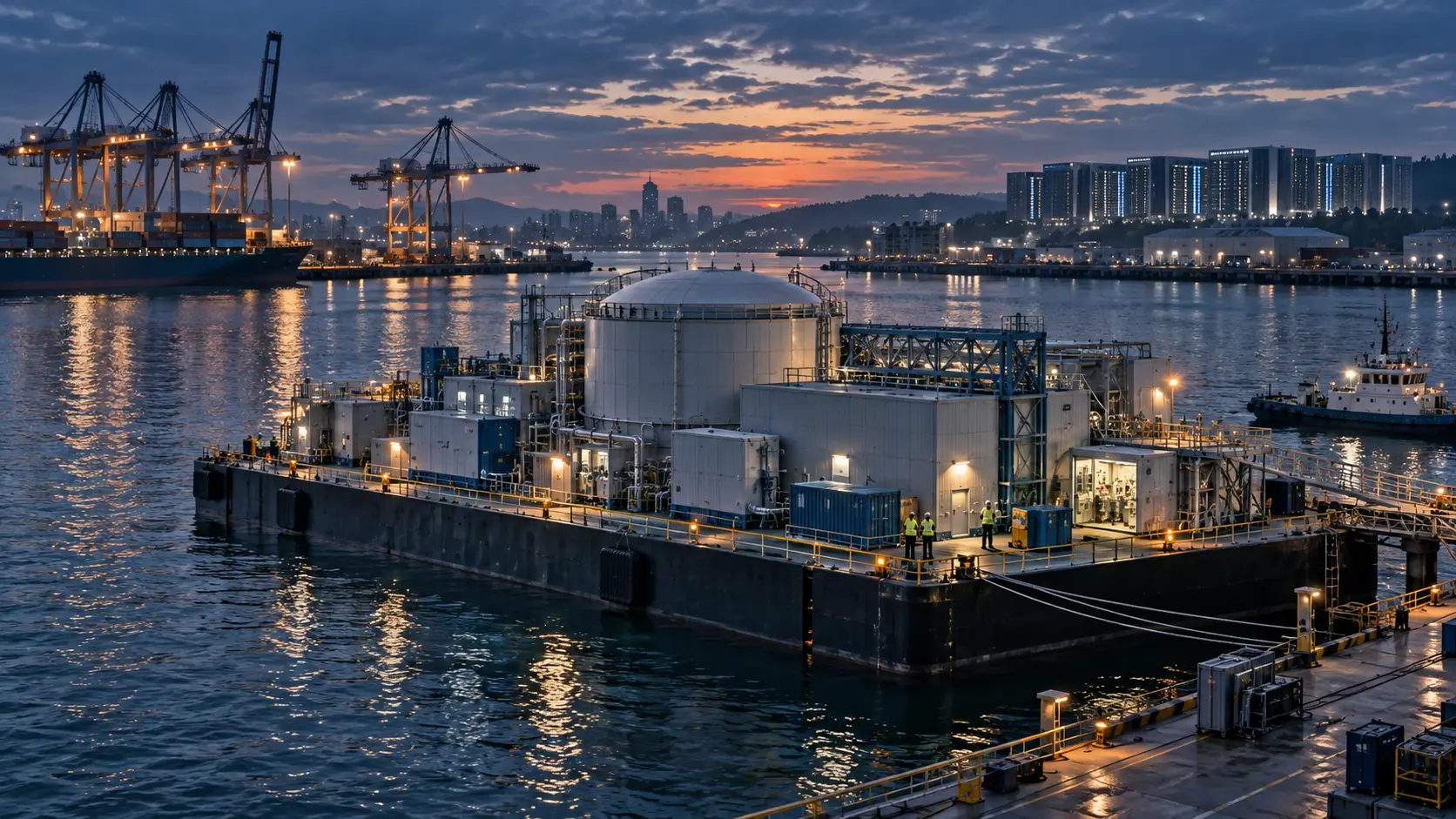
Bluecore has raised USD 50 million in seed funding to develop floating water-cooled reactors intended to deliver about 10 MW of continuous power for ports and industrial users. Technology, siting, nuclear safety, maritime regulation and decommissioning responsibility remain to be verified.
Executive Summary / Lead
ESG Today published or materially updated this event within the verified scan window. Bluecore announced a USD 50 million seed round for a barge-transportable, water-cooled reactor concept targeting about 10 MW of continuous electricity, with the Port of Long Beach described as an early deployment setting.
Company & Industry Context
The company previously raised about USD 10 million and remains in a technology, licensing and commercial-validation phase. This SNN draft rewrites only source-supported events, figures and entities without reproducing the source article's paragraph structure.
Challenge / Why It Matters
Floating nuclear power combines nuclear-safety, maritime, port-security, emergency-response, fuel and waste responsibilities. The central issue is that a commitment, capital allocation or policy label can be mistaken for a completed outcome when its boundary is unclear.
Action / Solution / Implementation
The project needs one control framework for design certification, site approval, hull integrity, cooling, cyber security and decommissioning assurance. Implementation should preserve scope, accountable owner, method version, approval checkpoints and exception handling so a later Source Review can reproduce the decision.
Evidence / Results / Impact
The financing and concept specifications are source-supported, but no commercial generation, safety record or cost performance is yet available. The current evidence supports only the disclosed facts and plans. It does not establish that every anticipated benefit has already been achieved.
Industry & Institutional Implications
If the technology matures, ports may gain firm low-carbon power, but accountability cannot fall between nuclear and maritime regimes. For markets and institutions, the next step is to convert finance, technology or policy labels into measurable, comparable and traceable operating records.
SNN Editorial / Pre-Disclosure Evidence Infrastructure Perspective
SNN editorial analysis: This event offers governance lessons for Taiwan finance, manufacturing, energy, technology, transport and supply-chain teams. Pre-Disclosure Evidence Infrastructure should use stable identities for the event, asset, contract, supplier and version, then connect source documents, calculation methods, timestamps, accountable owners, approval state, exceptions, corrections and assurance history. For “Bluecore Raises USD 50 Million to Advance Floating Nuclear Power for Port Deployment,” an organisation should retain more than a conclusion or news clipping. It should preserve when the source was retrieved, the applicable boundary, base year, denominator, data quality, estimates, measurements, controls and subsequent outcomes. If a Taiwan company relies on the related climate, resilience, nature or investment claim, its board, finance, compliance, procurement, sustainability and internal-audit teams should be able to inspect the same evidence version and see which fields remain unverified, were withdrawn, or were superseded. Supplier data should also show who supplied it, who transformed it, when it was locked and whether system transfers changed units or coverage. This reduces last-minute evidence reconstruction before assurance, prevents commitments from being reported as results and makes exceptions visible instead of hiding them behind one aggregate number. This paragraph is editorial interpretation, not a source-verified fact.
Future Outlook
Next checkpoints include nuclear, coast-guard and port approvals, prototype testing, fuel supply, insurance and decommissioning arrangements. Any later material fact should create a new version while preserving this draft rather than overwriting it.
Sources, evidence chain and editorial responsibility
Source publication: ESG Today · Original author: Mark Segal · Original publication date:
External institutional and reporting sources
These external announcements, rules, studies and reports support the discussion and are displayed separately from the original publication.
- primary event reportingESG TodayFloating Nuclear Power Startup Bluecore Raises $50 Million ↗Publication date 2026-09-08 · Checked at 2026-09-09 11:18 (UTC+8)
Funding amount, proposed floating reactor concept, target output and stated deployment context.
- independent transaction reportingTechCrunchNuclear startup Bluecore Energy raises $50M seed round just two months after launch ↗Publication date 2026-09-08 · Checked at 2026-09-09 11:18 (UTC+8)
Independent confirmation of the seed round, investors and early regulatory and product-development status.
- independent market contextAxiosBluecore bets on nuclear barges to power ports ↗Publication date 2026-09-08 · Checked at 2026-09-09 11:18 (UTC+8)
Independent context for port deployment, barge-based design and commercial positioning.
- company specification and chronologyBluecore EnergyBluecore Energy Emerges from Stealth ↗Publication date 2026-07-21 · Checked at 2026-09-09 11:18 (UTC+8)
Company-stated 10 MWe concept, Port of Long Beach work, pre-seed financing and development chronology.
Topic hub: 氣候與能源轉型