
ENGLISH EDITION · 全球新聞
CIP Acquires Gawara Baya Wind and Battery Project After AUD 1.7 Billion Close
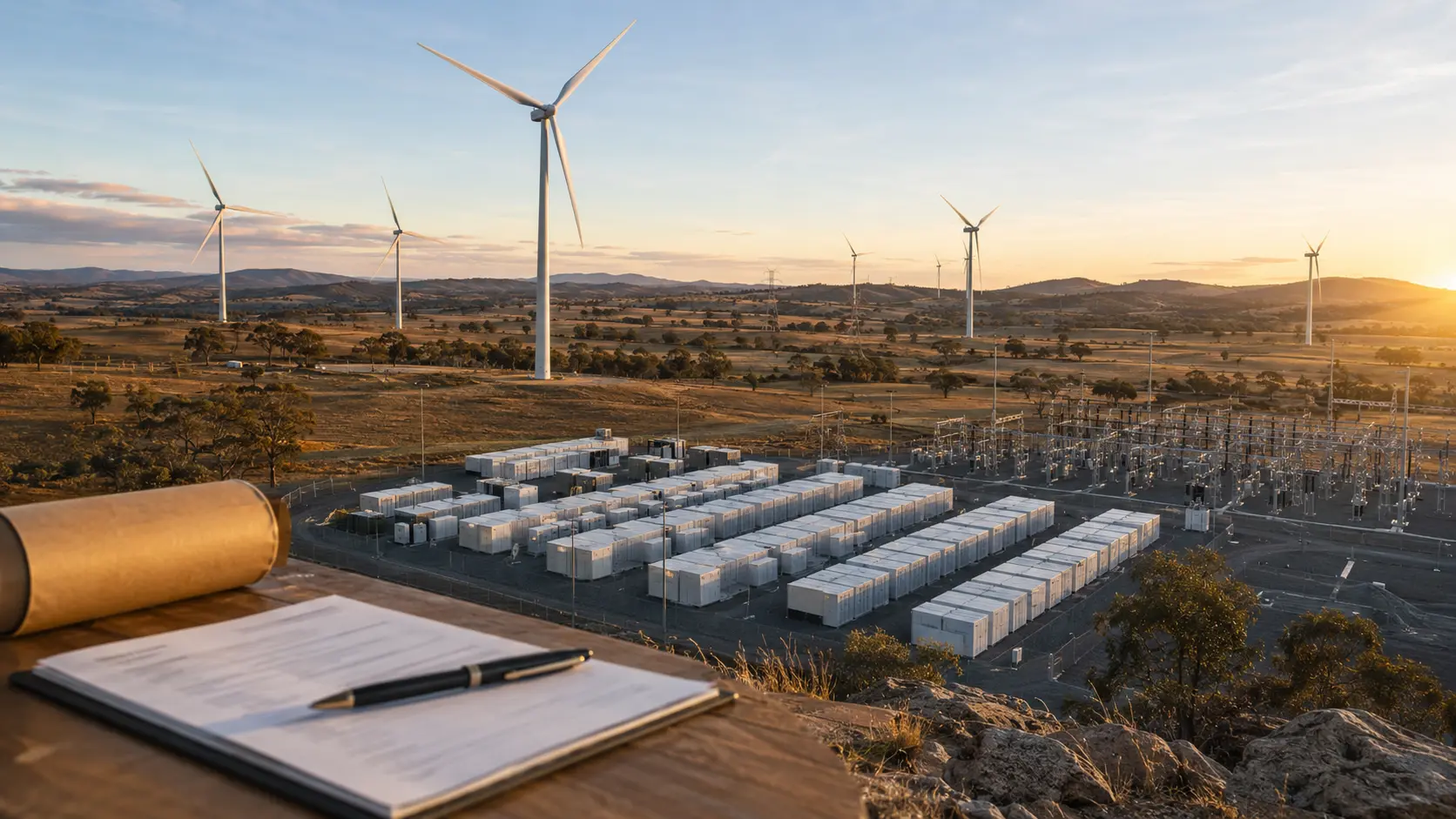
CIP acquired North Queensland's Gawara Baya through its fifth flagship fund, combining 408 MW of onshore wind with 104 MW of batteries and reaching an AUD 1.7 billion financing close after final investment decision.
Executive Summary / Lead
Copenhagen Infrastructure Partners, through Copenhagen Infrastructure V, acquired the Gawara Baya wind-and-storage project from Windlab. The plan combines 408 MW of onshore wind, 104 MW of batteries and 68 turbines. It reached final investment decision and financial close with an AUD 1.7 billion facility from ten banks.
Company & Industry Context
Located in North Queensland, Gawara Baya is expected to be fully operational in 2030. It is projected to supply up to 240,000 homes and avoid 1.2 million tonnes of energy-sector carbon annually. Long-term arrangements with Stanwell, SmartestEnergy and Australia's Capacity Investment Scheme provide revenue visibility. CIP's CI V flagship fund closed above EUR 12 billion.
Challenge / Why It Matters
A wind-and-battery combination can improve dispatchability, but nominal power does not establish delivery duration, capacity value or emissions reduction. The project must manage transmission, wind resources, construction cost, battery life, Indigenous relationships, ecology and local procurement. The 1.2 million-tonne figure is a forecast requiring a defined grid baseline and method.
Action / Solution / Implementation
The transaction aligns ownership transfer, final investment decision, a ten-bank facility, long-term offtake and capacity support at one construction stage. Work will begin with planned engagement involving the Gugu Badhun People and local communities. Each permit, land right, procurement package, construction milestone, offtake duty and community commitment needs verifiable completion evidence.
Evidence / Results / Impact
The source supports 408 MW of wind, 104 MW of batteries, 68 turbines, AUD 1.7 billion of financing, ten banks, a 2030 target and up to 500 direct and indirect jobs. It also relays projections of 1.2 million tonnes of avoided emissions and more than AUD 200 million of regional benefit. Those outcomes remain forecasts, not operating results.
Industry & Institutional Implications
Bankability increasingly depends on layered contracts that reduce different risks, including offtake, capacity support, debt and community arrangements. Sustainability reporting must therefore show how contractual terms become construction, electricity, emissions and local-benefit outcomes, rather than listing capacity and capital alone.
SNN Editorial / Pre-Disclosure Evidence Infrastructure Perspective
SNN editorial analysis: Taiwan offshore wind and large storage have different technical settings but share the need to connect equity transfers, financing conditions, procurement, construction, interconnection, offtake and local commitments for Pre-Disclosure Evidence Infrastructure. Every asset and work package should have a stable identity; progress payments should link to acceptance records; emissions claims to delivered electricity and grid factors; and local procurement to invoices and beneficiaries. Banks, corporate buyers and regulators can then distinguish nominal, built, available and delivered capacity. This also reduces the risk that an outdated claim survives after an engineering delay or contract change. This is editorial interpretation, not a source-verified fact.
Future Outlook
Next checkpoints are construction, equipment delivery, interconnection, turbine and battery availability, offtake performance, cost changes, community and Indigenous agreements, and consistent reporting of avoided emissions and regional benefits.
Sources, evidence chain and editorial responsibility
Source publication: ESG Today · Original author: Kenny Fisher · Original publication date:
External institutional and reporting sources
These external announcements, rules, studies and reports support the discussion and are displayed separately from the original publication.
- Primary automated discovery and factual sourceESG TodayCIP Acquires Gawara Baya Wind and Battery Project After AUD 1.7 Billion Close ↗Published 2026-09-01 · Accessed 2026-09-02T03:25:00.000Z
Publication identity, event facts, attributed statements and date used in this original bilingual summary.
- acquisition and financing anchorCopenhagen Infrastructure PartnersCopenhagen Infrastructure Partners acquires onshore wind and battery project in Australia ↗Published 2026-08-31 · Accessed 2026-09-02T04:15:00.000Z
Acquisition, final investment decision, AUD 1.7 billion financing, 408 MW wind capacity, 104 MW battery, and 2030 operating target.
- programme participation and capacity corroborationAustralian Department of Climate Change, Energy, the Environment and WaterClosed Capacity Investment Scheme tenders ↗Published 2026-07-20 · Accessed 2026-09-02T04:15:00.000Z
Gawara Baya participation in CIS Tender 4, Queensland location, wind-plus-battery configuration, and government-recorded capacity.
Topic hub: 氣候與能源轉型