
ENGLISH EDITION · 議題探討
Critical-Mineral Demand Extends Beyond Clean Energy as Equity Risks Grow
An Oakland Institute report challenges the claim that mining expansion is solely for the energy transition, saying about one-fifth of current demand is linked to renewables while defence, transport, AI data centres and construction drive the rest.
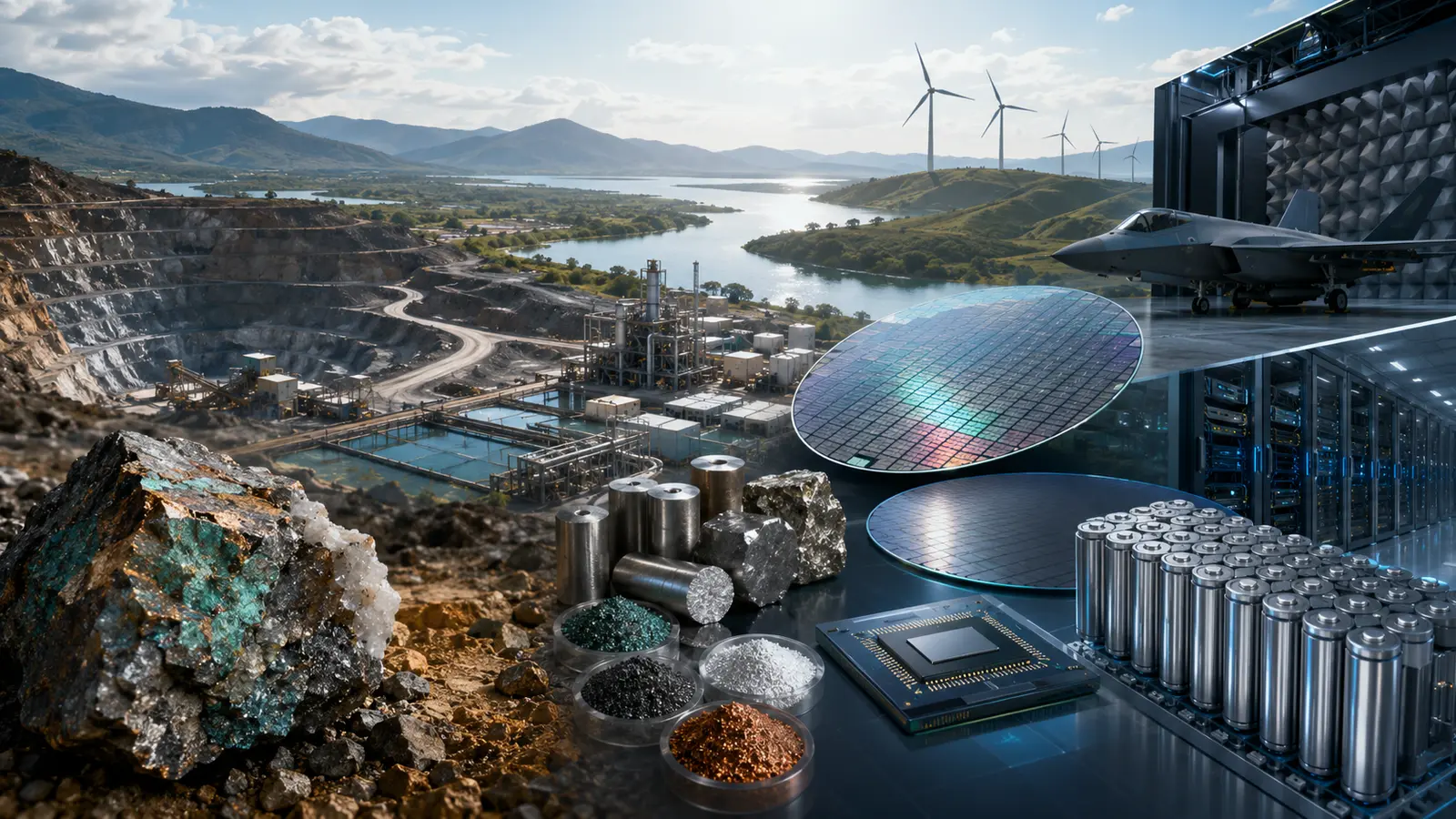
Executive Summary / Lead
An Oakland Institute report challenges the claim that mining expansion is solely for the energy transition, saying about one-fifth of current demand is linked to renewables while defence, transport, AI data centres and construction drive the rest. Demand spans energy, defence, transport, AI and construction, so green narratives should disclose end use and allocation methods.
Company & Industry Context
Copper, lithium, cobalt, nickel, graphite and rare earths serve energy, digital, defence and conventional industry. Africa holds about 30 percent of known reserves but processes less than 15 percent locally. The gap between African reserves and local processing makes land, water, power, tax and employment central governance questions.
Challenge / Why It Matters
The report has an advocacy perspective and its demand shares and cases need comparison with other data. Rising demand still cannot excuse land, water, electricity and community-consent risks. Advocacy estimates and cases need comparison with IEA, UN and national statistics rather than being treated as a complete picture. The expanded cross-check separates three questions. The IEA 2026 outlook covers energy technologies alongside strategic uses in high-tech manufacturing, AI and digital systems, aerospace and defence. The OECD handbook sets a risk-based due-diligence method from extraction through transformation and downstream use. UN Trade and Development adds the African development question of processing, diversification and local value addition. These sources support demand structure, enterprise responsibility and distributional outcomes respectively; none substitutes for the others.
Action / Solution / Implementation
The report calls for decisions to disclose mineral end uses, benefiting industries, energy consumption, pollution, processing location and local benefits, with stronger participation and domestic value addition. Companies should connect mine, concession, processor, lot, shipment and end product while preserving consent, grievances and remedies.
Evidence / Results / Impact
The source cites 2000-2024 growth of 187 percent for nickel, 329 percent for rare earths and 1,602 percent for lithium. It says Zambian copper mining uses over half the country's electricity while household access is 43 percent. Oakland Institute offers critical cases and UN principles add just-transition and rights context; individual figures still require review. The evidence chain now contains seven distinct sources. Eco-Business and Mongabay provide the original media context, the Oakland Institute provides the critical report thesis, the United Nations provides global governance principles, Taiwan's National Development Council provides Taiwan critical-material resilience context, the IEA provides a demand framework spanning energy and non-energy strategic uses, the OECD provides environmental due-diligence methodology, and UN Trade and Development provides African value-addition context. Source Review must still verify every percentage and case-specific claim.
Industry & Institutional Implications
Mineral governance needs both end-use attribution and local-impact evidence, or a green narrative may obscure other industries and unequal resource distribution. Security and responsible sourcing cannot be separated, or resilience may transfer risk to producing communities.
SNN Editorial / Pre-Disclosure Evidence Infrastructure Perspective
SNN editorial analysis: Taiwan semiconductor, electronics, battery, server and precision-manufacturing industries depend on cross-border minerals. Supplier declarations alone may not meet customer and lender scrutiny of origin and impact. Pre-Disclosure Evidence Infrastructure should preserve mine and concession identifiers, processors, lots and shipment chain, origin and smelter, water and energy use, community consent, grievances and remedy, product bills of materials, end use and claim-allocation method. Taiwan companies should distinguish traced, mass-balance and estimated data so processor-level certification is not presented as a mine-level guarantee. The same infrastructure can support supply resilience, human-rights, nature and carbon disclosure. This is editorial interpretation of Taiwan industry transmission.
Future Outlook
Next checks include the report method, IEA demand breakdowns, mine water and power data, local processing investment, community agreements and traceability by end use. Follow-up should cover demand allocation, processing investment, community agreements, water and power data and lot traceability.
Sources, evidence chain and editorial responsibility
Source publication: Eco-Business / Mongabay · Original author: Victoria Schneider, Mongabay.com · Original publication date:
External institutional and reporting sources
These external announcements, rules, studies and reports support the discussion and are displayed separately from the original publication.
- Primary editorial discovery and event sourceEco-Business / MongabayCritical-Mineral Demand Extends Beyond Clean Energy as Equity Risks Grow ↗Published 2026-08-31 · Accessed 2026-09-01T03:50:00.000Z
Publication identity, event facts, attributed statements and source timing used for the SNN bilingual summary.
- report anchor and critical perspectiveOakland InstituteWar, AI and corporate interests drive the global mineral rush ↗Published 2026-08-27 · Accessed 2026-09-01T03:50:00.000Z
Report thesis, demand categories and Africa-focused distributional risks.
- global governance contextUnited NationsCritical Energy Transition Minerals ↗Published 2024-09-11 · Accessed 2026-09-01T03:50:00.000Z
UN principles on justice, human rights, value addition and critical-mineral governance.
- Taiwan critical-material contextNational Development Council, TaiwanBuilding resilient critical-material supply chains in Taiwan ↗Published 2024-03-06 · Accessed 2026-09-01T03:50:00.000Z
Taiwan semiconductor, vehicle-battery and critical-material resilience context.
- independent demand and strategic-use cross-checkInternational Energy AgencyGlobal Critical Minerals Outlook 2026 ↗Published 2026-07-16 · Accessed 2026-09-01T05:20:00.000Z
Demand and supply framework for key minerals, including energy technologies and strategic uses in high-tech manufacturing, AI and digital systems, aerospace and defence.
- environmental risk and supply-chain control methodologyOECDHandbook on Environmental Due Diligence in Mineral Supply Chains ↗Published 2023-09-19 · Accessed 2026-09-01T05:20:00.000Z
Risk-based environmental due diligence across extraction, smelters and refiners as control points, downstream enterprises, land tenure, communities and remediation.
- Africa reserves, processing and local value-addition contextUN Trade and DevelopmentCritical minerals: Africa holds key to sustainable energy future ↗Published 2024-06-05 · Accessed 2026-09-01T05:20:00.000Z
African critical-mineral endowment, dependence on raw-material exports, and the development case for processing, diversification and greater local value addition.
Topic hub: 氣候與能源轉型