ENGLISH EDITION · 議題探討
The Collateral Transformation: How Central Bank Frameworks Are Redefining Sustainability Information
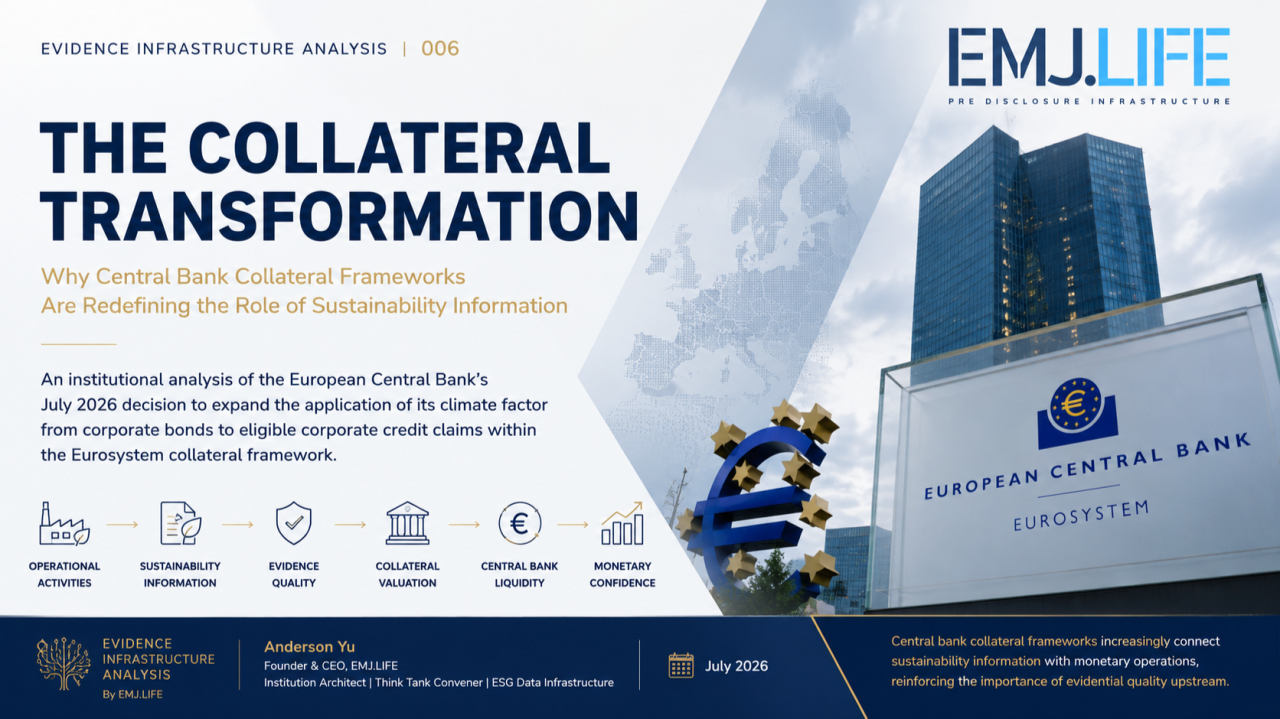
The ECB's extension of its climate factor from corporate bonds to eligible corporate credit claims moves transition information closer to collateral valuation and liquidity operations.
This English edition remains available for review but is excluded from search indexing until editorial approval.
Executive Summary / Lead
The ECB has extended its climate factor from eligible corporate bonds to eligible corporate credit claims, moving transition-risk information closer to collateral valuation and Eurosystem liquidity operations.
Company & Industry Context
Corporate bonds sit mainly in capital markets, while credit claims originate in commercial banking. The expanded scope makes banks a key transmission layer between corporate operations, credit risk and central-bank liquidity.
Challenge / Why It Matters
An exemption from statutory sustainability reporting does not necessarily create a financing exemption. Banks may request reliable transition information for collateral management beyond the legal boundaries of disclosure rules.
Action / Solution / Implementation
Banks can bind the provenance, method, time, responsibility and asset identity of transition information to credit and collateral workflows, reducing distortion between corporate operations, lending assessment and monetary operations.
Evidence / Results / Impact
The ECB announcement confirms that corporate credit claims enter the climate-factor scope. It does not create a new corporate disclosure regime; it adjusts the evaluation of assets used within the Eurosystem.
Industry & Institutional Implications
Sustainability information may now affect collateral value, liquidity and balance-sheet management, not only investor decisions. Integrated banking groups may therefore move toward more consistent methods across markets.
SNN Editorial / Evidence Infrastructure Perspective
SNN editorial analysis: The case suggests that financial confidence forms before assets reach central-bank operations. Evidence Infrastructure is an upstream information-quality lens, not an official ECB policy term.
Future Outlook
Future review should examine changes in bank credit data, collateral management and customer information requests, as well as possible diffusion to other central banks. Editors must verify the ECB announcement and implementation timeline.
Sources, author and editorial responsibility
Source publication: SustainabilityNewsNetwork.net · Original author: Anderson Yu · Original publication date: 2026-07-29
International original and supporting sources
- Sustainability News Network original source ↗
- European Central Bank original source ↗
- LinkedIn original source ↗
Topic hub: 氣候與能源轉型
Translation status: ai-assisted-pending-review