
ENGLISH EDITION · 全球新聞
El Nino Weakens Pacific Upwelling as Satellite Data Signals Food-Web Stress
Satellite observations show lower chlorophyll across the central Pacific than under neutral conditions in 2025. Developing El Nino conditions are weakening nutrient upwelling, with risks cascading through plankton, fish, seabirds and fisheries.
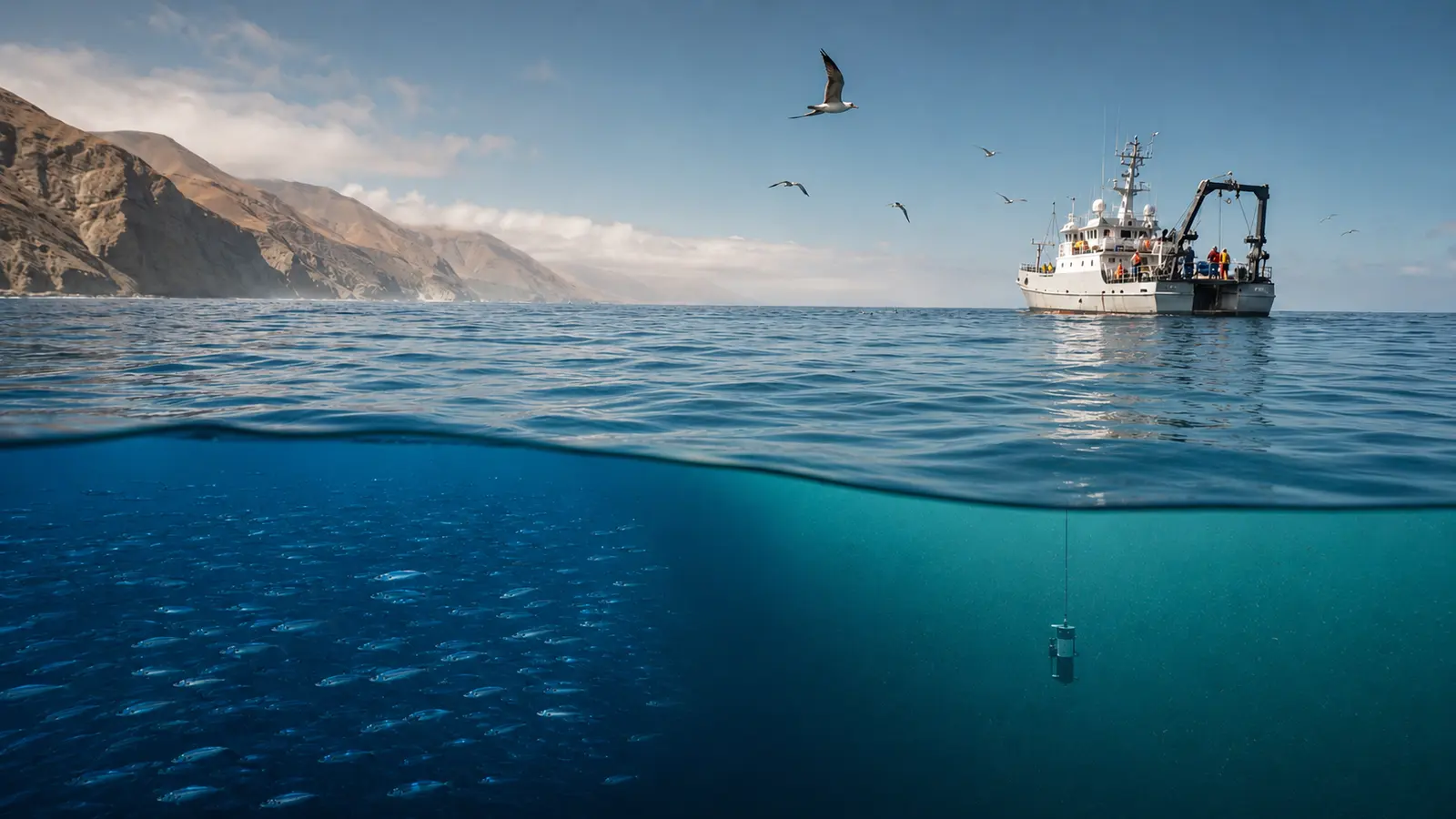
Executive Summary / Lead
Satellite data show a substantial decline in chlorophyll across the central Pacific compared with neutral conditions in June 2025. Developing El Nino conditions are weakening cold, nutrient-rich upwelling and may spread stress through the marine food web.
Company & Industry Context
Chlorophyll is an important remote-sensing indicator of phytoplankton activity. Phytoplankton supports zooplankton, fish, seabirds and marine mammals, while changes in equatorial winds and temperatures reduce nutrient supply to surface waters.
Challenge / Why It Matters
Food-web effects vary by place and emerge with different lags, and satellites mainly observe the surface. Treating one chlorophyll map as proof of fishery or species collapse would overlook subsurface conditions, migration and possible post-event recovery.
Action / Solution / Implementation
Researchers combine sea-surface temperature, chlorophyll and historical El Nino patterns. Fisheries managers can adjust timing around movement, reproduction and prey signals, while Peru's anchovy sector has previously suspended activity under warm-water and stock pressure.
Evidence / Results / Impact
The source reports a NOAA probability above 90 percent that El Nino will persist into early 2027. Current evidence supports observed temperature and chlorophyll signals and known ecological mechanisms, but not a definite loss for each species, fishery or economy.
Industry & Institutional Implications
Marine climate monitoring now affects quotas, food prices, coastal livelihoods and insurance as well as science. Decisions need a common timeline linking remote sensing, vessel surveys, catches, species observations and management actions.
SNN Editorial / Pre-Disclosure Evidence Infrastructure Perspective
SNN editorial analysis: Taiwan seafood and food supply chains should retain forecasts, ocean observations, procurement changes and realised losses as separate records. Model probability, satellite signal and delivered supply disruption are different evidence states.
Future Outlook
Next checks should follow upwelling and chlorophyll trends, fish and seabird responses, management in major fisheries such as Peru and any productivity rebound after El Nino.
Sources, evidence chain and editorial responsibility
Source publication: Eco-Business / Mongabay · Original author: Naina Rao, Mongabay.com · Original publication date:
External institutional and reporting sources
These external announcements, rules, studies and reports support the discussion and are displayed separately from the original publication.
- Primary automated discovery and factual sourceEco-Business / MongabayEl Nino triggers cascading disruption in the Pacific marine food web ↗Published 2026-08-28 · Accessed 2026-08-29T03:10:00.000Z
Satellite-observation context, ecological mechanisms and attributed fishery examples.
- Upstream reporting sourceMongabayEl Nino is disrupting the Pacific marine food web from the bottom up ↗Published 2026-08-26 · Accessed 2026-08-29T03:10:00.000Z
Original byline, source imagery context and reporting on chlorophyll and food-web effects.
- Current ENSO outlook referenceNOAA Climate Prediction CenterENSO Diagnostic Discussion ↗Published 2026-08-13 · Accessed 2026-08-29T03:10:00.000Z
Official probability and timing outlook for the 2026 to 2027 El Nino event.
Topic hub: 氣候與能源轉型