
ENGLISH EDITION · 全球脈動
Indonesia Urged to Integrate 100 GW Solar Target With Grid, Storage and Coal Retirement
IEEFA argues that Indonesia should place its 100 GW solar programme inside the ten-year RUPTL, coordinating ground-mounted, floating and rooftop solar with storage, transmission and retirement of inefficient coal assets using current costs.
Executive Summary / Lead
Eco-Business reports an IEEFA analysis arguing that Indonesia should formally place its 100 GW solar programme inside the ten-year RUPTL electricity plan rather than leave it as a standalone target. Generation, transmission, storage, procurement and retirement of inefficient coal assets need to be planned together to turn the target into a least-cost investment sequence.
Company & Industry Context
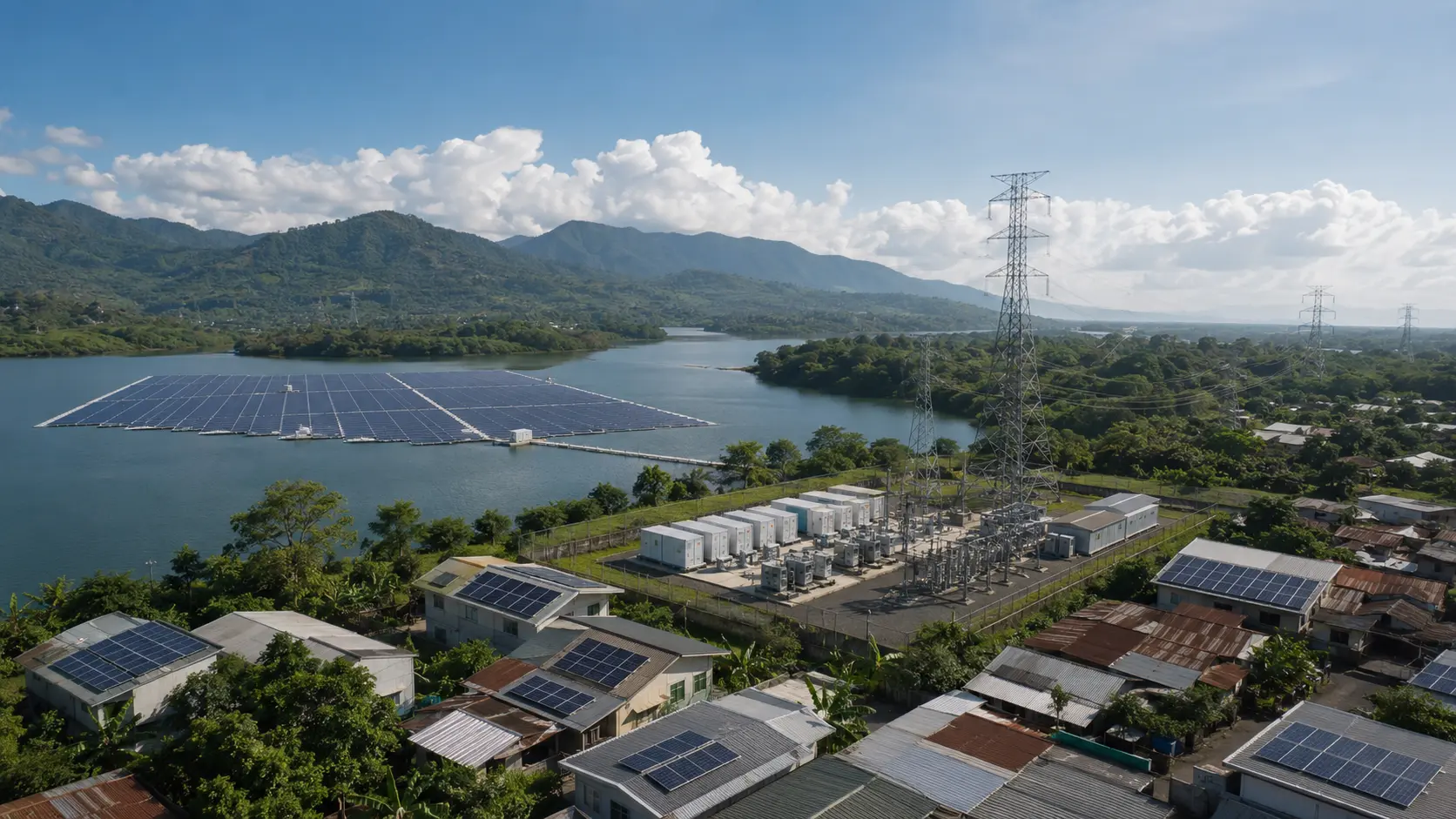
RUPTL translates Indonesian demand, generation mix, networks and procurement into projects. The 100 GW programme includes multi-province utility projects, floating solar and rooftops. IEEFA estimates up to 91.6 GW of floating-solar potential on reservoirs and lakes and 30 to 40 GW on homes and businesses, although technical potential is not the same as executable capacity.
Challenge / Why It Matters
Lower nominal solar cost does not automatically resolve intermittency, land, congestion, island grids, financing or state-utility procurement. Reported cost ranges depend on study assumptions, while coal economics include subsidies, fuel and treatment of existing assets. Adding solar without retiring inefficient generation can leave the system paying for both old and new capacity.
Action / Solution / Implementation
IEEFA recommends planning ground-mounted, floating and rooftop solar together in RUPTL revisions, locating storage and transmission where they displace expensive fossil generation, and creating an early-retirement strategy for inefficient coal. It also notes that the nominal solar capacity required to replace equal electricity differs for coal, gas and diesel generation.
Evidence / Results / Impact
The source supports the 100 GW target, the role of RUPTL, floating potential up to 91.6 GW, rooftop potential of 30 to 40 GW and the study's cost comparisons. It reports that low-end utility solar could be about 44 percent cheaper than coal. This is a modelled comparison and does not establish the cost of every region or project.
Industry & Institutional Implications
Indonesia shows that energy transition is not simply a declaration of more renewable capacity. National planning, procurement, grids, storage and retirement decisions must share the same assumptions. For Southeast Asian supply chains, electricity source, reliability and cost will shape manufacturing investment, product footprints and export competitiveness.
SNN Editorial / Pre-Disclosure Evidence Infrastructure Perspective
SNN editorial analysis: Taiwan also needs to coordinate dense manufacturing loads, renewable location and grid investment. Pre-Disclosure Evidence Infrastructure should preserve versions of demand forecasts, site and feeder identities, interconnection capacity, storage duration, curtailment, fuel prices, retirement assumptions and procurement results inside a comparable model, with every policy or cost change recorded. Companies citing a national renewable target should still trace claims to actual delivery region, hour and contract instead of assigning nominal capacity directly to product emissions. For Taiwan manufacturers evaluating Southeast Asian expansion, this enables comparison of system cost and electricity-evidence quality rather than policy incentives or targets alone. This is editorial interpretation, not a source-verified fact.
Future Outlook
Next checkpoints are whether RUPTL formally incorporates the 100 GW path, annual procurement by solar and storage type, transmission investment, financing, coal retirement, delivered generation and curtailment, and cost and reliability across different island systems.
Sources, evidence chain and editorial responsibility
Source publication: Eco-Business · Original author: Hannah Alcoseba Fernandez · Original publication date:
External institutional and reporting sources
These external announcements, rules, studies and reports support the discussion and are displayed separately from the original publication.
- Primary automated discovery and factual sourceEco-BusinessIndonesia Urged to Integrate 100 GW Solar Target With Grid, Storage and Coal Retirement ↗Published 2026-09-01 · Accessed 2026-09-02T03:25:00.000Z
Publication identity, event facts, attributed statements and date used in this original bilingual summary.
- programme design and implementation evidenceInstitute for Essential Services ReformImplementation of 100 GW of Solar Power Must Begin with Measurable and Sustainable Quick Wins ↗Published 2026-05-29 · Accessed 2026-09-02T04:45:00.000Z
100 GW programme structure, 80 GW distributed and 20 GW utility-scale split, RUPTL diesel baseline, storage role, and short-term governance recommendations.
- cost, storage and implementation corroborationInstitute for Energy Economics and Financial AnalysisAdvancing Indonesia’s 100GW solar program through de-dieselization for energy security ↗Published 2026-04-02 · Accessed 2026-09-02T04:45:00.000Z
100 GW solar-plus-storage programme context, initial 13 GW diesel-replacement pathway, modeled cost comparison, financing constraints, and energy-security implications.
Topic hub: 氣候與能源轉型