ENGLISH EDITION · 議題探討
Indonesia's Nearly USD 6 Billion Petrochemical Expansion Tests Climate Goals
Indonesia is advancing nearly USD 6 billion in petrochemical investment and major ethylene capacity, supporting industrial growth while increasing long-term emissions lock-in and export-competitiveness risks.
This English edition remains available for review but is excluded from search indexing until editorial approval.
Executive Summary / Lead
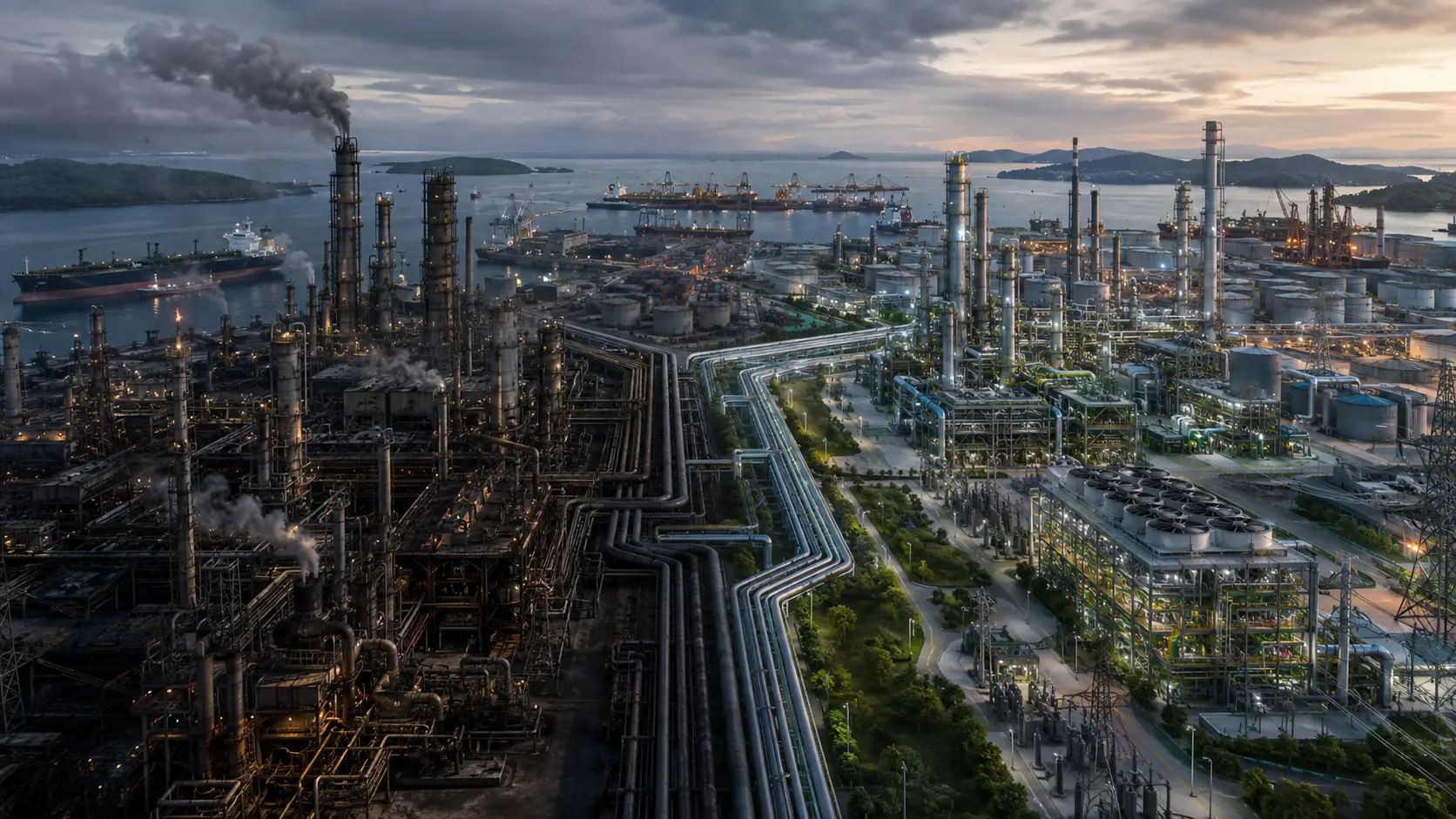
Indonesia is advancing a nearly USD 6 billion PT Taikun petrochemical investment with planned output of 7.2 million tonnes a year. Together with major ethylene capacity in Cilegon, the expansion tests national climate and industrial decarbonisation goals.
Company & Industry Context
The government treats petrochemicals as a foundation for import substitution, employment and industrial upgrading. PT Taikun is projected to contribute about USD 9 billion annually to GDP, while Lotte's new plant can produce one million tonnes of ethylene a year.
Challenge / Why It Matters
Petrochemical assets are long lived and can lock in fuel and process emissions. Procedural advantages for national strategic projects can also create a timing gap between investment and decarbonisation rules.
Action / Solution / Implementation
Indonesia is preparing industrial decarbonisation regulation expected by late 2026. Companies can advance efficiency, cleaner power, lower-carbon feedstocks, process changes and carbon management, although technical and cost conditions differ.
Evidence / Results / Impact
Indonesia's direct industrial process emissions were about 10.3 million tonnes of carbon dioxide equivalent in 2022, with petrochemicals accounting for roughly one quarter. Reporting suggests efficiency alone may cut no more than about 15 percent by 2050.
Industry & Institutional Implications
Investment can improve trade and supply security in the short term, while creating future carbon-cost, low-carbon product standard and stranded-asset risks. Export rules can turn plant emissions into a competitiveness condition.
SNN Editorial / Evidence Infrastructure Perspective
SNN editorial analysis: Industrial policy should connect investment approval, equipment life, energy inputs, production and emissions pathways in one decision record to identify irreversible carbon lock-in.
Future Outlook
Next checks should cover the decarbonisation regulation, final investment and construction at PT Taikun, Lotte utilisation, energy sources, product carbon intensity and requirements in major export markets.
Sources, author and editorial responsibility
Source publication: Eco-Business · Original author: Ahmad Pathoni · Original publication date: 2026-08-19
International original and supporting sources
- eco-business.com original source ↗
- dialogue.earth original source ↗
- wri-indonesia.org original source ↗
- ekon.go.id original source ↗
Topic hub: 永續制度與揭露
Translation status: ai-assisted-pending-review