ENGLISH EDITION · 永續學堂
Japan Plants 680,000 Coastal Trees to Complement Tsunami Defences
The Chinju no Mori initiative has planted about 680,000 native trees along northeastern Japan over 14 years to complement seawalls, while effectiveness still depends on tsunami scale and planting design.
This English edition remains available for review but is excluded from search indexing until editorial approval.
Executive Summary / Lead
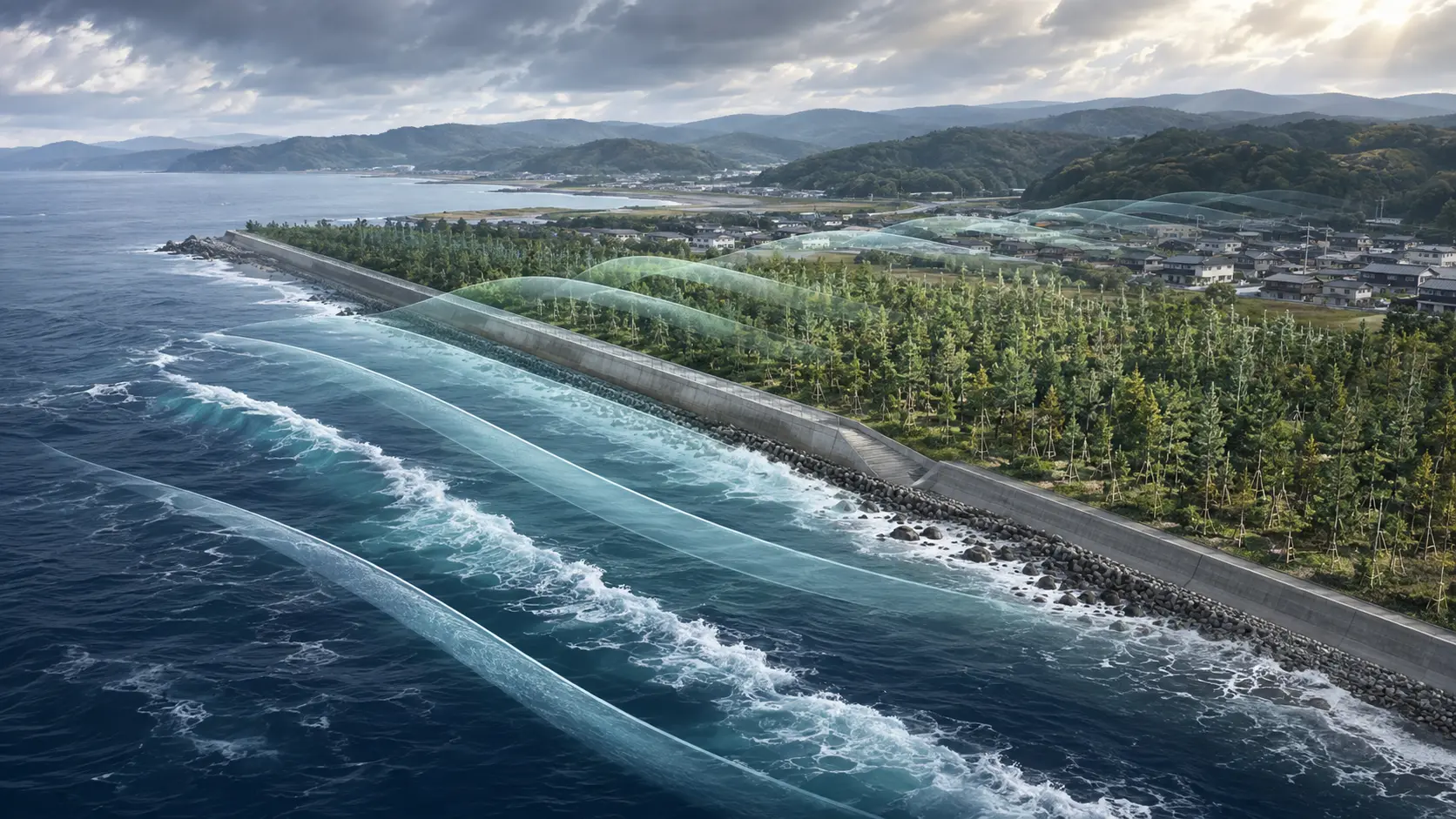
The Chinju no Mori initiative has planted about 680,000 trees along northeastern Japan over 14 years, using native coastal forest to complement seawalls. About 1,000 volunteers recently planted another 12,000 trees in Minamisoma.
Company & Industry Context
The magnitude 9.0 earthquake and tsunami of 2011 killed more than 19,700 people. Japan built extensive seawalls after the disaster while some communities added forests as a second buffer.
Challenge / Why It Matters
Forests cannot stop every tsunami, and performance depends on tree age, density, terrain and wave height. Evidence around dense Miyawaki planting is also contested, so tree counts cannot be treated as safety outcomes.
Action / Solution / Implementation
The project uses locally native species and dense planting near or behind seawalls. A robust approach treats forests, engineered structures, evacuation routes, land use and warning systems as a layered defence.
Evidence / Results / Impact
The 680,000 trees, 14-year period and Minamisoma event come from reporting. Research indicates seawalls above five metres generally reduce damage, while smaller walls can sometimes increase risk and forests are better suited to smaller events.
Industry & Institutional Implications
Nature-based solutions can deliver ecological and community benefits, but their protection limits must be explicit. A false sense of security can encourage redevelopment in high-risk areas.
SNN Editorial / Evidence Infrastructure Perspective
SNN editorial analysis: Resilience evidence should track survival rates, forest structure, modelled scenarios, evacuation time and post-event damage, not planting totals alone.
Future Outlook
Further work should compare long-term survival and ecological outcomes across planting methods and test combined forest and seawall performance through models and real events.
Sources, author and editorial responsibility
Source publication: Eco-Business · Original author: Jonathan Vit · Original publication date: 2026-08-20
International original and supporting sources
- eco-business.com original source ↗
- news.mongabay.com original source ↗
- besjournals.onlinelibrary.wiley.com original source ↗
- ncei.noaa.gov original source ↗
Topic hub: 氣候與能源轉型
Translation status: ai-assisted-pending-review