
ENGLISH EDITION · 全球新聞
JetZero Secures Up to USD 100 Million as Blended-Wing Aircraft Moves Toward Manufacturing
JetZero secured a senior secured facility of up to USD 100 million for its full-scale Jet1 demonstrator, North Carolina facilities and Z4 programme, which targets up to 50 percent lower fuel burn and emissions at comparable capacity.
Executive Summary / Lead
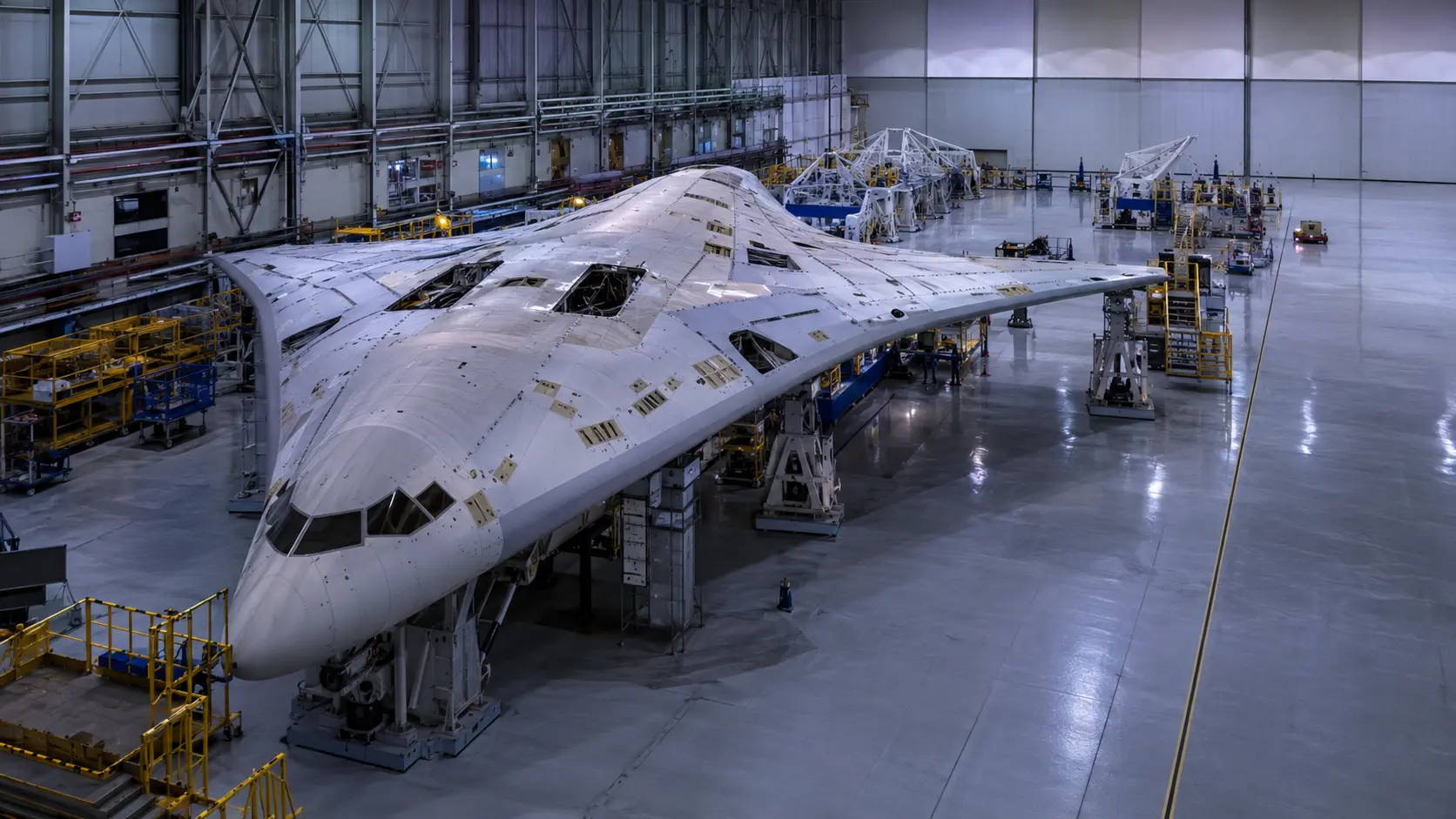
JetZero closed a senior secured term-loan facility of up to USD 100 million for the Z4 blended-wing aircraft programme and its full-scale Jet1 demonstrator. The company estimates up to 50 percent lower fuel burn and emissions than conventional tube-and-wing aircraft at comparable passenger capacity. That remains a design target rather than a result measured in commercial service.
Company & Industry Context
A blended-wing body integrates the wing and fuselage into a smoother lifting structure to reduce aerodynamic drag. The planned Z4 would carry about 250 passengers for up to 5,000 nautical miles and is targeted for service in the early 2030s, with sustainable-aviation-fuel compatibility. Jet1 is being built with Scaled Composites, was about 40 percent complete in June 2026 and is scheduled for first flight in the fourth quarter of 2027.
Challenge / Why It Matters
Aviation decarbonisation claims cross design, materials, manufacturing, flight testing, certification, airport compatibility and real passenger operations. A 50 percent efficiency target can be misunderstood unless the baseline aircraft, payload, range, mission profile and fuel lifecycle are defined. The new airframe must also prove maintenance, evacuation, cabin and supply-chain manufacturability.
Action / Solution / Implementation
The facility will support Jet1 production, technology maturation, Greensboro manufacturing and test facilities, and working capital. Participants include Pinegrove Credit Partners and Silicon Valley Bank. The financing emphasises programme milestones, suggesting that drawdowns and any expanded capacity should be connected to design freeze, assembly, ground testing, first flight and certification evidence.
Evidence / Results / Impact
Verifiable points include the facility size, Jet1 being about 40 percent complete in June 2026, a fourth-quarter 2027 first-flight target and the company plan for more than 14,000 North Carolina jobs over ten years. The source does not provide full lending terms, independent engineering validation, flight-test fuel data or certification results. Efficiency and employment therefore remain forward-looking claims.
Industry & Institutional Implications
If commercialised, blended-wing aircraft could reorganise structures, composites, interiors, maintenance equipment and airport operations. Capital providers may also place greater weight on technical milestones instead of relying on a final emissions narrative. For transition finance, the link between use of proceeds and engineering evidence will determine whether funding demonstrably advances low-carbon technology.
SNN Editorial / Pre-Disclosure Evidence Infrastructure Perspective
SNN editorial analysis: Taiwan aerospace suppliers entering a new-aircraft programme should not stop at material specifications or annual carbon inventories. Pre-Disclosure Evidence Infrastructure should connect design revisions, material lots, supplier changes, process energy, test reports, non-conformances and corrective actions to the same part identity and airworthiness requirement. It should also separate simulated efficiency, flight-test efficiency and commercial-service efficiency. Lenders and investors should bind financing milestones to verifiable engineering records rather than a company announcement alone. Taiwan aerospace manufacturers can extend established quality-management capability into sustainability and transition-finance evidence capability, making technical and environmental claims traceable before disclosure. This is editorial interpretation, not a source-verified fact.
Future Outlook
Next checkpoints are Jet1 assembly, the 2027 first flight, Z4 design freeze and certification path, Factory1 construction, facility drawdown conditions, and measured performance across ranges, payloads and fuels. The 50 percent claim becomes comparable only when methods and baselines are disclosed.
Sources, evidence chain and editorial responsibility
Source publication: ESG Today · Original author: Kenny Fisher · Original publication date:
External institutional and reporting sources
These external announcements, rules, studies and reports support the discussion and are displayed separately from the original publication.
- Primary automated discovery and factual sourceESG TodayJetZero Secures Up to USD 100 Million as Blended-Wing Aircraft Moves Toward Manufacturing ↗Published 2026-09-01 · Accessed 2026-09-02T03:25:00.000Z
Publication identity, event facts, attributed statements and date used in this original bilingual summary.
- financing and programme anchorJetZeroJetZero Closes USD 100 Million Financing Facility to Advance the Z4 Program ↗Published 2026-08-31 · Accessed 2026-09-02T04:15:00.000Z
Senior secured facility of up to USD 100 million, lenders, use of proceeds, Jet1 build status, and Greensboro manufacturing plans.
- manufacturing-site and programme milestone corroborationOffice of the Governor of North CarolinaGovernor Stein Celebrates JetZero Groundbreaking to Launch Greensboro Airplane Maker’s 14,500-Job Project ↗Published 2026-06-15 · Accessed 2026-09-02T04:15:00.000Z
Greensboro factory groundbreaking, Z4 manufacturing purpose, stated investment scale, employment commitment, and state support context.
Topic hub: 氣候與能源轉型