ENGLISH EDITION · 全球新聞
Mafix Raises USD 5.4 Million to Scale Mineral Fertilizer Carbon Removal
Stanford spinout Mafix has raised USD 5.4 million in pre-seed funding to turn silicate rock into fast-weathering silicon fertiliser and advance a 1,000-tonne commercial demonstration.
This English edition remains available for review but is excluded from search indexing until editorial approval.
Executive Summary / Lead
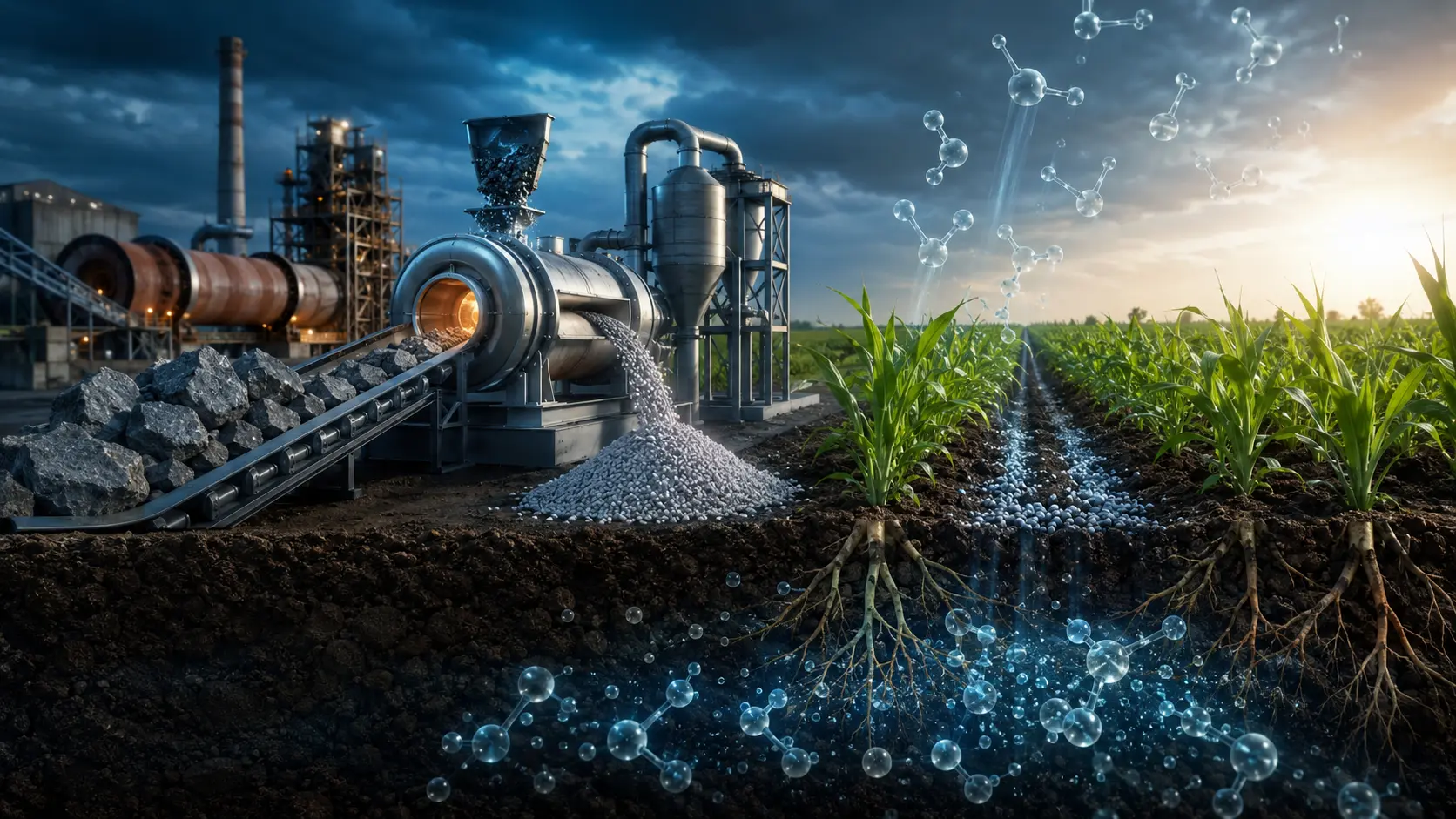
Agricultural and industrial technology startup Mafix has raised USD 5.4 million in pre-seed funding to convert silicate rock into a faster-weathering silicon fertiliser. The company says the product can release nutrients within a growing season while moving carbon dioxide into a bicarbonate storage pathway.
Company & Industry Context
Mafix launched in 2026 as a Stanford University spinout founded by Jade Marcus and materials-science professor Matthew Kanan. Its technology sits at the intersection of fertiliser, mineral processing and enhanced rock weathering, seeking to combine farm-input revenue with carbon-removal value.
Challenge / Why It Matters
Conventional basalt application can weather slowly, with performance shaped by mineralogy, particle size, soil, rainfall and crops. Energy-intensive processing could erode net carbon benefit. Fertiliser performance, heavy-metal safety, bicarbonate formation and storage duration all require independent measurement.
Action / Solution / Implementation
Mafix says its mineral-conversion process can use multiple silicate feedstocks to produce a more reactive silicon fertiliser and could make use of spare cement-kiln capacity. Proceeds will support a 1,000-tonne commercial demonstration, feedstock assessment and further product and field testing.
Evidence / Results / Impact
Azolla Ventures led the round with participation from Counteract VC, Astera, Plug and Play, Impact Science and a Dutch family office. The financing and planned demonstration are public, but within-season removal, agronomic performance and permanence remain primarily company claims rather than completed independent validation.
Industry & Institutional Implications
If the fertiliser creates farm value, removal may rely less on carbon-credit revenue alone. Existing kiln capacity could also lower the barrier to production. The model still must establish life-cycle net removal per tonne and a credible adoption case for farmers.
SNN Editorial / Evidence Infrastructure Perspective
SNN editorial analysis: A credible evidence chain should connect feedstock origin and mineralogy, kiln energy, product batches, field application, crop response, soil and water bicarbonate, life-cycle emissions and final net removal. Company estimates, experimental results and third-party verification should remain distinct.
Future Outlook
Next evidence should cover operation of the 1,000-tonne demonstration, controlled field trials, product regulation and safety data, and a repeatable measurement, reporting and verification method.
Sources, evidence chain and editorial responsibility
Source publication: ESG Today · Original author: Kenny Fisher · Original publication date: 2026-08-21
Controlled publication records
- esgtoday.com publication record ↗
- finance.yahoo.com publication record ↗
- mafix.ag publication record ↗
Topic hub: 氣候與能源轉型
Translation status: ai-assisted-pending-review