ENGLISH EDITION · 議題探討
Malaysia's Strong El Nino Outlook Tests Heat Protections for Outdoor Workers
Malaysia may face a strong El Nino and higher temperatures, while protection for outdoor workers still relies mainly on general safety duties and voluntary guidance.
This English edition remains available for review but is excluded from search indexing until editorial approval.
Executive Summary / Lead
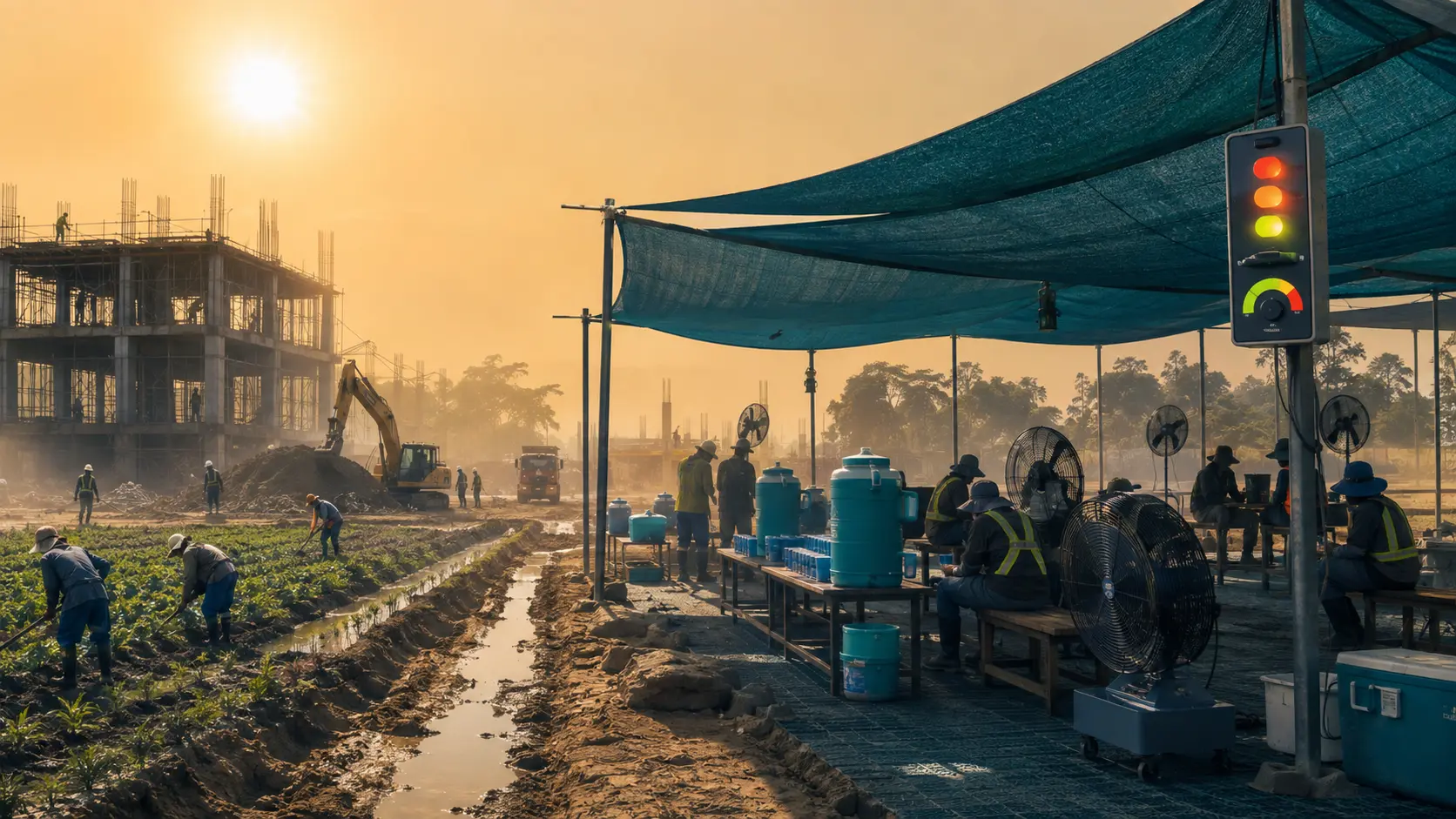
Malaysia's meteorological authorities see the possibility of a strong or very strong El Nino, with record high temperatures possible from March to May 2027. Protection is under scrutiny for outdoor workers in construction, agriculture, logistics, manufacturing and delivery.
Company & Industry Context
The International Labour Organization estimates that 74 percent of workers in Asia and the Pacific are exposed to excessive heat. Malaysia issued Level 2 heatwave warnings for 37 to 40 degrees Celsius over three consecutive days in March, and recorded 73 heat illnesses and four deaths by early July.
Challenge / Why It Matters
Authorities recorded only eight occupational heat-stress cases from 2017 to 2025. The contrast with national heat-illness data is substantial, but the definitions and populations differ, so it cannot prove that all cases were work-related or that under-reporting has been established.
Action / Solution / Implementation
Current protection relies on general employer duties under the Occupational Safety and Health Act 1994 and 2016 heat-stress guidance. Controls include cooling, ventilation, emergency procedures, work-rest schedules, hydration, acclimatisation, health monitoring, habits, humidity and shade. Worker groups also seek mandatory stop-work and rest thresholds.
Evidence / Results / Impact
Meteorological agencies use weak, moderate, strong and very strong classifications, while the World Meteorological Organization does not formally use the term super El Nino. The 73 illnesses and four deaths are national figures and should not be presented as entirely occupational.
Industry & Institutional Implications
Heat management affects occupational safety, productivity, human rights and small-business cost. General duties without enforceable thresholds can produce uneven protection across employers and contracting layers.
SNN Editorial / Evidence Infrastructure Perspective
SNN editorial analysis: Heat-risk evidence should connect weather and workplace measurements, shifts and workers, controls, symptoms, incidents and claims. Only a shared data chain can distinguish lower risk from weak detection or reporting.
Future Outlook
Further review should track the El Nino outlook, mandatory rules and enforcement, workplace heat-illness data, stop-work and rest thresholds, and measured effects on health and productivity.
Sources, author and editorial responsibility
Source publication: Eco-Business · Original author: Samantha Ho · Original publication date: 2026-08-20
International original and supporting sources
Topic hub: 氣候與能源轉型
Translation status: ai-assisted-pending-review