ENGLISH EDITION · 全球新聞
Mars Impact Fund Allocates More Than USD 13 Million Across Six Social-Impact Partnerships
Mars announced six partnerships across Côte d’Ivoire, India, the United States and Thailand covering mint and cocoa communities, science education and rabies control. Credibility depends on beneficiary baselines, fund flows, outcome definitions and grievance mechanisms.
Executive Summary / Lead
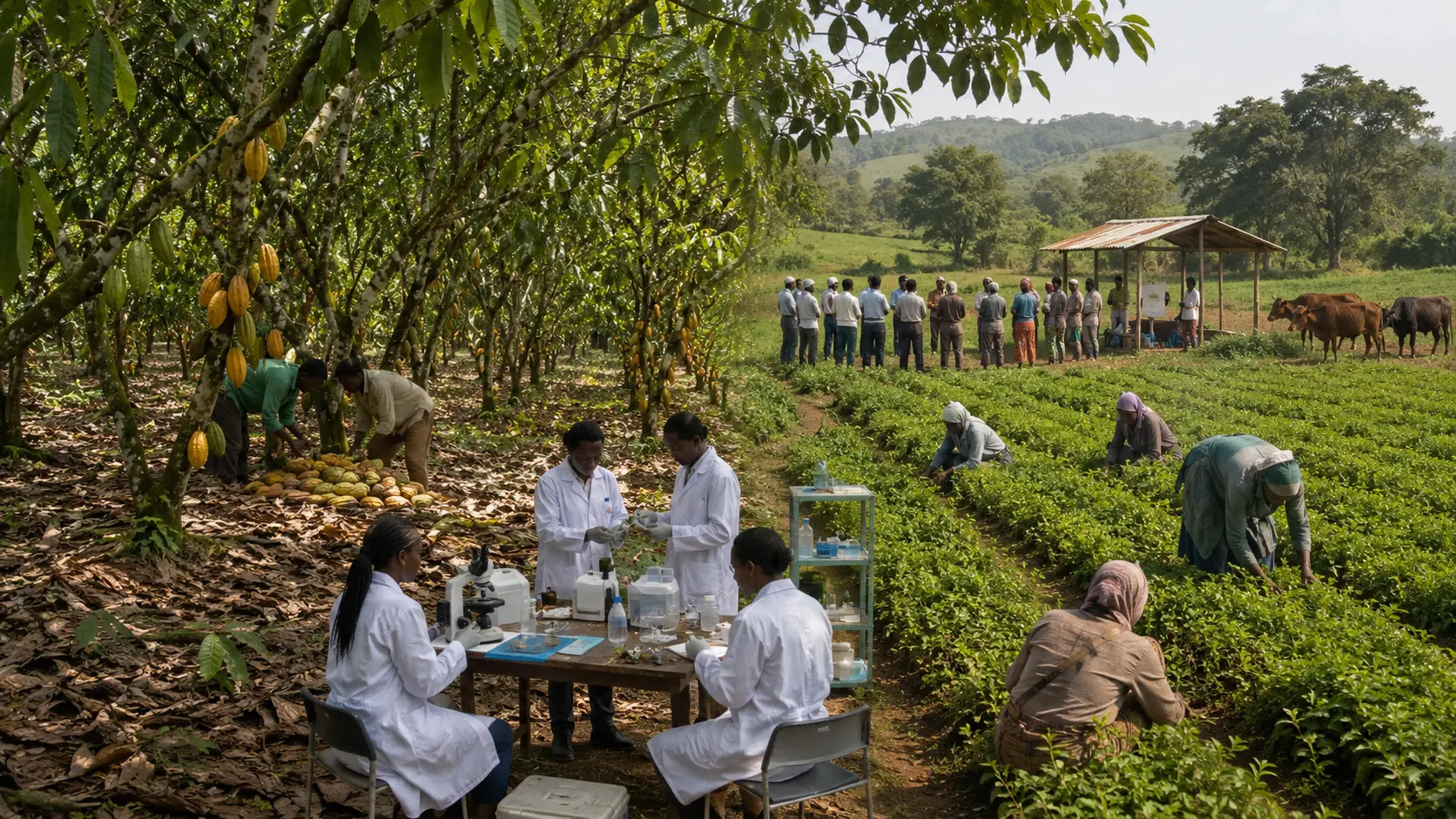
Mars announced six partnerships worth more than USD 13 million across Côte d’Ivoire, India, the United States and Thailand. Commitments include USD 5.6 million to Tanager for 20,000 mint-farming families, USD 3 million to 4-H for up to 200,000 young people, USD 2.07 million to Elucid for cocoa-community health and USD 3 million to Worldwide Veterinary Service for rabies work in Thailand.
Company & Industry Context
Mars announced six partnerships worth more than USD 13 million across Côte d’Ivoire, India, the United States and Thailand. Commitments include USD 5.6 million to Tanager for 20,000 mint-farming families, USD 3 million to 4-H for up to 200,000 young people, USD 2.07 million to Elucid for cocoa-community health and USD 3 million to Worldwide Veterinary Service for rabies work in Thailand. Mars says the fund has USD 85 million for 2025 to 2027 and plans at least USD 50 million annually from 2028.
Challenge / Why It Matters
Committed dollars do not by themselves prove income, health or animal-welfare outcomes. Cross-border programmes also face duplicate beneficiary counts, currency and overhead effects, local partner capacity, privacy and adverse-outcome reporting.
Action / Solution / Implementation
Each partnership should define inputs, activities, outputs, near-term outcomes and long-term impact, supported by beneficiary baselines and counterfactual assumptions. Disbursement milestones, geography, sampling, exit criteria and grievance channels should be recorded.
Evidence / Results / Impact
Evidence chain: Mars says the fund has USD 85 million for 2025 to 2027 and plans at least USD 50 million annually from 2028.
Industry & Institutional Implications
Supply-chain social investment is shifting from philanthropy narrative toward verifiable risk and resilience management. Brands linking grants to sourcing must not treat programme participation as proof of broad improvement or as a substitute for fair prices and working conditions.
SNN Editorial / Pre-Disclosure Evidence Infrastructure Perspective
SNN editorial analysis: Taiwan food, flavour, feed, pet-care and retail companies with overseas inputs need separate records for social investment and sourcing responsibility. Pre-Disclosure Evidence Infrastructure should connect pseudonymous beneficiary identity, location, eligibility, disbursement batch, delivery evidence, baseline survey, outcome metrics, third-party sampling, grievance and remedy, while retaining denominators for programme coverage and total sourced volume. Taiwan companies can then distinguish money committed, people reached and attributable change, instead of allowing selected success stories to represent an entire supply chain. The same evidence can support sustainability reporting, due diligence and impact finance before claims are drafted. This is editorial interpretation, not a source-verified fact.
Future Outlook
Next review should test execution milestones, updated measurements, methodology changes, adverse outcomes and whether the evidence supports each public claim. Material changes must create a new version rather than overwrite this record.
Sources, evidence chain and editorial responsibility
Source publication: ESG Today · Original author: Kenny Fisher · Original publication date:
External institutional and reporting sources
These external announcements, rules, studies and reports support the discussion and are displayed separately from the original publication.
- primary automated discovery and factual sourceESG TodayMars Impact Fund Allocates More Than USD 13 Million Across Six Social-Impact Partnerships ↗Published 2026-09-02 · Accessed 2026-09-03T03:05:00.000Z
Publication identity, attributed facts and source timing used for the SNN original bilingual summary.
- company grant announcementMarsMars Impact Fund awards more than USD 13 million ↗Published 2026-09-01 · Accessed 2026-09-03T03:05:00.000Z
Grant amounts, programme partners, countries and stated beneficiary reach.
- fund governance backgroundMarsMars launches Impact Fund ↗Published 2026-02-26 · Accessed 2026-09-03T03:05:00.000Z
Fund launch, governance intent, multi-year allocation and planned annual commitment.
Topic hub: 企業與供應鏈