ENGLISH EDITION · 全球新聞
Microsoft and Qcells Explore New Energy Capacity for AI Infrastructure
Microsoft and Qcells are expanding their partnership to explore new generation and virtual power plants for AI infrastructure, with the new concepts still at an exploratory stage.
This English edition remains available for review but is excluded from search indexing until editorial approval.
Executive Summary / Lead
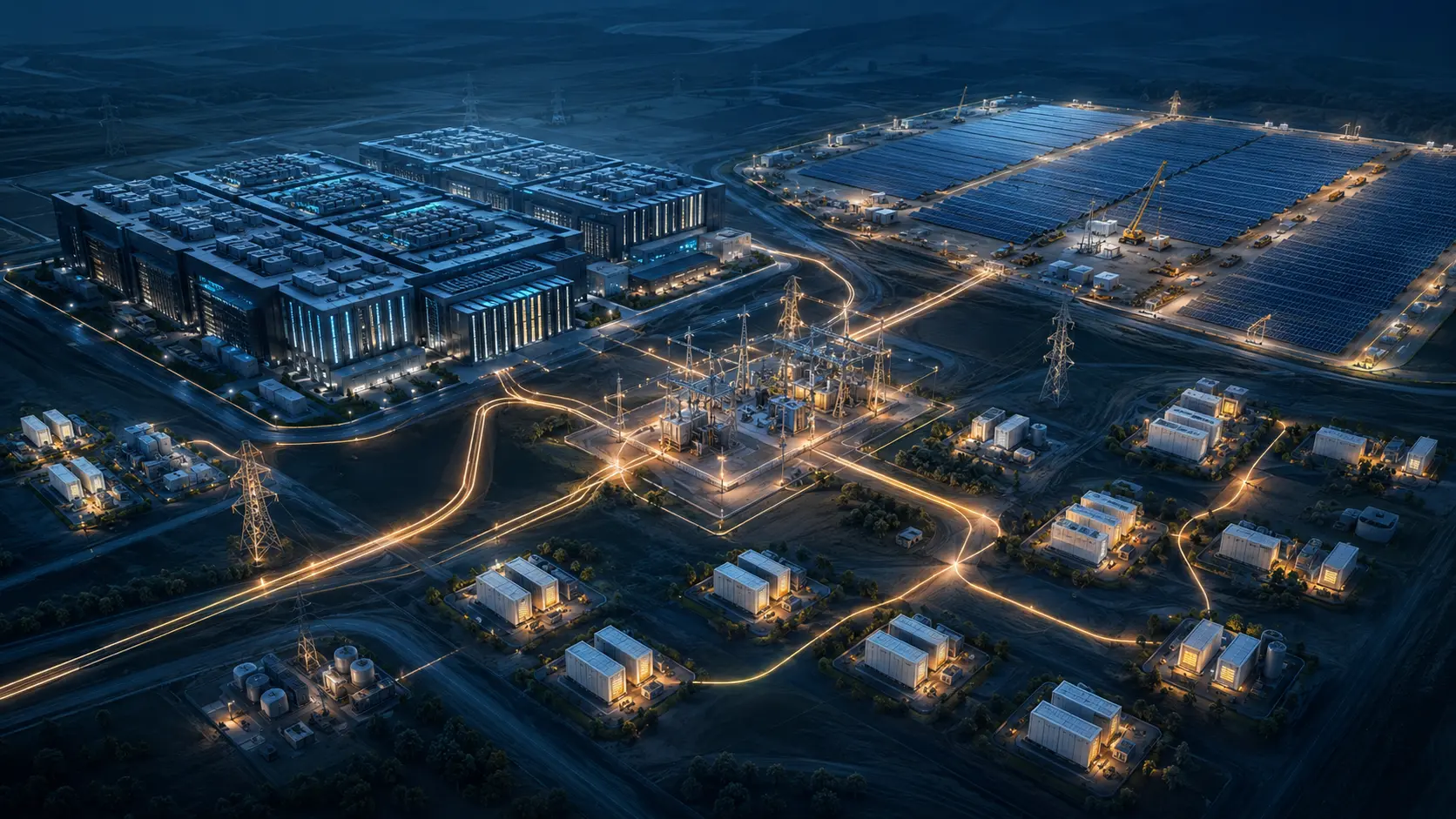
Microsoft and Qcells are expanding their partnership to explore new generation and flexible resources for AI infrastructure. The companies describe a bring-your-own-capacity concept and potential virtual power plants aggregating residential and commercial batteries.
Company & Industry Context
The partners began with a 2.5 GW solar agreement in 2023 and expanded it to an eight-year, 12 GW alliance in 2024. Rapid growth in AI data-centre demand is bringing power supply, community cost and emissions into infrastructure planning.
Challenge / Why It Matters
New data centres without matching deliverable power and flexibility can increase grid and local price pressure. ESG Today also reports a 25 percent rise in Microsoft's emissions last year, showing that renewable procurement must be assessed alongside load growth and supply-chain emissions.
Action / Solution / Implementation
Under the BYOC concept, Qcells would develop new power near Microsoft's infrastructure for direct or utility delivery, funded by Microsoft. The virtual-power-plant concept would aggregate residential and commercial batteries, with priority exploration for income-qualified households.
Evidence / Results / Impact
The announcement describes areas for exploration and does not provide new capacity, sites, investment amounts or operation dates. The earlier 2.5 GW and 12 GW agreements are context and cannot be counted as outcomes from the new concept.
Industry & Institutional Implications
Technology-company energy procurement is moving beyond certificates and long-term contracts toward joint design of load, generation, storage and community participation. Utility approval and cost allocation will determine scalability.
SNN Editorial / Evidence Infrastructure Perspective
SNN editorial analysis: Verifiable additionality should connect data-centre load forecasts, new power, interconnection conditions, community prices, battery dispatch and emissions attribution while separating plans, contracts and delivered results.
Future Outlook
Next evidence should include binding agreements, sites, capacity, operation dates, utility approvals, household participation and actual emissions impact to show whether the concept reaches measurable execution.
Sources, author and editorial responsibility
Source publication: ESG Today · Original author: Kenny Fisher · Original publication date: 2026-08-20
International original and supporting sources
- esgtoday.com original source ↗
- marketplace.microsoft.com original source ↗
- blogs.microsoft.com original source ↗
- hanwha.com original source ↗
Topic hub: 氣候與能源轉型
Translation status: ai-assisted-pending-review