ENGLISH EDITION · 全球新聞
Neocrete Raises USD 3.5 Million to Scale Low-Carbon Concrete From Brunei
New Zealand low-carbon concrete startup Neocrete has raised USD 3.5 million after its technology was used in 3,700 cubic metres of concrete in Brunei, with a larger Muara Port deployment planned.
This English edition remains available for review but is excluded from search indexing until editorial approval.
Executive Summary / Lead
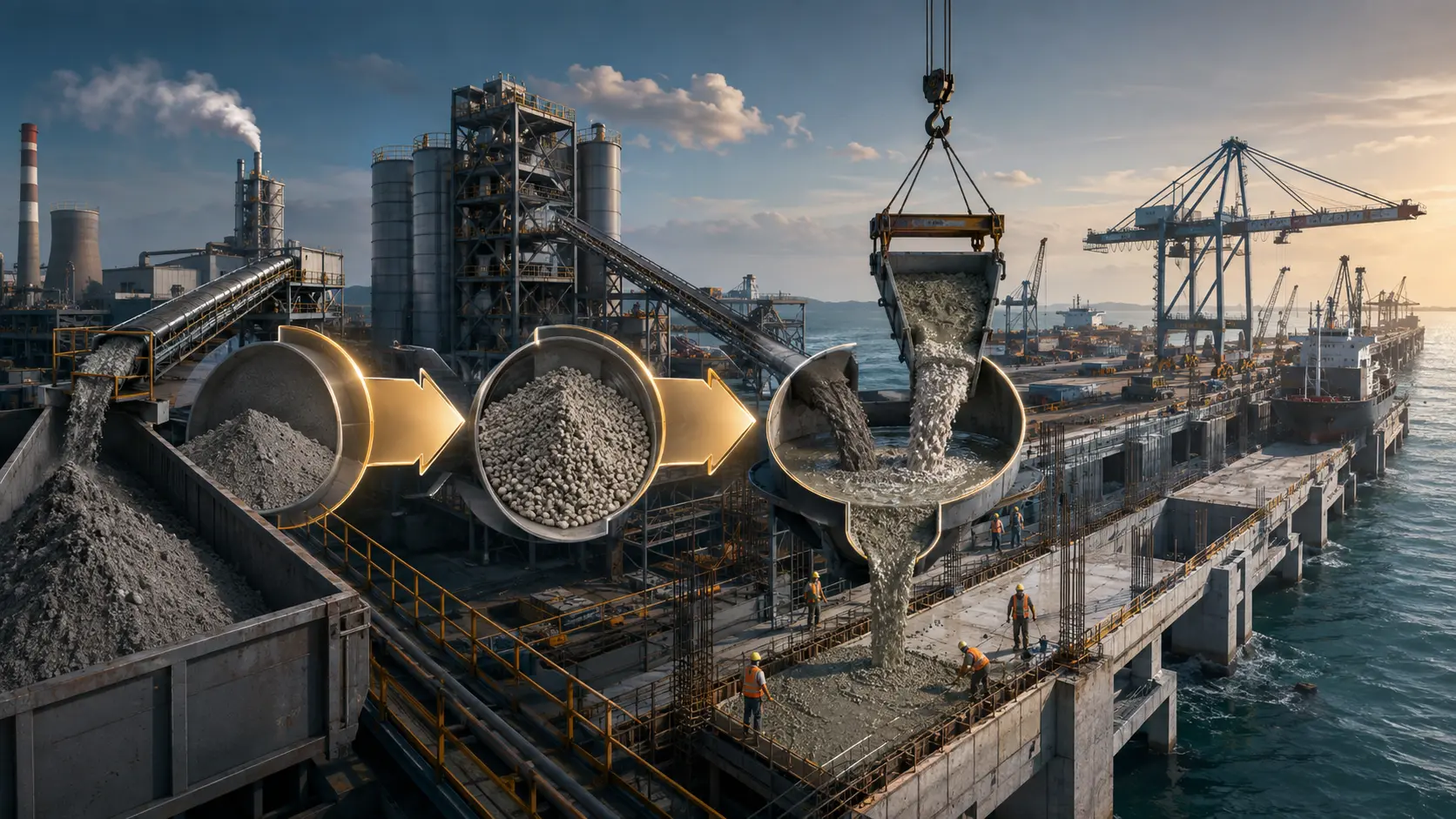
New Zealand low-carbon concrete company Neocrete has raised USD 3.5 million to expand in Europe, the United States and Southeast Asia. Its additive enables lower-quality fly ash or volcanic ash to replace part of cement, with a Brunei project serving as its first commercial-scale case.
Company & Industry Context
Neocrete was founded in 2018 by Zarina Alexander and Matt Kennedy-Good. Cement production accounts for roughly 8 percent of global carbon dioxide emissions, driving demand for supplementary cementitious materials even as supplies of high-quality fly ash and slag remain constrained.
Challenge / Why It Matters
Higher substitution cannot compromise strength, durability, workability or local compliance. Ash origin and quality affect mix design. Avoided-emissions claims can be overstated without a disclosed baseline, material transport, additive production and actual poured volume.
Action / Solution / Implementation
Neocrete says its activation additive lets lower-quality ash replace 30 to 50 percent of cement and improves supplementary-material performance. Wavemaker Ventures, Icehouse, Temasek Trust's C3H programme and angel investors backed the round for international expansion.
Evidence / Results / Impact
Readymix Brunei has used the technology since 2025 and poured about 3,700 cubic metres with 30 percent cement replacement. The company case estimates a 25 percent embodied-carbon cut, around 215 tonnes of carbon dioxide avoided and nearly USD 20,000 saved. Muara Port figures of 65,000 cubic metres, 5,200 tonnes avoided and roughly USD 300,000 saved are forecasts, not delivered outcomes.
Industry & Institutional Implications
If lower-grade ash can be used consistently, existing industrial by-products could become local low-carbon material and reduce cement cost and volume. Long-term supply must still account for declining fly ash as coal generation retires and for traceable quality in alternative minerals.
SNN Editorial / Evidence Infrastructure Perspective
SNN editorial analysis: A concrete evidence chain should connect ash origin, mix and batch to strength and durability tests, regulatory verification, actual poured volume, environmental product declarations, life-cycle boundaries and in-service performance. Delivered results and future forecasts should remain separate.
Future Outlook
Further evidence should cover actual Muara Port volumes and completion data, long-term durability across G25 to G50 grades, third-party life-cycle verification and regulatory and commercial adoption in Europe and the United States.
Sources, evidence chain and editorial responsibility
Source publication: ESG Today · Original author: Kenny Fisher · Original publication date: 2026-08-21
Controlled publication records
- esgtoday.com publication record ↗
- temasektrust.org.sg publication record ↗
- neocrete.com publication record ↗
- neocrete.com publication record ↗
Topic hub: 氣候與能源轉型
Translation status: ai-assisted-pending-review