
ENGLISH EDITION · 全球新聞
Philippines Fast-Tracks Critical Minerals Across 9 Million Hectares, Testing Consent and Ecosystem Evidence
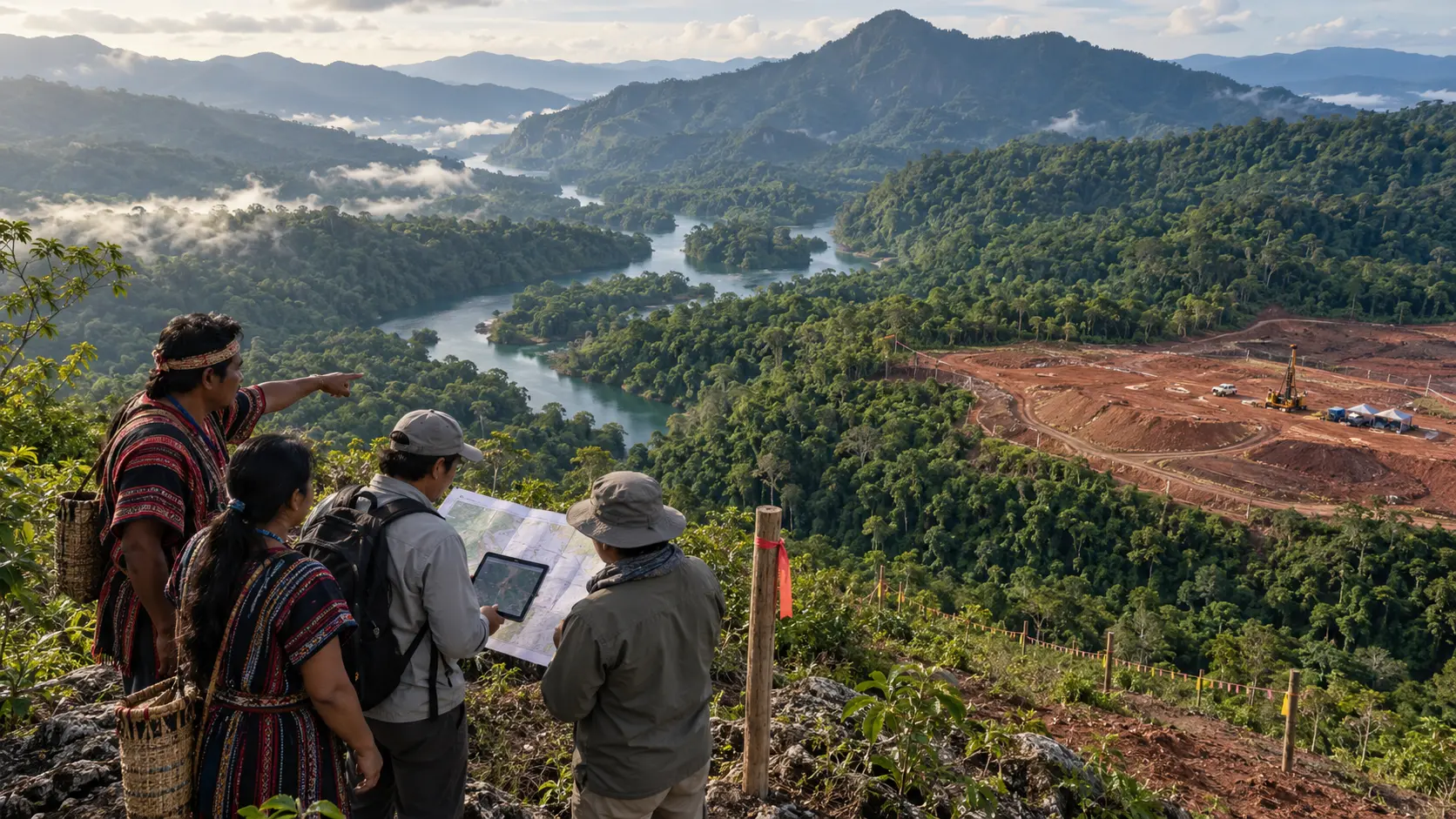
The Philippines is targeting at least 9 million hectares of prospective critical-mineral areas and introducing parallel permit processing. Industry expects investment and downstream processing, while Indigenous and environmental groups warn that free, prior and informed consent, forests and ancestral-domain evidence could be compressed.
Executive Summary / Lead
Eco-Business published the syndicated report on 7 September. Philippine Executive Order No. 122 creates a national critical-minerals framework covering at least 9 million hectares of prospective areas and calls for national and local approvals to be processed in parallel through a virtual one-stop shop. The area is more than eleven times the roughly 813,575 hectares under approved mining projects, but it is prospective territory, not approved mine land.
Company & Industry Context
The policy seeks to move from raw extraction toward refining, materials, manufacturing and recycling, so industry groups welcome faster and more predictable permitting. Environmental-law and Indigenous-rights groups say forests, ancestral domains and livelihoods may overlap the prospective areas. They warn that parallel processing could advance consultation and free, prior and informed consent before communities receive complete impact information.
Challenge / Why It Matters
Critical minerals support batteries, grids and electronics, but transition use does not establish sustainable extraction. The 9 million hectares is a policy-scale potential area, not land already mined or necessarily damaged. Risk depends on mineral, location, method, forest and watershed baselines, rights status, and whether communities receive understandable evidence and sufficient time to accept, reject or condition a proposal.
Action / Solution / Implementation
Implementation should separate exploration, mining, environmental review, forest and water rights, ancestral-domain review, local approvals and FPIC into traceable workflows. Each site needs a stable geospatial identity and records for application versions, agency comments, alternatives, community notice, translations, meetings and refusals, benefit sharing, grievances, monitoring and rehabilitation bonds. Parallel processing may reduce waiting, but no legal decision should rely on evidence that is not yet complete.
Evidence / Results / Impact
The available sources support the executive order, the 9 million prospective hectares, about 813,575 approved hectares, and a group estimate that roughly 424,830 approved hectares may overlap ancestral domains. They also document industry support and rights-group concerns. The figures come from different datasets and dates. They do not prove that any individual project is unlawful, caused a particular harm or obtained valid consent.
Industry & Institutional Implications
Battery and electronics supply chains will increasingly need to show that minerals are not only legal but also rights-respecting and compatible with avoidance of irreversible ecosystem loss. Faster permits, domestic processing and investment totals cannot support automaker, battery, bank or export-market due diligence without site-level land, community, water and biodiversity evidence.
SNN Editorial / Pre-Disclosure Evidence Infrastructure Perspective
SNN editorial analysis: Taiwan battery-material, electronics-component, automotive-electronics, finance and trading companies may encounter the Philippine policy through nickel, copper and other mineral supply chains. The transferable lesson is not to treat 9 million hectares as a procurement opportunity or a proven risk surface. Buyers and financiers should require verifiable rights and nature evidence from each upstream site. Pre-Disclosure Evidence Infrastructure should connect mine coordinates and permit versions, supplier and smelter batches, ancestral-domain and protected-area layers, FPIC notice and language, participant authority, dissent and grievances, environmental baselines, water, soil and species monitoring, rehabilitation liability, transport and material flow. Taiwan companies should keep prospective policy designation, approved rights, actual extraction and product lots as separate states. Procurement decisions should also preserve who checked which map version, how evidence gaps were handled, when an order was paused and whether corrective action was completed. These controls let responsible sourcing, nature risk and human-rights due diligence rely on one reproducible evidence chain. This prevents a national strategy from being reported in sustainability statements or customer questionnaires as proof that a particular material was responsibly sourced. This is editorial interpretation, not a source-verified fact.
Future Outlook
Next checkpoints are one-stop-shop rules, first project files, FPIC and environmental-review sequencing, public geospatial data, alternatives, local and Indigenous grievances, downstream processing and recycling investment, and independent assurance requirements from buyers. Any change in area, boundary or rights status should create a new version rather than overwrite the prior record.
Sources, evidence chain and editorial responsibility
Source publication: Eco-Business · Original author: Keith Anthony Fabro / Mongabay · Original publication date:
External institutional and reporting sources
These external announcements, rules, studies and reports support the discussion and are displayed separately from the original publication.
- primary automated discovery and factual sourceEco-BusinessPhilippines Fast-Tracks Critical Minerals Across 9 Million Hectares, Testing Consent and Ecosystem Evidence ↗Published 2026-09-07T00:27:00Z · Accessed 2026-09-07T02:20:00.000Z
Eco-Business publication identity, timing and the reported policy, land-area, permitting and stakeholder claims.
- original syndicated reportingMongabayPhilippines fast-tracks critical minerals, raising Indigenous, environmental concerns ↗Published 2026-09-02 · Accessed 2026-09-07T02:20:00.000Z
Executive Order 122, 9 million prospective hectares, current approved area, ancestral-domain overlap, FPIC concerns and industry response.
- external rights and biodiversity evidenceGlobal WitnessRush for critical minerals in Philippines threatens Indigenous communities and biodiversity ↗Published 2024-12-03 · Accessed 2026-09-07T02:20:00.000Z
Geospatial methodology and prior evidence on overlap among mining, Indigenous territory and biodiversity areas.
- independent supply-chain contextReutersInvestors push for action to end deforestation and human rights risks in nickel mining ↗Published 2026-04-08 · Accessed 2026-09-07T02:20:00.000Z
Investor expectations for FPIC, deforestation controls and third-party scrutiny in nickel supply chains.
Topic hub: 永續制度與揭露