
ENGLISH EDITION · 全球新聞
RBC Uses Ten-Year REC Contracts to Support Community Solar Financing
RBC launched a community solar programme using ten-year renewable-energy certificate purchase contracts to provide predictable revenue, beginning with projects in Winnipeg and Prince Edward Island. The model can improve bankability if attribute ownership and retirement remain transparent.
Executive Summary / Lead
RBC will sign ten-year REC purchase agreements with participating organisations to create an additional revenue stream. Initial projects include a 109.8 kW system at BUILD Winnipeg and two Holland College installations totalling 214.5 kW.
Company & Industry Context
RBC will sign ten-year REC purchase agreements with participating organisations to create an additional revenue stream. Initial projects include a 109.8 kW system at BUILD Winnipeg and two Holland College installations totalling 214.5 kW. RBC Foundation provides separate upfront capital, creating distinct grant and REC revenue streams.
Challenge / Why It Matters
Long-term REC contracts improve revenue visibility, but combining grants, bill savings and attribute revenue can overstate additionality. Community organisations also face generation shortfalls, maintenance, issuance and delivery risk.
Action / Solution / Implementation
Projects should keep separate records for equipment cost, grants, financing, generation, meter data, REC issuance, delivery, retirement and bill savings, with rules for shortfalls, maintenance and termination.
Evidence / Results / Impact
The three initial projects are limited in scale and do not establish national deployment results, but they show how a bank can convert its own certificate demand into long-term community project revenue.
Industry & Institutional Implications
Corporate energy procurement need not rely only on utility-scale plants. Standardised small-project data, contracts and aggregation can bring community assets into procurement portfolios.
SNN Editorial / Pre-Disclosure Evidence Infrastructure Perspective
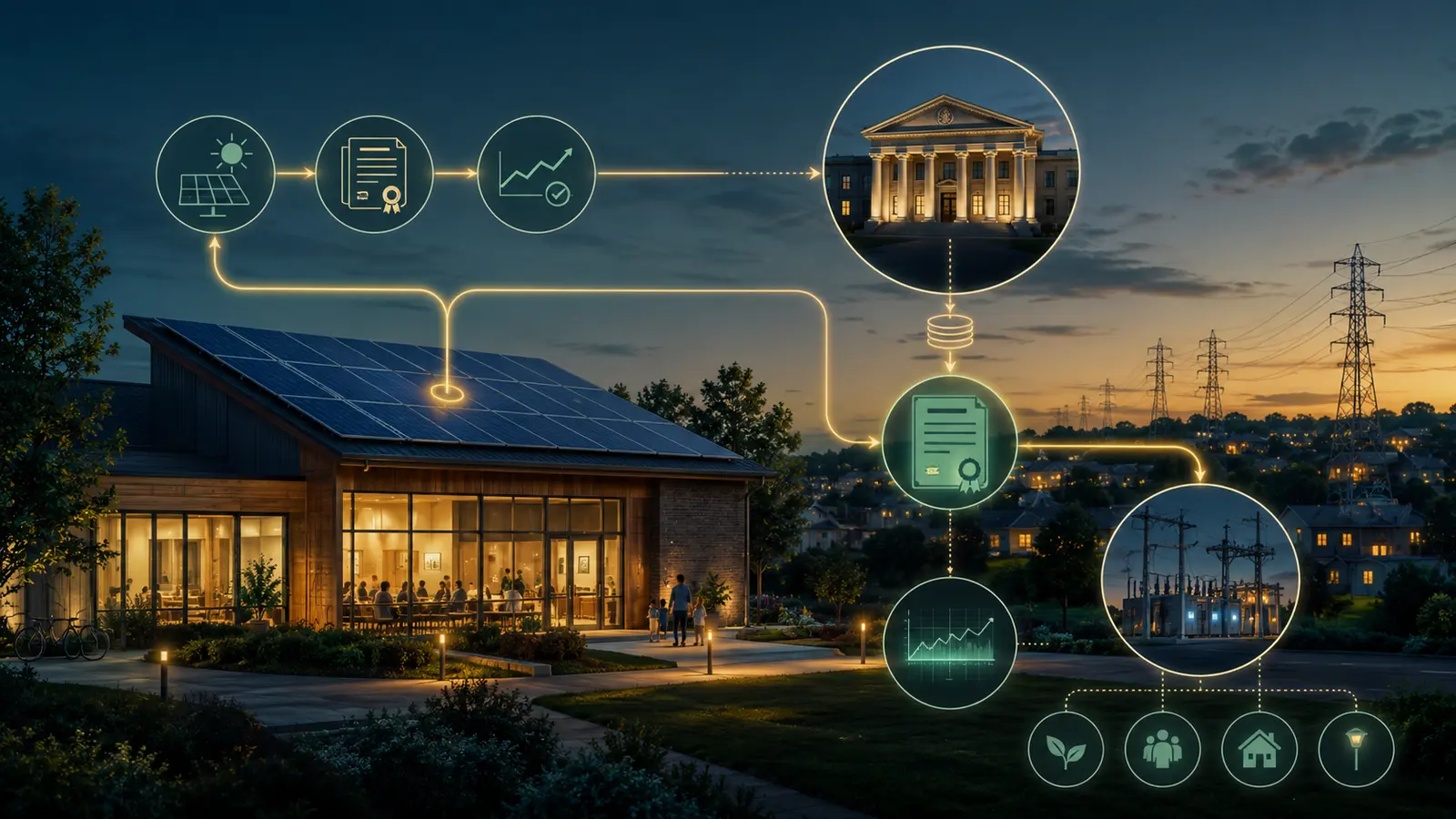
SNN editorial analysis: Taiwan social organisations, schools, cooperatives and small businesses often face upfront-capital, credit and maintenance barriers for rooftop solar. Pre-Disclosure Evidence Infrastructure could connect site rights, equipment serials, grant sources, financing terms, utility meters, interval generation, REC issuance, corporate purchase, retirement and beneficiary bill changes. If banks or large companies adopt a similar model in Taiwan, donations, financing returns, self-consumed electricity and environmental attributes must be separated. Project denominators and generation shortfalls should also be disclosed so the host and buyer do not both claim the same green-power outcome. This is editorial interpretation, not a source-verified fact.
Future Outlook
Next review should track additional sites, actual generation and REC delivery, project default rates, community bill benefits and RBC retirement disclosure.
Sources, evidence chain and editorial responsibility
Source publication: ESG Today · Original author: Kenny Fisher · Original publication date:
External institutional and reporting sources
These external announcements, rules, studies and reports support the discussion and are displayed separately from the original publication.
- primary automated discovery and factual sourceESG TodayRBC Uses Ten-Year REC Contracts to Support Community Solar Financing ↗Published 2026-09-03 · Accessed 2026-09-04T02:25:00.000Z
Publication identity, attributed facts and source timing used for the SNN original bilingual summary.
- company programme announcementRBCRBC Community Solar Program announcement ↗Published 2026-09-02 · Accessed 2026-09-04T02:25:00.000Z
Programme mechanics, ten-year REC purchases and initial projects.
- external energy-sector coverageClean Energy CanadaRBC launches community solar programme ↗Published 2026-09-02 · Accessed 2026-09-04T02:25:00.000Z
Independent programme summary and financing context.
Topic hub: 氣候與能源轉型