
ENGLISH EDITION · 全球新聞
T1A Acquires Flex IT to Form EUR 150 Million Circular IT Platform Built on Chain of Custody
Eurazeo-backed T1A has completed its combination with Dutch company Flex IT, connecting corporate device collection, certified data erasure, refurbishment and a network of about 13,000 customers or resellers in a European circular IT platform with roughly EUR 150 million in revenue. The available sources do not yet provide verifiable post-combination environmental performance.
Executive Summary / Lead
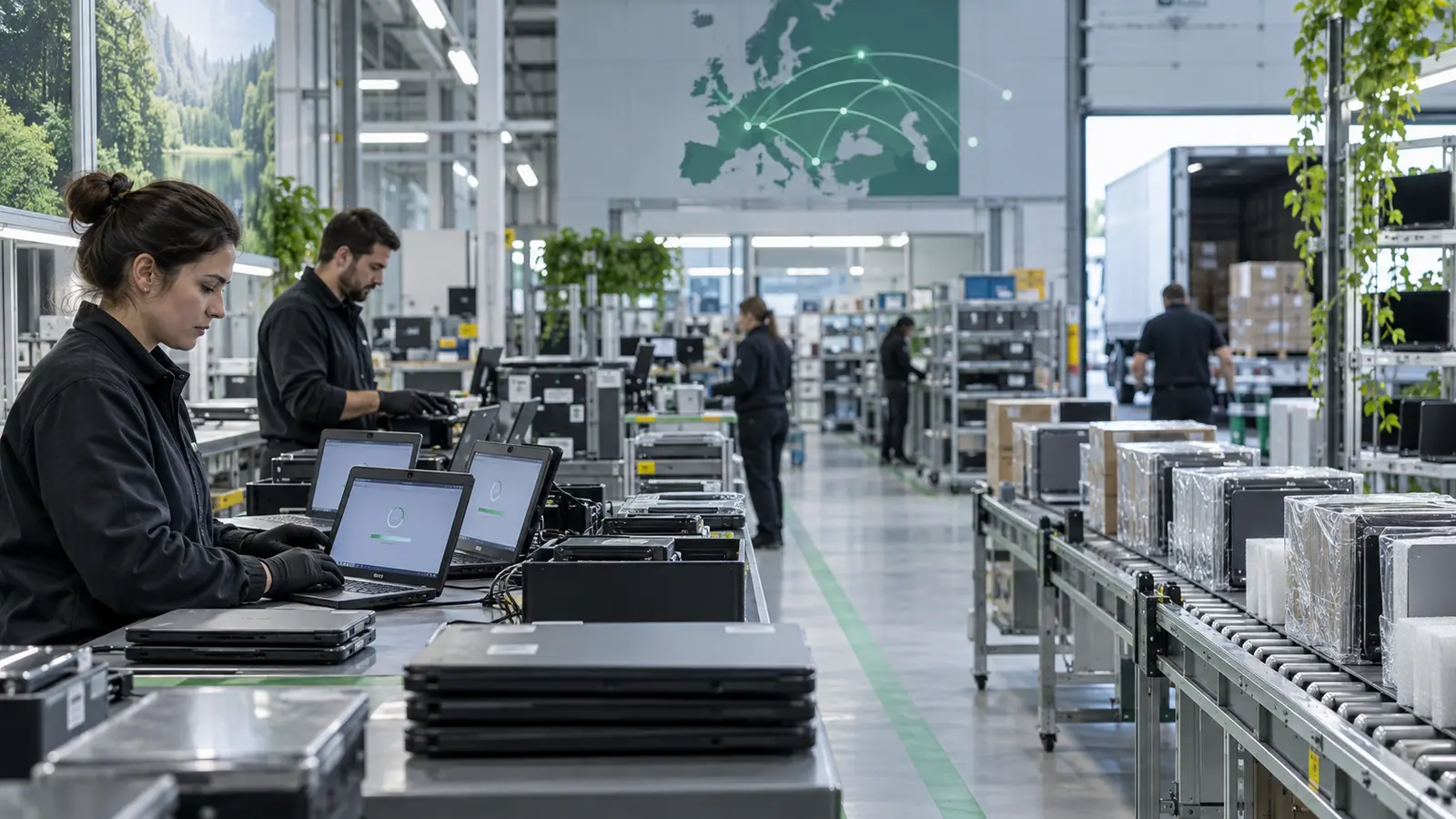
ESG Today reported on 7 September on the combination of Danish circular-IT company T1A and Dutch sustainable-hardware provider Flex IT. Flex IT, Altor and other sources record that the transaction was completed. The combined platform has about EUR 150 million in revenue and covers corporate device collection, certified data erasure, refurbishment, rental and European resale channels. Eurazeo’s Planetary Boundaries Fund backed the transaction.
Company & Industry Context
T1A collects enterprise IT equipment after its first use and performs certified data erasure and refurbishment. Flex IT distributes new and refurbished hardware through roughly 13,000 European resellers, operates certified refurbishment capacity in Poland and provides rental and demonstration-device services. Flex IT chief executive Angelo Bul leads the combined company, while T1A founder Peter Hemicke becomes executive chair and remains a co-investor.
Challenge / Why It Matters
Laptops and servers that remain idle or are scrapped lose residual utility and increase demand for virgin materials, manufacturing emissions and electronic-waste treatment. Cross-border reuse also creates data-leakage, title, export-classification, repair-quality and warranty risks. A circularity claim becomes defensible only when device identity, erasure evidence, component replacement and final destination can be verified.
Action / Solution / Implementation
The operating model should assign a device-level identity when an enterprise transfers equipment and preserve custody, erasure method and result, hardware testing, grading, component replacement, refurbishment site, resale market and warranty. Units that cannot be reused should move to qualified recyclers with weight and material-destination records. Cross-border routing can improve matching, but certification scope, exceptions and accountable personnel must remain visible for every site and handoff.
Evidence / Results / Impact
The evidence chain now includes the combined company’s announcement, seller and investor records, and reporting by two media outlets. Together they support completion of the combination, about EUR 150 million in revenue, a network of about 13,000 customers or resellers, Polish refurbishment capacity and leadership appointments. Revenue and operating figures still originate mainly from transaction-party disclosures. The sources do not provide closing terms, post-integration reuse rates, avoided emissions, erasure failure rates or independent assurance, so platform scale cannot be treated as realised environmental impact.
Industry & Institutional Implications
Circular IT is moving from isolated recycling services toward cross-border asset-management platforms. Enterprise customers may increasingly require security, privacy, product-quality, waste-law and carbon-accounting evidence in one procurement decision. An impact fund must also connect post-acquisition operating metrics to its investment claim and distinguish life extension, component reuse, material recycling and non-compliant export.
SNN Editorial / Pre-Disclosure Evidence Infrastructure Perspective
SNN editorial analysis: Taiwan electronics manufacturers, enterprise IT teams, leasing companies, cloud operators and cyber-security suppliers may all participate in cross-border IT asset disposition. Pre-Disclosure Evidence Infrastructure should keep one verifiable identity for each device from procurement and use through erasure, grading, repair, resale and final recycling. It should connect serial number, asset owner, erasure-tool version and log, operator, certified site, component source, energy use, logistics custody, warranty and exception cases. If a Taiwan company reports longer device life or avoided emissions, it should preserve the comparison baseline, functional test, actual second user, new-device substitution assumption and the denominator of units that were not reused. Procurement, information security and sustainability teams should cite the same record version so a device is not destroyed in the security system, written off in finance and still counted as reused in sustainability reporting. This is editorial interpretation, not a source-verified fact.
Future Outlook
At the data cutoff, the sources record completion of the transaction but do not disclose full closing terms, regulatory-approval details, site and certification integration, interoperability of device-tracking systems, reuse and recycling denominators, erasure exceptions, cross-border logistics compliance, warranty returns or reproducible impact indicators. Any later material facts should create a new version rather than overwrite this draft.
Sources, evidence chain and editorial responsibility
Source publication: ESG Today · Original author: Kenny Fisher · Original publication date:
External institutional and reporting sources
These external announcements, rules, studies and reports support the discussion and are displayed separately from the original publication.
- primary automated discovery and factual sourceESG TodayEurazeo-backed T1A Acquires Flex IT to Form EUR 150 Million Circular IT Platform ↗Published 2026-09-07T10:36:53Z · Accessed 2026-09-08T02:31:00.000Z
Transaction identity, reported revenue, company roles, operating footprint and stated circular-economy rationale.
- transaction-party announcementFlex ITFlex IT and T1A combine to form a leading European Circular Platform ↗Published 2026-09-07 · Accessed 2026-09-08T02:31:00.000Z
Completion of the combination, approximate combined revenue, investor backing, company roles, operating footprint, certifications and leadership appointments.
- seller transaction recordAltorAltor divests Flex IT to Eurazeo ↗Published 2026-09-07 · Accessed 2026-09-08T02:31:00.000Z
Seller confirmation of divestment and completed combination, Flex IT 2025 revenue, customer and geographic footprint, approximate combined revenue and chief executive appointment.
- investor transaction recordEurazeoEurazeo acquires T1A Group in Denmark to accelerate the circular economy in the IT sector ↗Published 2026-05-28 · Accessed 2026-09-08T02:31:00.000Z
Eurazeo Planetary Boundaries Fund majority investment in T1A, T1A operating history, refurbishment scale and Peter Hemicke continuing as co-investor.
- independent transaction reportingTech.euFlex IT and T1A combine to create EUR 150M European circular IT platform ↗Published 2026-09-07 · Accessed 2026-09-08T02:31:00.000Z
Independent reporting of the completed combination, approximate revenue, 13,000-reseller network, certified processing footprint and leadership.
Topic hub: 企業與供應鏈