ENGLISH EDITION · 議題探討
China Marine Litigation Rules Limit NGO Protection of Dolphin Habitat
Underwater blasting for a Fujian pier was suspended after complaints, but a later public-interest case was rejected because the NGO lacked standing, exposing inconsistent access to environmental litigation across land and marine ecosystems in China.
Executive Summary / Lead
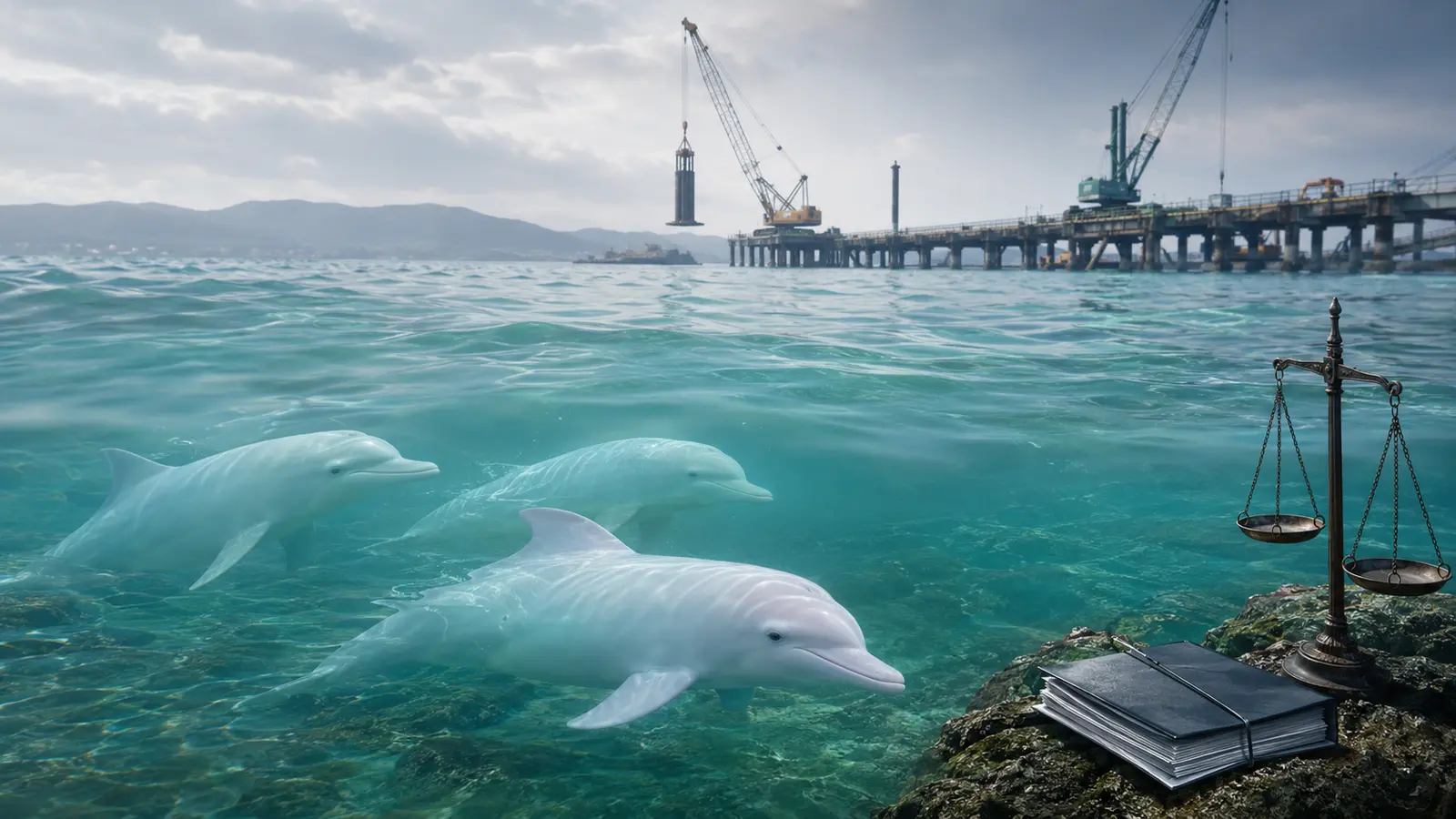
A pier project in Weitou Bay, Fujian planned underwater blasting in important Chinese white dolphin habitat. Authorities suspended the work after complaints, but a Friends of Nature public-interest case was rejected for lack of standing in August 2025.
Company & Industry Context
China's environmental public-interest litigation system permits qualified organisations to bring some pollution, wetland and wildlife cases, alongside agencies and prosecutors. Courts frequently treat marine cases as outside ordinary civil-society standing.
Challenge / Why It Matters
Ports, reclamation, dredging and offshore energy can cross administrative boundaries and cause slowly reversible marine damage. If NGOs can complain but cannot seek preventive orders, public oversight faces timing and responsibility gaps.
Action / Solution / Implementation
Friends of Nature and ChinaBlue gathered information on possible breaches, contacted authorities and raised public attention. The source says the original impact assessment did not cover underwater blasting and agencies struggled to coordinate responsibility.
Evidence / Results / Impact
Verified facts include the temporary suspension, rejected lawsuit and the court's standing rationale. The report does not establish that the entire pier project is permanently stopped, and it does not provide the complete case file or final ecological monitoring.
Industry & Institutional Implications
The case shows an uneven legal boundary between terrestrial and marine public-interest litigation. Reliance on agencies and prosecutors may limit independent civil-society participation in early prevention and cross-jurisdiction oversight.
SNN Editorial / Pre-Disclosure Evidence Infrastructure Perspective
SNN editorial analysis: Evidence for marine construction should link project boundaries, seasonal species activity, noise and blasting models, impact-assessment changes, stop-work orders, court procedure and follow-up monitoring. Complaint, suspension and permanent protection are different legal states.
Future Outlook
Next checks should follow any restart, interpretation of the new ecological and environmental code, standing in marine cases, prosecutorial action and continued dolphin-habitat monitoring.
Sources, evidence chain and editorial responsibility
Source publication: Dialogue Earth · Original author: Han Qing · Original publication date:
External institutional and reporting sources
These external announcements, rules, studies and reports support the discussion and are displayed separately from the original publication.
- Original publicationDialogue EarthWhy couldn't NGOs sue to stop blasting of Chinese white dolphin habitat? ↗Published 2026-08-20 · Accessed 2026-08-28
圍頭灣爆破暫停與訴訟程序; NGO 原告資格爭議; 海洋與陸域公益訴訟差異
- External official evidenceSupreme People's Procuratorate of the People's Republic of ChinaRegulations on the Issues of Handling Public Interest Litigation Cases of Marine Natural Resources and Ecological Environment ↗Published 2022-05-11 · Accessed 2026-08-28
海洋自然資源與生態環境公益訴訟的受理範圍; 行政機關與檢察機關角色; 報導所述 NGO 訴權邊界的法律背景
Topic hub: 企業與供應鏈