
ENGLISH EDITION · 全球新聞
DayOne Tests Fuel Cells at a Singapore Data Centre Backed by Green Finance
DayOne secured about USD 416 million in green financing for a 20 MW Singapore data centre that plans to test solid-oxide fuel cells and hydrogen-based energy.
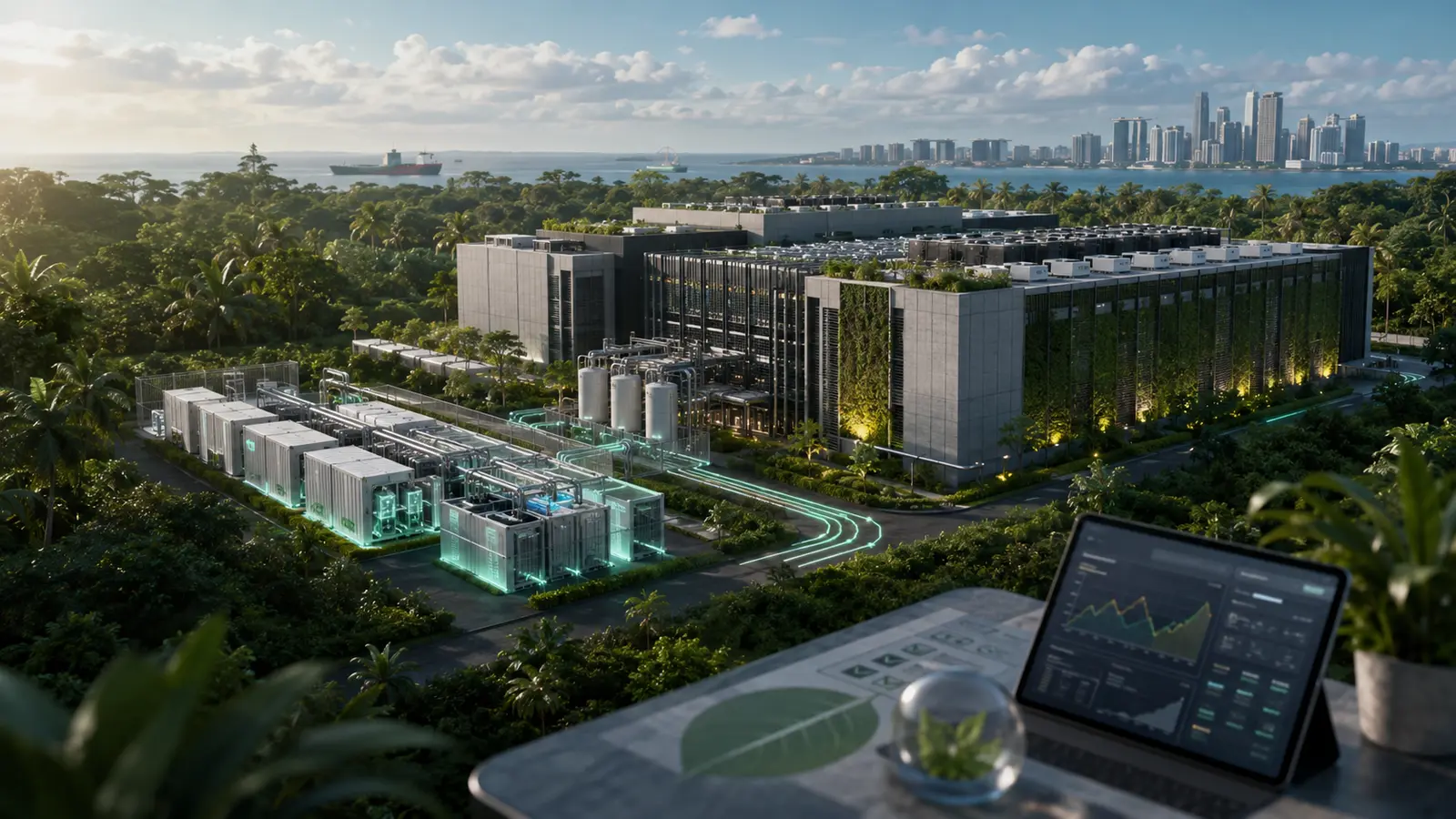
Executive Summary / Lead
DayOne secured about USD 416 million in green financing for a 20 MW Singapore data centre that plans to test solid-oxide fuel cells and hydrogen-based energy. The green loan and hydrogen trial combine finance, data-centre efficiency and emerging power, requiring separate verification of use of proceeds and technical results.
Company & Industry Context
Singapore faces power and land constraints while AI data centres require stable high-density electricity. Fuel cells can generate on site and integrate heat, but carbon performance depends on the fuel source. The 20 MW facility includes BIPV, hybrid cooling and an SOFC trial, so total performance cannot be inferred from one technology label.
Challenge / Why It Matters
DayOne has not disclosed the initial fuel, hydrogen timing, hydrogen source or share of facility power. Cost, carbon intensity and variable AI loads add uncertainty. Early fuel cells may use natural gas; hydrogen origin and lifecycle emissions remain uncertain, and green finance does not equal zero-carbon operation.
Action / Solution / Implementation
The project treats solid-oxide fuel cells as a proof of concept alongside building-integrated solar and hybrid air and liquid cooling. DBS, OCBC and UOB arranged the four-year green loan. Implementation should connect eligible expenditure and drawdown to equipment acceptance, fuel origin, efficiency, availability, emissions, PUE, WUE and backup tests.
Evidence / Results / Impact
The source confirms a SGD 530 million loan, 20 MW capacity, expected operation in Q1 2027 and provisional Green Mark Platinum certification. OCBC and DayOne sources support the loan, capacity, technology and schedule; actual hydrogen share and reductions await operating evidence.
Industry & Institutional Implications
When green finance funds emerging data-centre energy systems, loan frameworks need evidence on fuel origin, lifecycle emissions, availability and cooling efficiency rather than technology labels alone. Lenders increasingly need a path from green-loan frameworks to facilities, assets and operating KPIs, not only eligible categories.
SNN Editorial / Pre-Disclosure Evidence Infrastructure Perspective
SNN editorial analysis: Taiwan's AI-compute expansion also faces power, cooling and high-density facility constraints. The DayOne case can help data-centre operators, fuel-cell and power-electronics suppliers, banks and assurance providers define shared evidence. Pre-Disclosure Evidence Infrastructure should connect the green-loan framework and each drawdown to eligible expenditure, equipment serials, SOFC fuel origin and lifecycle emissions, generation efficiency and availability, PUE, WUE, liquid-cooling load, BIPV output, backup duration and lender verification. If the trial begins with natural gas, that case must remain separate from a green-hydrogen scenario so technical convertibility is not presented as achieved zero carbon. This is editorial interpretation for Taiwan data-centre and finance industries.
Future Outlook
Next checks include the fuel-cell supplier, fuel and hydrogen sources, proof-of-concept results, PUE, water, green-loan KPIs and the operating energy mix in 2027. Follow-up should test Q1 2027 operation, SOFC scale, fuel mix, efficiency, availability and loan reporting.
Sources, evidence chain and editorial responsibility
Source publication: Eco-Business · Original author: Taejun Kang · Original publication date:
External institutional and reporting sources
These external announcements, rules, studies and reports support the discussion and are displayed separately from the original publication.
- Primary editorial discovery and event sourceEco-BusinessDayOne Tests Fuel Cells at a Singapore Data Centre Backed by Green Finance ↗Published 2026-08-31 · Accessed 2026-09-01T03:50:00.000Z
Publication identity, event facts, attributed statements and source timing used for the SNN bilingual summary.
- financing anchorOCBCDayOne secures S$530 million green loan for its first Singapore data centre ↗Published 2026-08-18 · Accessed 2026-09-01T03:50:00.000Z
Loan amount, facility capacity, lenders, green-loan framework and planned technologies.
- technology anchorDayOne Data CentersDayOne and SK ecoplant collaborate on fuel-cell technology trial ↗Published 2023-09-04 · Accessed 2026-09-01T03:50:00.000Z
SOFC trial design, initial natural-gas feedstock and green-hydrogen pathway.
- Taiwan AI infrastructure contextNational Development Council, TaiwanInternational supply-chain relocation and implications for Taiwan investment and exports ↗Published 2025-06-30 · Accessed 2026-09-01T03:50:00.000Z
Taiwan AI supply-chain and electricity and water infrastructure resilience context.
Topic hub: 氣候與能源轉型