ENGLISH EDITION · 議題探討
The Credibility Disconnect: Corporate Sustainability Is Reaching the Limits of Downstream Reporting
EFRAG's review of 905 assured sustainability statements finds that companies identify material topics more readily than they set targets or produce granular operational evidence, exposing a structural execution gap.
This English edition remains available for review but is excluded from search indexing until editorial approval.
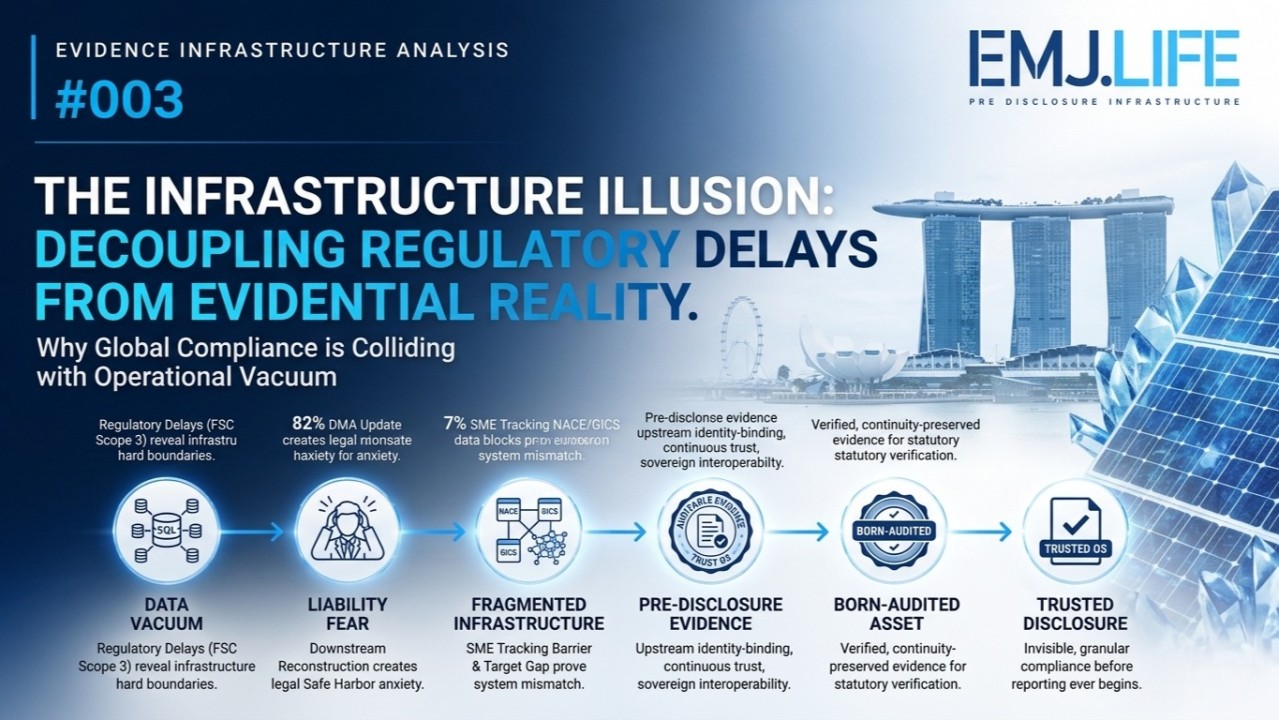
Executive Summary / Lead
EFRAG's 2026 State of Play Report examines 905 third-party assured sustainability statements. Companies identify material topics more readily than they convert priorities into targets, measurement and continuous evidence.
Company & Industry Context
The first ESRS reporting wave spans countries and sectors, providing an important baseline. Reporting, ERP, procurement and supplier-management systems were originally built for different purposes.
Challenge / Why It Matters
Disclosure tools can organise existing information but cannot create missing evidence. When operational data lacks granular identity, context and responsibility, companies rely on aggregation or declarations instead of verifiable execution.
Action / Solution / Implementation
Improvement requires traceable links among material topics, targets, operations, counterparties and responsible actors. Supplier codes should connect to payment, audit and remediation records rather than remain declarations.
Evidence / Results / Impact
The report finds that 81 percent of organisations reference ESG criteria in supplier selection, while only 7 percent disclose specific average payment terms for SMEs. The gap indicates system capability limits.
Industry & Institutional Implications
Institutional attention will shift from more disclosure toward stronger upstream operational evidence. Assurance credibility depends on preserving identity, time, method and responsibility when information is created.
SNN Editorial / Evidence Infrastructure Perspective
SNN editorial analysis: The Credibility Disconnect is EMJ.LIFE's interpretation of EFRAG findings. Reported figures are source facts, while explanations of causes and institutional direction remain editorial analysis.
Future Outlook
Future comparison should examine later reporting cycles, sector variation and system improvements. Human review must confirm the sample, statistical definitions and ESRS context before publication.
Sources, author and editorial responsibility
Source publication: SustainabilityNewsNetwork.net · Original author: Anderson Yu · Original publication date: 2026-07-18
International original and supporting sources
Topic hub: 永續制度與揭露
Translation status: ai-assisted-pending-review