ENGLISH EDITION · 議題探討
Iraya Mangyan REDD+ Programme Protects Forests While Carbon Revenue Remains Pending
A Mindoro programme combines Indigenous patrols, ancestral-domain rights, carbon monitoring and livelihoods across more than 40,000 hectares. Early monitoring gains are reported, while carbon agreements and independent verification remain incomplete.
Executive Summary / Lead
The Mindoro Forest and Biodiversity Conservation Programme combines Indigenous patrols, ancestral-domain rights, carbon monitoring and livelihoods across more than 40,000 hectares, with about 2,500 Iraya Mangyan households in scope.
Company & Industry Context
Led by the Center for Conservation Innovations Philippines, the 2020 to 2049 programme partly covers the Puerto Galera Biosphere Reserve. Its REDD+ design seeks to connect forest protection with community governance.
Challenge / Why It Matters
Protected areas and patrols may not stop logging, mining and encroachment when tenure and livelihood pressure remain unresolved. A carbon programme that advances accounting while delaying benefit sharing can also repeat broken promises to Indigenous people.
Action / Solution / Implementation
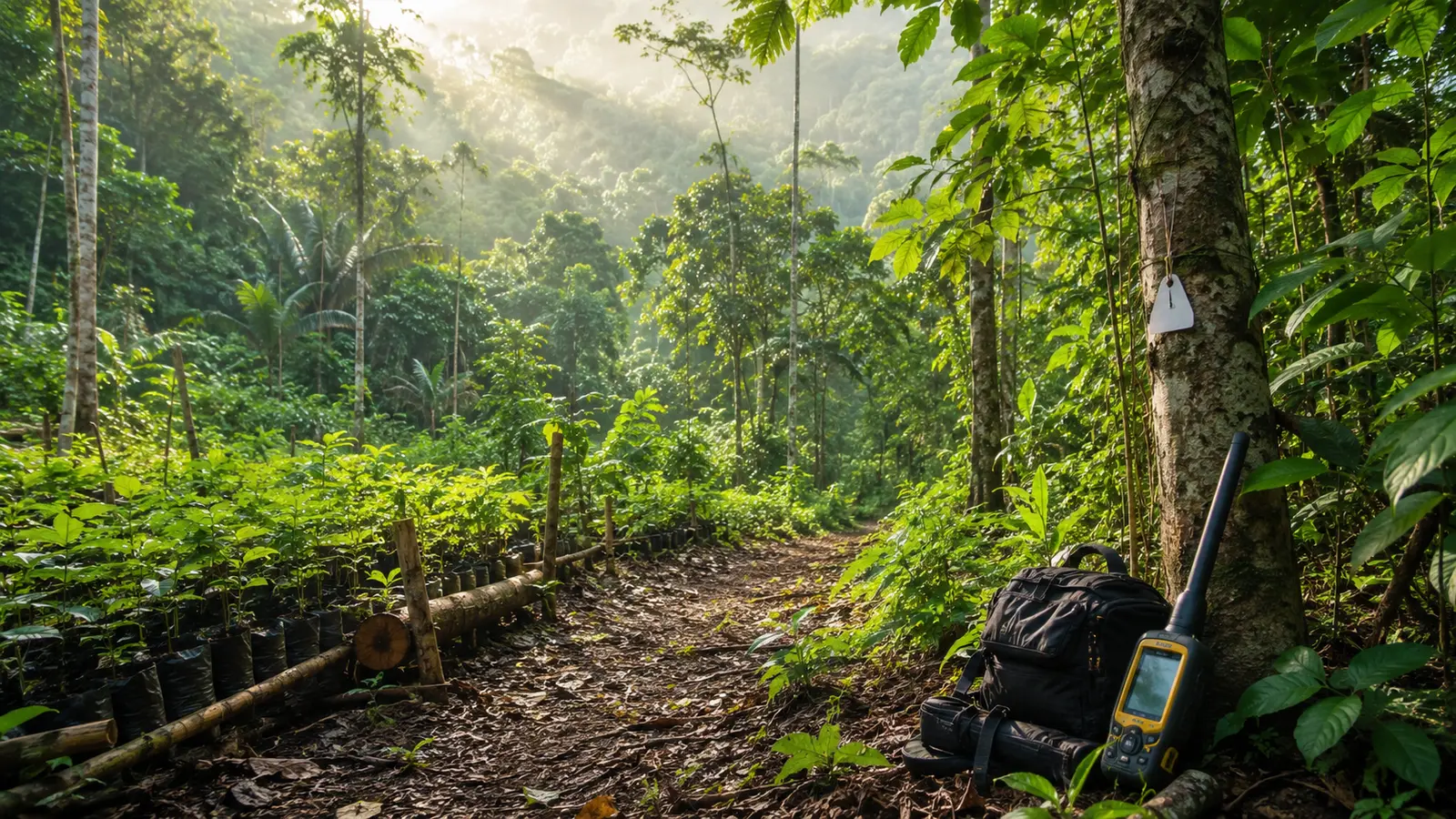
Trained patrollers send geolocated threat reports, community nurseries raise native species and the programme supports delineation of two ancestral domains. It currently employs 108 community members in patrol, nursery and coordination roles.
Evidence / Results / Impact
Local officials report that small-scale mining and timber poaching fell from near-daily events to minimal levels, while surveys recorded 517 species. Two nurseries had produced about 14,000 to 15,000 seedlings by July 2026. These early reported results still need consistent methods and external assurance.
Industry & Institutional Implications
Carbon revenue has not begun, the benefit-sharing agreement is unsigned, and registration and independent verification remain pending. REDD+ governance must therefore evaluate rights, livelihoods, culture, water and carbon together.
SNN Editorial / Pre-Disclosure Evidence Infrastructure Perspective
SNN editorial analysis: Evidence for community nature projects should include free, prior and informed consent, land boundaries, patrol logs, species data, revenue allocation and grievance channels. Forecast carbon income must not be presented as delivered benefit.
Future Outlook
Next checks should cover the benefit-sharing agreement, registration and verification, stable worker income, carbon-revenue timing, community-led governance and long-term forest and water measurements.
Sources, evidence chain and editorial responsibility
Source publication: Mongabay · Original author: Keith Anthony Fabro · Original publication date:
External institutional and reporting sources
These external announcements, rules, studies and reports support the discussion and are displayed separately from the original publication.
- Original publicationMongabayCan REDD+ deliver for Philippines' Iraya Mangyan? ↗Published 2026-08-26 · Accessed 2026-08-28
計畫範圍與參與家庭; 巡護、苗圃與物種調查的早期結果; 利益分享、登錄與查證仍未完成
- External first-party evidenceCenter for Conservation Innovations PhilippinesMindoro Forest and Biodiversity Conservation Programme ↗Published 2024-03-07 · Accessed 2026-08-28
MFBCP 的 REDD+ 設計; 森林、生物多樣性與生計目標; 原住民族與地方社群參與定位
Topic hub: 氣候與能源轉型