ENGLISH EDITION · 全球脈動
MENA Green Hydrogen Links Chinese Technology With Europe but Lacks Firm Buyers
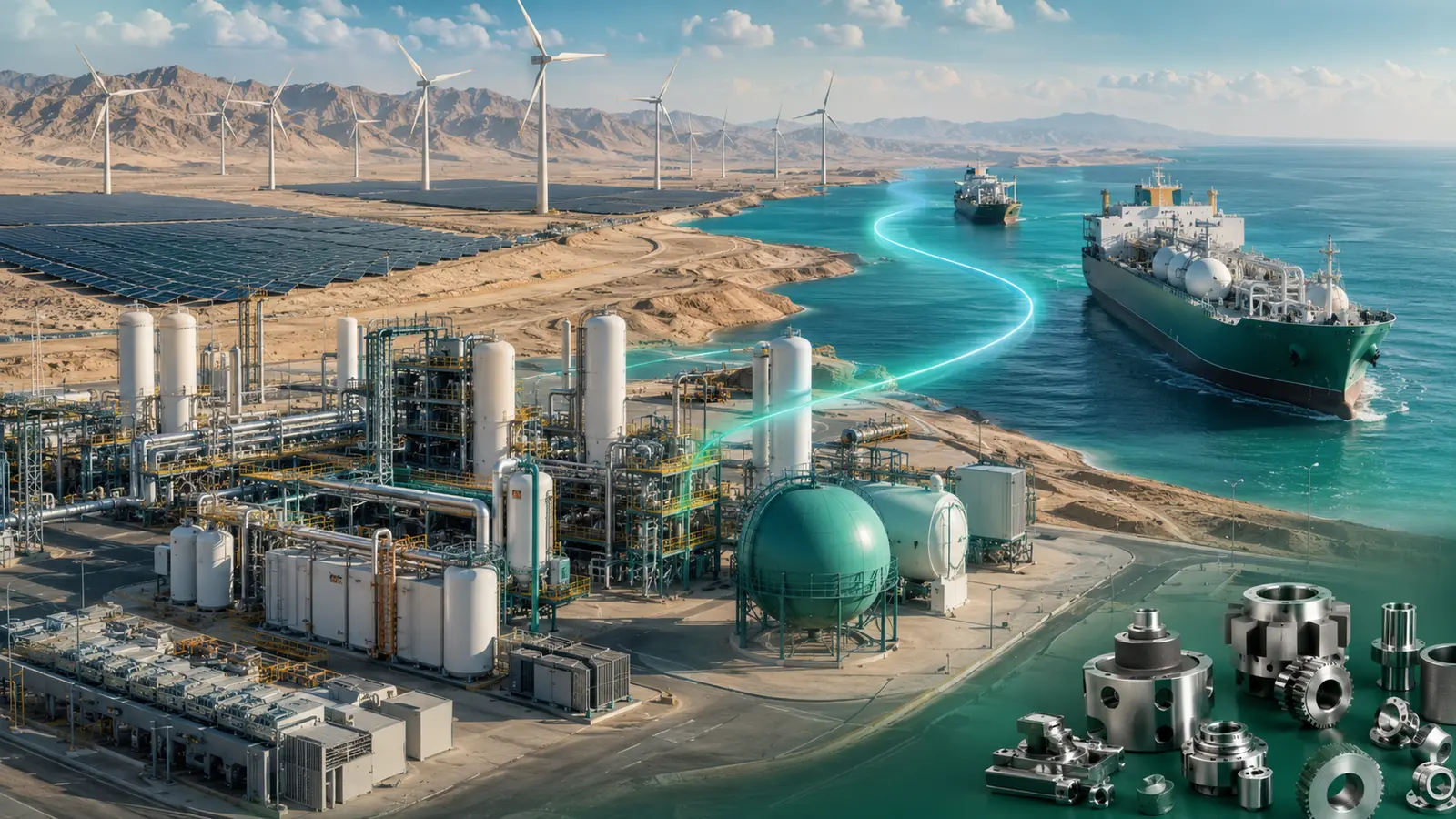
MENA is positioning itself as a green-hydrogen bridge between Chinese engineering and European demand. Only about one-third of more than 1,500 announced hydrogen projects globally have reached final investment decision, with offtake the main constraint.
Executive Summary / Lead
The Middle East and North Africa is using strong solar and wind resources and proximity to Europe to develop green hydrogen, while Chinese equipment and engineering support early construction across a cross-regional supply model.
Company & Industry Context
Hydrogen can serve steel, transport and ammonia, but current production remains dominated by fossil fuels. The source cites IEA data showing that less than one percent is low-emissions, so project labels and actual production methods must remain separate.
Challenge / Why It Matters
MENA projects may access low-cost renewable power and shorter routes to Europe, but hydrogen conversion and transport can lose 40 to 70 percent of energy. Limited domestic demand and reliance on exports make firm long-term buyers central to financing.
Action / Solution / Implementation
Several gigawatt-scale projects target green-hydrogen costs below USD 3 per kilogram. Chinese firms are involved in hydrogen or green-ammonia projects in Saudi Arabia, Morocco and Oman, while Europe expects imports to meet future demand.
Evidence / Results / Impact
DNV data cited by the source shows that only about one-third of more than 1,500 announced hydrogen projects worldwide have reached final investment decision, with weak offtake the most common reason. Cost, capacity and demand estimates are not delivered outcomes.
Industry & Institutional Implications
The model could position MENA as producer and exporter, China as technology and engineering provider, and Europe as buyer. Policy changes, certification, transport losses and price gaps will still determine financeability.
SNN Editorial / Pre-Disclosure Evidence Infrastructure Perspective
SNN editorial analysis: Taiwan companies supplying or buying hydrogen equipment and materials should retain electricity origin, electrolyser efficiency, water use, carbon intensity, certification boundaries, offtake contracts and transport losses. Announced capacity and final investment decision are different evidence states.
Future Outlook
Next checks should follow signed offtake agreements, capacity reaching final investment decision, EU rules, delivered cost, lifecycle emissions and equipment delivery by Chinese companies.
Sources, evidence chain and editorial responsibility
Source publication: Dialogue Earth · Original author: Song Wanyuan · Original publication date:
External institutional and reporting sources
These external announcements, rules, studies and reports support the discussion and are displayed separately from the original publication.
- Original publicationDialogue EarthGreen hydrogen: made in MENA, built with China, sold to Europe? ↗Published 2026-08-24 · Accessed 2026-08-28
MENA、中國與歐洲的供應鏈角色; 承購不足與運輸損耗; 已宣布專案與最終投資決策差距
- External official evidenceInternational Energy AgencyGlobal Hydrogen Review 2026 — Production ↗Published 2026-06-18 · Accessed 2026-08-28
全球氫生產仍由未減排化石燃料主導; 低排放氫產量與專案進度; 需求與監管障礙對投資決策的限制
Topic hub: 永續制度與揭露