ENGLISH EDITION · 全球新聞
Raja Ampat Children Link Island Stewardship With the Nickel-Mining Debate
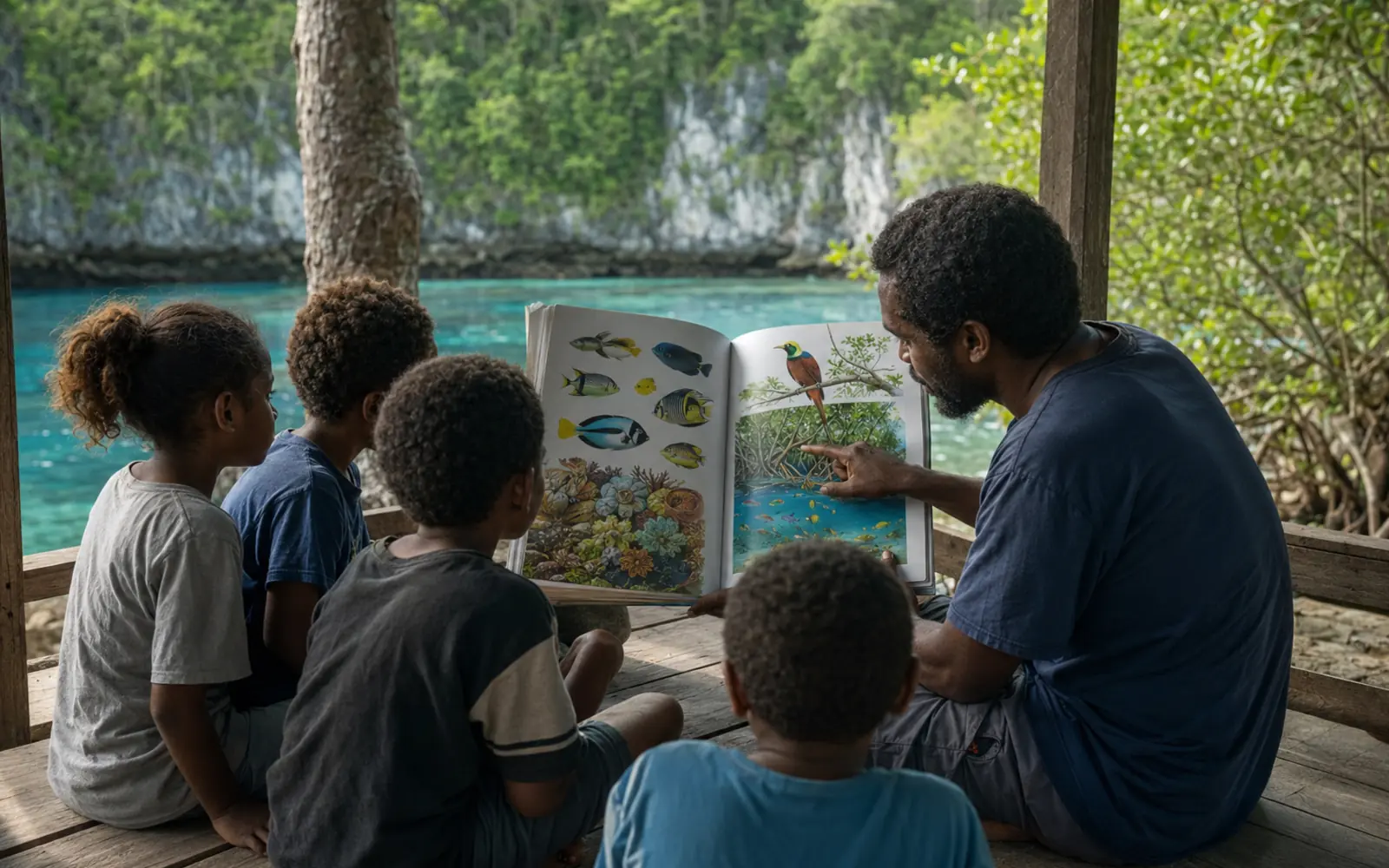
An Indigenous gathering in Raja Ampat used a children's book to connect local ecological knowledge with nickel-mining risks, bringing together representatives of 20 Indigenous subtribes. Long-term conservation outcomes remain to be measured.
Executive Summary / Lead
An Indigenous gathering in Raja Ampat used a children's book to discuss island ecology and nickel-mining risk, with children identifying fish, coral and plants from daily experience.
Company & Industry Context
The event brought together representatives of 20 Raja Ampat Indigenous subtribes and visitors from elsewhere, organised by Greenpeace Indonesia and Institut USBA. The book The Wounds of Small Islands uses disappearing colours to portray potential mining damage.
Challenge / Why It Matters
Raja Ampat lies within the Coral Triangle and has exceptional marine biodiversity. Nickel supply and EV-material demand create economic opportunity, while small-island ecosystems, rights, culture and tourism may carry concentrated risk.
Action / Solution / Implementation
The author and illustrator used local species, experience and storytelling to help children document their environment. The gathering also strengthened connections among communities protecting land, water and biodiversity.
Evidence / Results / Impact
The source reports that after public backlash in 2025, authorities suspended operations and revoked four of five permits. This is evidence of policy action, but the education programme's long-term effect on decisions, mine status or ecological outcomes remains unmeasured.
Industry & Institutional Implications
Environmental education can preserve local species names, locations, seasons and observations as a complement to formal monitoring. It should not be romanticised as a substitute for legal rights, scientific assessment or enforcement.
SNN Editorial / Pre-Disclosure Evidence Infrastructure Perspective
SNN editorial analysis: Taiwan battery and electronics supply chains using Indonesian nickel should connect mine permits, island boundaries, Indigenous rights, restoration and community observations to procurement evidence. Children's and community knowledge requires consent and provenance, not corporate extraction.
Future Outlook
Next checks should follow remaining permits, judicial or government decisions, community consent, environmental monitoring and whether the programme remains community-led.
Sources, evidence chain and editorial responsibility
Source publication: Mongabay · Original author: Hans Nicholas Jong · Original publication date:
Original publication
External institutional and reporting sources
These external announcements, rules, studies and reports support the discussion and are displayed separately from the original publication.
- Mining-risk contextGreenpeace Southeast AsiaA Year After #SaveRajaAmpat, Greenpeace Report Reveals Nickel and Dirty Energy Threats in the Archipelago ↗Published 2026-07-30 · Accessed 2026-08-27
Raja Ampat 採礦許可與供應鏈疑慮; PT Gag Nikel 營運背景; 島嶼生物多樣性與原住民族風險
- Controlled correction recordGreenpeace Southeast AsiaGreenpeace Clarifies Findings on the Raja Ampat’s Nickel Report ↗Published 2026-08-17 · Accessed 2026-08-27
兩項鎳礦與一項煤礦許可敘述更正; 行政法院案件結果更正; 研究版本治理
Topic hub: 企業與供應鏈