
ENGLISH EDITION · 議題探討
Global Hunger Falls to About 645 Million, but Rural Investment Must Link Soil, Land Rights and Markets
A materially updated Eco-Business commentary says about 645 million people faced hunger in 2025, around 14 million fewer than a year earlier. Sustained progress requires investment in soil health, technology, land rights, electricity, cold chains, roads and markets.
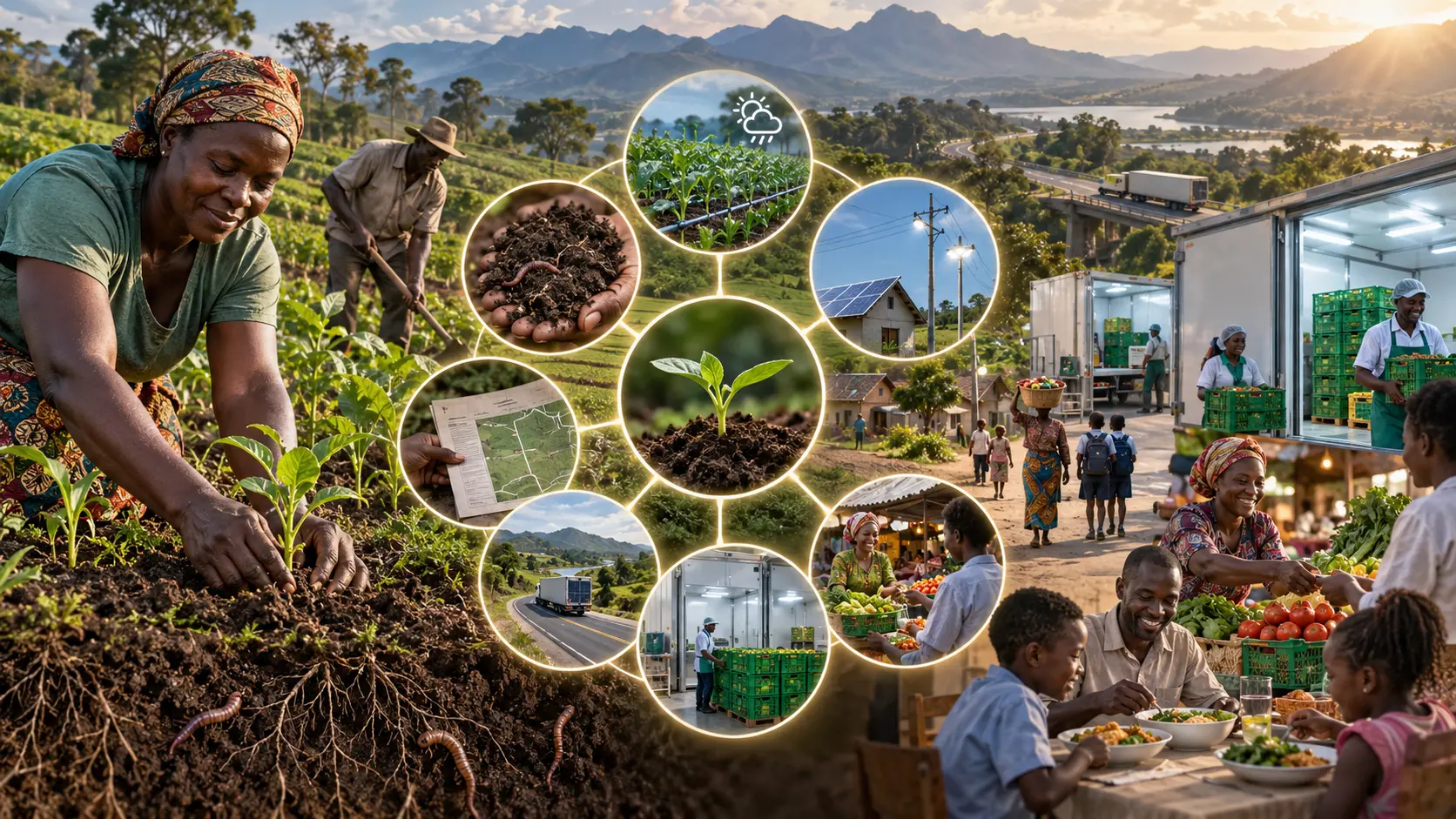
Executive Summary / Lead
Eco-Business published or materially updated this event within the verified scan window. The commentary cites an estimate of about 645 million people facing hunger in 2025, around 14 million fewer than a year earlier, and notes the first decline in Africa in a decade while rural, gender and vulnerability gaps remain.
Company & Industry Context
The author argues against relying on farmland expansion and instead calls for soil health, technology, land rights and public infrastructure. This SNN draft rewrites only source-supported events, figures and entities without reproducing the source article's paragraph structure.
Challenge / Why It Matters
Hunger reflects combined income, productivity, storage, energy, road, market, conflict and climate risks. The central issue is that a commitment, capital allocation or policy label can be mistaken for a completed outcome when its boundary is unclear.
Action / Solution / Implementation
Investment programmes need continuous records for local baselines, beneficiaries, tenure, adoption, loss, prices and nutrition outcomes. Implementation should preserve scope, accountable owner, method version, approval checkpoints and exception handling so a later Source Review can reproduce the decision.
Evidence / Results / Impact
Global estimates and policy arguments support the direction, but do not show that every intervention works equally in every place. The current evidence supports only the disclosed facts and plans. It does not establish that every anticipated benefit has already been achieved.
Industry & Institutional Implications
Rural development measured only by money spent may miss distribution, equity and actual hunger reduction. For markets and institutions, the next step is to convert finance, technology or policy labels into measurable, comparable and traceable operating records.
SNN Editorial / Pre-Disclosure Evidence Infrastructure Perspective
SNN editorial analysis: This event offers governance lessons for Taiwan finance, manufacturing, energy, technology, transport and supply-chain teams. Pre-Disclosure Evidence Infrastructure should use stable identities for the event, asset, contract, supplier and version, then connect source documents, calculation methods, timestamps, accountable owners, approval state, exceptions, corrections and assurance history. For “Global Hunger Falls to About 645 Million, but Rural Investment Must Link Soil, Land Rights and Markets,” an organisation should retain more than a conclusion or news clipping. It should preserve when the source was retrieved, the applicable boundary, base year, denominator, data quality, estimates, measurements, controls and subsequent outcomes. If a Taiwan company relies on the related climate, resilience, nature or investment claim, its board, finance, compliance, procurement, sustainability and internal-audit teams should be able to inspect the same evidence version and see which fields remain unverified, were withdrawn, or were superseded. Supplier data should also show who supplied it, who transformed it, when it was locked and whether system transfers changed units or coverage. This reduces last-minute evidence reconstruction before assurance, prevents commitments from being reported as results and makes exceptions visible instead of hiding them behind one aggregate number. This paragraph is editorial interpretation, not a source-verified fact.
Future Outlook
Future evidence should track rural women, African trends, food loss, incomes, nutrition and attributable investment outcomes. Any later material fact should create a new version while preserving this draft rather than overwriting it.
Sources, evidence chain and editorial responsibility
Source publication: Eco-Business · Original author: Esther Ngumbi · Original publication date:
External institutional and reporting sources
These external announcements, rules, studies and reports support the discussion and are displayed separately from the original publication.
- primary argument and synthesisEco-BusinessTo end global hunger, invest in rural communities ↗Publication date 2026-09-07 · Checked at 2026-09-09 11:18 (UTC+8)
Hunger estimate, rural investment argument and claimed links among soil, rights, infrastructure and markets.
- global outcome baselineFAO, IFAD, UNICEF, WFP and WHOThe State of Food Security and Nutrition in the World 2026 ↗Publication date 2026-07-24 · Checked at 2026-09-09 11:18 (UTC+8)
Authoritative 2025 hunger estimate, regional trends, uncertainty and food-security definitions.
- independent counterargument evidenceFrontiers in Sustainable Food SystemsIs the relationship between agricultural performance and land tenure security uniform across the world? Evidence from meta-analysis ↗Publication date 2026-02-05 · Checked at 2026-09-09 11:18 (UTC+8)
Meta-analytic evidence that tenure effects are positive in some outcomes but heterogeneous and context-dependent.
- independent risk contextWorld BankWhen risks stack up: threats to global food markets in 2026 ↗Publication date 2026-06-16 · Checked at 2026-09-09 11:18 (UTC+8)
Stacked commodity, conflict, logistics and affordability risks that qualify a single-intervention rural investment narrative.
- post-harvest and market-system evidenceFood and Agriculture Organization of the United NationsThe State of Food and Agriculture 2019: Moving forward on food loss and waste reduction ↗Publication date 2019-10-14 · Checked at 2026-09-09 11:18 (UTC+8)
Evidence on food loss, supply-chain stages and the role of storage, transport and market infrastructure.
- distributional and gender countercheckFood and Agriculture Organization of the United NationsThe Status of Women in Agrifood Systems ↗Publication date 2023-04-13 · Checked at 2026-09-09 11:18 (UTC+8)
Evidence on gender gaps in assets, work, services and resilience that qualifies aggregate rural investment claims.
Topic hub: 氣候與能源轉型