
ENGLISH EDITION · 永續學堂
Mazda Tests Sustainable Fuel in Arctic Conditions to Cut Combustion-Engine Emissions
Mazda's cold-weather trial explores whether lower-carbon fuel can reduce emissions from existing combustion-engine vehicles during the transition to electrification.
This English edition is available for independent reading and search discovery.
Executive Summary / Lead
As the global auto industry moves toward net-zero emissions, electric vehicles (EVs) have emerged as the mainstream solution. However, for the vast number of internal combustion engine (ICE) vehicles still on the road, finding effective ways to reduce emissions using existing technology and extending the transition period has become a critical challenge for decarbonizing the transport sector.
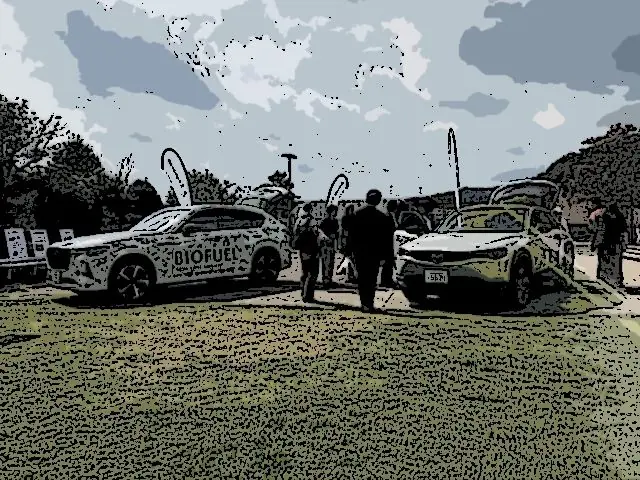
Recently, Mazda launched a highly symbolic initiative in Europe: 12 units of its latest 2.5-liter e-Skyactiv G mild-hybrid CX-30 SUVs completed a grueling journey of over 1,344 miles (approx. 2,160 kilometers), starting from southern Sweden, crossing through Finland, and ending deep within the Arctic Circle in Tromsø, Norway. The entire route was powered solely by 100% second-generation sustainable biofuel - putting ICE decarbonization to the test under real-world extreme conditions.
Company & Industry Context
Arctic Endurance: Stock Vehicles, Real Roads, and -20°C Temperatures
Mazda’s test was not conducted with prototypes or custom-built models, but rather with standard production versions of the CX-30. The only modification was the installation of studded winter tires to handle snow and freezing temperatures. Behind the wheel were professional reviewers, auto journalists, and influencers, simulating real-world driving experiences over a three-day period.
Challenge / Why It Matters
Despite temperatures plummeting to -20°C at times, Mazda reported that the CX-30s averaged over 40 miles per gallon (approximately 17 km per liter). According to official estimates, each vehicle reduced CO₂ emissions by about 317 kilograms during the trip - equivalent to the emissions generated by fully charging an EV approximately 13 times.
From Agricultural Waste to Carbon-Neutral Fuel: The Short Carbon Cycle
The fuel used in the challenge was provided by UK-based SUSTAIN and is classified as a second-generation (advanced) biofuel. Unlike first-generation biofuels made from food crops like corn or palm oil, this fuel is derived from agricultural waste - such as straw and plant residues - avoiding conflict with food production and allowing for localized sourcing and production.
Action / Solution / Implementation
The science behind it is simple: the plants used to make the fuel have already absorbed CO₂ from the atmosphere during their growth. When the fuel is burned, the same carbon is released back, resulting in net-zero carbon emissions - a key reason this fuel is considered "carbon neutral." This differs fundamentally from fossil fuels, which release ancient carbon from underground into the atmosphere.
David Richardson, Managing Director of SUSTAIN, remarked, “Sustainable fuels aren’t just a substitute for gasoline - they’re one of the most immediately viable carbon reduction solutions for the millions of internal combustion vehicles still on the road.”
Mazda Europe: Not Everyone Can Drive EVs - ICE Vehicles Can Also Transition Sustainably
As EVs surge in popularity, Mazda has chosen a different path, promoting what it calls a "multi-solution strategy." Rather than betting solely on electric cars, Mazda continues to optimize ICE technologies, explore hydrogen fuels, and support sustainable fuel applications.
Jeremy Thomson, Managing Director of Mazda UK, emphasized, “We believe the transition to cleaner transportation shouldn’t be a one-size-fits-all approach. Many regions still lack full charging infrastructure, and many consumers can’t afford higher-priced EVs.”
Evidence / Results / Impact
He revealed that Mazda is actively developing algae-based fuels, synthetic fuels, and biofuels in Japan and has officially joined the eFuel Alliance in Europe - alongside Porsche, Audi, and Airbus - to jointly advocate for low-carbon synthetic fuel policies.
Policy Momentum: EU, Japan, and G7 Support Sustainable Fuel R&D and Regulation
With net-zero targets approaching, countries around the world are increasingly integrating sustainable fuels into policy and regulatory frameworks:
While EVs are seen as the end goal, the general consensus across the industry is that a combination of short- and medium-term decarbonization strategies - including CCUS (carbon capture, utilization, and storage), alternative fuels, and ICE retrofits - will be needed to achieve interim milestones.
Analysis: Carbon-Neutral Transport Is Not a One-Way Street - ICE Vehicles Have a Role to Play
Mazda’s Arctic challenge underscores the untapped potential of combining sustainable fuels with existing ICE technology. Today, there are still over 1.3 billion gasoline vehicles on the road globally. Even if all new car sales were electric starting today, it would take decades to fully phase them out. Under these realities, enabling "existing vehicles" to join the decarbonization journey is becoming a key transition strategy.
Industry & Institutional Implications
As SUSTAIN’s CEO put it: “This isn’t about opposing EVs - it’s about expanding the range of immediate, practical carbon-reduction tools. We need to play every card we’ve got.”
For the industry, sustainable fuels are more than just a technical alternative - they represent a systemic shift involving supply chain restructuring and policy coordination. From sourcing agricultural waste, to refining, distribution, and upgrading fueling stations, a multi-sector effort is required. Consumer awareness, acceptance, and cost sensitivity will also influence how quickly the market adapts.
SNN Editorial / Pre-Disclosure Evidence Infrastructure Perspective
Conclusion: What’s the Next Step?
Mazda’s Arctic expedition opens the door to bigger questions: Can we build regional low-carbon fuel supply chains? Can ICE vehicles be extended by 10 years instead of being scrapped? Can we establish a dual-track decarbonization model alongside EVs?
Future Outlook
The next decade will be a critical experimentation period for global transportation energy transitions. This long journey, powered by agricultural waste and engineered by Mazda, may be the perfect example of how a multi-technology approach can bring us closer to net zero.
Sources, evidence chain and editorial responsibility
Topic hub: 氣候與能源轉型