
永續學堂
材料發現研究院開發水資源新解方:從乾燥空氣中提取飲用水
雖然位於伊利諾州斯科基市的實驗室距離非洲沙漠數千英里,材料發現研究院(MDRI)的首席研究科學家提穆爾.伊斯拉莫魯(Timur Islamoglu)每天思考的卻是如何在這些乾旱地區找到足夠的水源。
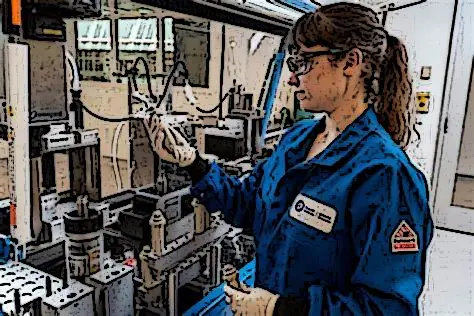
Chief research scientist Timur Islamoglu is deeply focused on one pressing question: how can we harvest water from the air in the driest places on Earth
While the labs of the Materials Discovery Research Institute (MDRI) sit thousands of miles from the deserts of Africa, chief research scientist Timur Islamoglu is deeply focused on one pressing question: how can we harvest water from the air in the driest places on Earth?
重點摘要
Executive Summary / Lead雖然位於伊利諾州斯科基市的實驗室距離非洲沙漠數千英里,材料發現研究院(MDRI)的首席研究科學家提穆爾.伊斯拉莫魯(Timur Islamoglu)每天思考的卻是如何在這些乾旱地區找到足夠的水源。
伊斯拉莫魯正致力於開發一種具有特定特性的材料,可從乾燥空氣中擷取水分,轉化為可持續的飲用水來源,尤其針對相對濕度低於30%的乾旱地區。「這些地區最迫切需要這類技術,因為氣候變遷將加劇乾旱、減少降雨,使得尋找替代水源變得更加迫切,」他表示。
While the labs of the Materials Discovery Research Institute (MDRI) sit thousands of miles from the deserts of Africa, chief research scientist Timur Islamoglu is deeply focused on one pressing question: how can we harvest water from the air in the driest places on Earth?
Islamoglu and his team are developing a novel class of materials capable of capturing moisture from extremely arid air - particularly in regions where relative humidity falls below 30%. “These areas are on the front lines of climate change. As droughts worsen and rainfall declines, the need for alternative water sources is becoming urgent,” he explains.
企業與產業背景
Company & Industry Context這項研究屬於材料發現研究院(MDRI)的核心任務,該機構隸屬於美國UL研究院(UL Research Institutes)旗下,2022年成立,並於2024年9月啟用配備尖端自動化合成與數據採集技術的實驗室。MDRI聚焦於應對氣候變遷與能源儲存挑戰,致力於研發乾淨飲用水、移除過剩碳排,以及開發更高效的氫能源生產與儲存方式。
Founded in 2022 under the umbrella of UL Research Institutes, MDRI officially opened its state-of-the-art lab in September 2024. Equipped with automated synthesis tools and real-time data acquisition technologies, MDRI is tackling some of the most complex sustainability challenges of our time - ranging from water security and carbon removal to next-generation hydrogen energy storage.
挑戰與重要性
Challenge / Why It MattersMDRI副總裁暨執行長史都華‧米勒(Stuart Miller)表示:「全世界每個人都應該享有安全飲水的權利,而提供廉價電力則能有效改善貧困問題。我們面臨的最大挑戰是:如何在不增加碳排放的情況下做到這一切?材料創新將是關鍵。」
數位優先的材料創新策略
自工業革命以來,人類已開發出大量石化基材料以建構現代生活。但隨著化石燃料排碳造成氣候危機、全球人口預計在2050年代逼近100億,米勒強調,我們必須擺脫石油依賴,尋找替代材料。而透過傳統試錯法來開發新材料將耗費大量時間與資源,「我們沒有再等170年的本錢。」
“Everyone deserves access to safe drinking water. And affordable electricity can transform lives in low-income regions,” says Stuart Miller, MDRI’s Vice President and Executive Director. “But how do we achieve this without increasing carbon emissions? The answer lies in material innovation.”
Digital-First: A Radical Approach to Materials Discovery
Since the Industrial Revolution, petrochemical-based materials have enabled modern life. But as fossil-fuel-driven emissions worsen the climate crisis - and global population heads toward 10 billion by the 2050s - Miller warns that the era of oil dependency must end.
“We can’t afford to spend another 170 years on trial-and-error material development,” he says.
MDRI adopts a “digital-first” strategy that merges the expertise of materials scientists and chemists with robotic automation and AI. Their lab features nanoprinting machines capable of simultaneous catalyst generation and deposition, integrated with sensors that collect environmental data (e.g., humidity), which is fed into machine learning models to rapidly identify and optimize promising compounds.
行動、方案與執行
Action / Solution / Implementation因此,MDRI採取所謂的「數位優先」(digital-first)策略,整合材料科學家與化學家的專業知識,自動化的化學合成設備、能同時進行奈米粒子催化劑生成與沉積的奈米印刷機,以及多種感測器來收集實驗數據(如濕度)並導入機器學習模型,以加快材料篩選與優化速度。
在缺水地區,伊斯拉莫魯團隊正研究一種具微孔結構的材料,模仿海綿從低濕度空氣中吸收水分。為達成這項目標,材料需兼具數個條件:孔隙要夠小以捕捉水分子、不能太防水(疏水性太強會排斥水氣)、也不能吸水太緊,否則需高溫(攝氏200-300度)才能釋放水分,導致高昂能耗與成本。
不同氣候條件對吸水材料的孔隙結構也有不同需求,因此針對各類濕度環境進行適配性研究,也是MDRI的重要研究方向。聯合國近期報告指出,即便在美國與歐洲等開發國家,未來也可能面臨嚴重水資源短缺,尤其農業需大量用水,而氣候變遷也正在改變降雨模式。
將水與碳變資源,氫能接力減碳
類似結構的材料也可用於碳捕捉技術,從空氣或工業排放中直接吸收二氧化碳,再將其轉化為無害物質或用來製造石化產品,減少對原油的依賴。此類用途更重視材料的化學組成,以利與二氧化碳產生選擇性作用。
For dry regions, Islamoglu’s team is investigating micro-porous materials that mimic a sponge, absorbing water vapor even in low humidity. But these materials must meet delicate design criteria: pores must be small enough to trap moisture, not overly hydrophobic, and capable of releasing water without extreme heat - ideally far below 200–300°C, which would be energy- and cost-prohibitive.
Because different climates demand tailored pore structures, climate-specific adaptation is a key research direction. According to recent UN reports, even developed regions like the U.S. and Europe may face severe water scarcity in the future, driven by changing rainfall patterns and agricultural demand.
Turning Water and Carbon Into Resources - Hydrogen as a Clean Energy Bridge
Interestingly, materials similar to those used for water harvesting can also be adapted for carbon capture - absorbing CO₂ directly from air or emissions streams and converting it into stable compounds or synthetic fuels, reducing our reliance on crude oil. These applications depend more on chemical selectivity to target CO₂ molecules.
證據、成果與影響
Evidence / Results / Impact另一項減碳手段是使用氫燃料電池產生能源。MDRI首席科學家吳傑夫(Jeff Wu)正致力於開發更高效的電解催化劑,以分解水分子生成氫氣與氧氣。目前主流電解槽依賴昂貴稀有金屬,如鉑與釕。吳嘗試以更便宜、地球儲量豐富的金屬如鐵、鎳、銅取而代之。
吳也希望未來能以伊斯拉莫魯團隊開發的微孔材料作為氫氣儲存解方,並運用奈米印刷機加速開發可用於燃料電池的新型催化劑,提升發電效率。這些能量可再儲存在流體電池中,這類儲能系統使用液體溶劑,不僅比鋰電池便宜,也更安全。
吳強調,他們的目標不只停留在實驗室模擬階段,而是打造實際運作的原型機,如氫燃料電池、電解槽、流體電池等裝置,最大達千瓦級,並在現實環境中接受嚴苛測試,包括溫度變化、負載變動及濕度條件。
未來實驗室:人機協作的材料發現平台
Another key path to decarbonization lies in hydrogen fuel cells. MDRI chief scientist Jeff Wu is developing high-efficiency electrolytic catalysts to split water into hydrogen and oxygen. Current systems rely on rare, expensive metals like platinum and ruthenium. Wu’s team is exploring earth-abundant alternatives like iron, nickel, and copper.
Looking ahead, Wu envisions using Islamoglu’s microporous materials for hydrogen storage, and employing nanoprinting to prototype next-gen catalysts for fuel cells - boosting performance and affordability. These hydrogen systems could be paired with flow batteries, which store energy in liquid solvents, offering a safer and cheaper alternative to lithium-ion batteries.
“Our goal isn't just simulation - we’re building working prototypes at the kilowatt scale,” Wu says. “We want to test these technologies under real-world conditions: temperature shifts, humidity fluctuations, and variable load demands.”
The Future Lab: A Human-AI Collaboration Platform
To accelerate development, MDRI’s Director of Computational Science, Varinia Bernales, is spearheading high-throughput computational models that use machine learning to predict material properties - dramatically reducing time-consuming simulations and lab work.
產業與制度意涵
Industry & Institutional Implications為加速新材料研發,MDRI的計算組主管瓦瑞妮亞.貝納雷斯(Varinia Bernales)負責開發高通量運算模型,透過機器學習來預測材料特性,大幅減少傳統繁複模擬與實驗程序。
她目前與西北大學與多倫多大學合作,尋求能有效從礦石中選擇性提取稀土元素的解方。稀土金屬廣泛應用於電子產品、LED與燃料添加劑,但其開採過程對水源污染極具風險。
多倫多大學的合作者艾倫.阿斯普魯—古茲克(Alán Aspuru-Guzik)指出,若能成功解決這一問題,將為永續採礦與供應鏈穩定鋪路。
She is collaborating with Northwestern University and University of Toronto to develop selective extraction methods for rare earth elements, which are essential for electronics, LEDs, and fuel additives - but whose mining processes threaten local water systems.
Professor Alán Aspuru-Guzik of the University of Toronto notes, “Solving this challenge could unlock sustainable mining and secure global supply chains.”
SNN 編輯與揭露前證據基礎設施觀點
SNN Editorial / Pre-Disclosure Evidence Infrastructure Perspective貝納雷斯表示,未來實驗室將結合實驗、計算與機器人技術,由機器人負責大量樣品合成工作,讓科學家有更多時間思考創新問題。「這將是未來的實驗室樣貌。」
Bernales envisions the future lab as a seamless integration of computation, experimentation, and robotics. “Robots will handle the repetitive sample synthesis. Scientists will focus on the big questions. This is what the lab of the future looks like.”
A Generational Mission for a Sustainable Future
While MDRI aims to move fast toward prototype development and commercialization, Miller emphasizes that solving the world’s grand sustainability challenges is not a sprint:
未來展望
Future OutlookMDRI執行長米勒也強調,他們希望快速推進原型開發與商品化進程,但也不指望短期內解決所有永續挑戰。「這是一個世代任務。我們這一代要建構出知識基礎與研發架構,而真正能解決問題的人,現在還在學校學習。」
“This is a generational mission. Our job is to build the scientific foundation and research infrastructure. The people who will truly solve these problems are still in school today.”
來源、證據鏈與責任編輯
主題中心:企業與供應鏈
SNN.TW 原始刊登紀錄 ↗