
全球脈動
2025年1月創史上最熱紀錄:全球暖化加劇,拉尼娜降溫效應失靈
2025年1月成為有紀錄以來最熱的1月,全球平均氣溫較工業化前水準高出1.7°C,創下歷史新高。氣候學家原本預期,由於2024年底「厄爾尼諾」(El Niño)減弱並轉為「拉尼娜」(La Niña),全球氣溫應會略微下降,但實際數據顯示,全球暖化趨勢已壓倒自然氣候變化,科學家憂心極端氣候將進一步惡化。
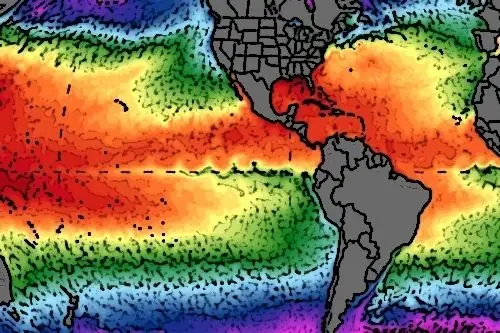
January 2025 Becomes the Hottest January on Record, Global Average Temperature Surpasses Pre-Industrial Levels by 1
January 2025 Becomes the Hottest January on Record, Global Average Temperature Surpasses Pre-Industrial Levels by 1.7°C
重點摘要
Executive Summary / Lead2025年1月成為有紀錄以來最熱的1月,全球平均氣溫較工業化前水準高出1.7°C,創下歷史新高。氣候學家原本預期,由於2024年底「厄爾尼諾」(El Niño)減弱並轉為「拉尼娜」(La Niña),全球氣溫應會略微下降,但實際數據顯示,全球暖化趨勢已壓倒自然氣候變化,科學家憂心極端氣候將進一步惡化。
January 2025 Becomes the Hottest January on Record, Global Average Temperature Surpasses Pre-Industrial Levels by 1.7°C
Climate scientists had initially expected global temperatures to decrease slightly as the El Niño phenomenon weakened at the end of 2024 and transitioned into La Niña. However, actual data shows that global warming trends have overridden natural climate variations, raising concerns among scientists that extreme weather events will worsen.
企業與產業背景
Company & Industry Context拉尼娜降溫效應減弱 全球暖化趨勢未受抑制
拉尼娜現象是「厄爾尼諾-南方振盪」(ENSO)的一部分,通常會導致東太平洋水溫下降,進而影響全球大氣循環,使全球平均氣溫下降約0.1°C至0.2°C。然而,科學家發現,2024年全球氣候從中等強度的厄爾尼諾轉為弱拉尼娜,但這次的拉尼娜未能明顯降低全球氣溫,顯示氣候變遷的影響已超越自然氣候規律。
La Niña's Cooling Effect Weakens, Global Warming Continues Unabated
La Niña is part of the El Niño-Southern Oscillation (ENSO) and typically causes sea surface temperatures in the eastern Pacific to drop, which in turn affects global atmospheric circulation and lowers the global average temperature by about 0.1°C to 0.2°C. However, scientists have observed that while the global climate shifted from a moderate El Niño to a weak La Niña in 2024, this transition failed to significantly lower global temperatures, indicating that climate change has surpassed the influence of natural climate patterns.
挑戰與重要性
Challenge / Why It Matters根據美國國家海洋和大氣管理局(NOAA)及歐洲中期天氣預報中心(ECMWF)數據,2025年1月,全球海洋表面溫度仍高於歷史平均水準,意味著即便進入拉尼娜階段,地球仍持續升溫,未見降溫跡象。
海洋持續升溫 改變全球氣候模式
長期研究顯示,受人為因素影響,海洋變暖速度正在加快,使全球溫度升幅逐年擴大,並逐步超越了自然氣候變遷的影響。即使在拉尼娜期間,全球海洋溫度仍異常偏高,尤其是北大西洋和印度洋的部分海域,水溫持續創新高。
According to data from the U.S. National Oceanic and Atmospheric Administration (NOAA) and the European Centre for Medium-Range Weather Forecasts (ECMWF), global sea surface temperatures in January 2025 remained above historical averages. This suggests that even with the onset of La Niña, the planet continues to warm, showing no signs of cooling.
Oceans Continue to Warm, Altering Global Climate Patterns
Long-term research indicates that human-induced ocean warming is accelerating, causing global temperature increases to outpace the influence of natural climate variations. Even during La Niña periods, global ocean temperatures remain abnormally high, particularly in parts of the North Atlantic and Indian Ocean, where record-breaking sea surface temperatures persist.
行動、方案與執行
Action / Solution / Implementation最新衛星監測數據顯示,儘管2025年1月赤道東太平洋的海水溫度略有下降,但全球其他海域仍維持高溫狀態。這導致全球大氣環流模式發生變化,影響了全球風場分布、降水模式,甚至進一步推動極端氣候事件的發生。
此外,大氣中的二氧化碳(CO₂)濃度仍持續上升。理論上,拉尼娜會促進植物生長,提高大氣中二氧化碳的吸收能力,進而略微降低氣溫,但2024年和2025年1月的數據顯示,全球二氧化碳濃度依舊維持高水平,顯示人為排放仍然超過自然吸收能力,導致全球暖化效應未見減緩。
污染減少與全球變暖的意外關聯
Latest satellite monitoring data reveals that while sea surface temperatures in the equatorial eastern Pacific slightly declined in January 2025, other oceanic regions remained excessively warm. This has led to changes in global atmospheric circulation patterns, affecting wind fields, precipitation distribution, and contributing to the increase in extreme weather events.
Additionally, atmospheric carbon dioxide (CO₂) levels continue to rise. In theory, La Niña promotes plant growth, which enhances CO₂ absorption and slightly lowers temperatures. However, data from late 2024 and January 2025 indicates that global CO₂ concentrations remain at high levels, suggesting that human emissions still exceed natural absorption capacities, thereby maintaining the warming trend.
The Unexpected Link Between Reduced Pollution and Global Warming
Scientists point to another potential driver of global warming: changes in the “climate reflection effect” due to reduced air pollution.
證據、成果與影響
Evidence / Results / Impact科學家指出,全球變暖的另一個推動因素可能來自空氣污染減少所造成的「氣候反射效應」變化。
過去,工業活動產生的大量氣溶膠(懸浮微粒)能夠在大氣中形成霧霾,部分陽光被反射回太空,使地表溫度略微降低。然而,隨著全球推行環保政策及清潔能源發展,空氣污染程度降低,使得大氣層對太陽輻射的反射能力減弱,導致地球吸收更多熱量,進一步加劇全球暖化趨勢。
這一現象在過去十年中逐漸顯現,特別是2020年COVID-19疫情期間,由於全球封鎖措施,工業活動大幅減少,空氣質量明顯改善,但全球氣溫卻沒有下降,反而持續上升,顯示污染減少與全球變暖之間的微妙關聯。
In the past, industrial activities produced large amounts of aerosols (suspended particles), which created atmospheric haze that reflected some sunlight back into space, slightly reducing surface temperatures. However, with the global push for environmental policies and cleaner energy, air pollution levels have declined, weakening the atmosphere’s ability to reflect solar radiation. As a result, the Earth absorbs more heat, further intensifying global warming trends.
This phenomenon has become more evident over the past decade, particularly during the COVID-19 pandemic in 2020, when lockdowns significantly reduced industrial activity and improved air quality. Despite this, global temperatures did not decrease but continued to rise, highlighting the complex relationship between reduced pollution and global warming.
產業與制度意涵
Industry & Institutional Implications極端氣候現象頻發 科學家發出警告
2025年1月,全球多地氣溫異常飆升。
科學家警告,雖然單一月份的氣溫創紀錄不一定代表長期趨勢,但這顯示拉尼娜等自然降溫機制正在變得越來越無力,難以抵消人類活動導致的氣候變遷影響。若全球碳排放量無法迅速下降,未來高溫紀錄將不斷被打破,極端氣候事件將愈發頻繁,影響全球糧食安全與生態系統穩定。
Frequent Extreme Weather Events Raise Scientists' Alarm
January 2025 saw unprecedented temperature anomalies worldwide:
Scientists warn that while a single month's record-breaking temperature does not necessarily indicate a long-term trend, it suggests that natural cooling mechanisms like La Niña are becoming increasingly ineffective in counteracting human-induced climate change. If global carbon emissions do not decline rapidly, new heat records will continue to be set, and extreme weather events will become more frequent, jeopardizing global food security and ecological stability.
SNN 編輯與揭露前證據基礎設施觀點
SNN Editorial / Pre-Disclosure Evidence Infrastructure Perspective全球應對氣候變遷刻不容緩
這一連串的氣候變化再次凸顯減少溫室氣體排放的迫切性。
Urgency of Global Climate Action
These climate changes underscore the urgent need to reduce greenhouse gas emissions.
未來展望
Future Outlook科學家強調,若不採取積極行動,全球暖化趨勢將難以逆轉,人類將面臨更嚴峻的氣候挑戰。各國政府、企業與個人需攜手合作,減少碳排放,以確保地球環境的永續發展。
Scientists emphasize that without decisive action, reversing global warming trends will become increasingly difficult, and humanity will face more severe climate challenges. Governments, corporations, and individuals must work together to cut carbon emissions and ensure the long-term sustainability of the planet.
來源、證據鏈與責任編輯
主題中心:氣候與能源轉型
SNN.TW 原始刊登紀錄 ↗