
議題探討
當證據變得可執行:歐盟公共採購法提案如何把證據轉為決策基礎設施
EIA-015 分析歐盟公共採購法提案中的數位企業憑證、電子資格服務、語意互通與採購資料空間,說明證據如何進入制度決策,以及台灣產業應如何管理主體、版本、有效期、撤銷與責任邊界。
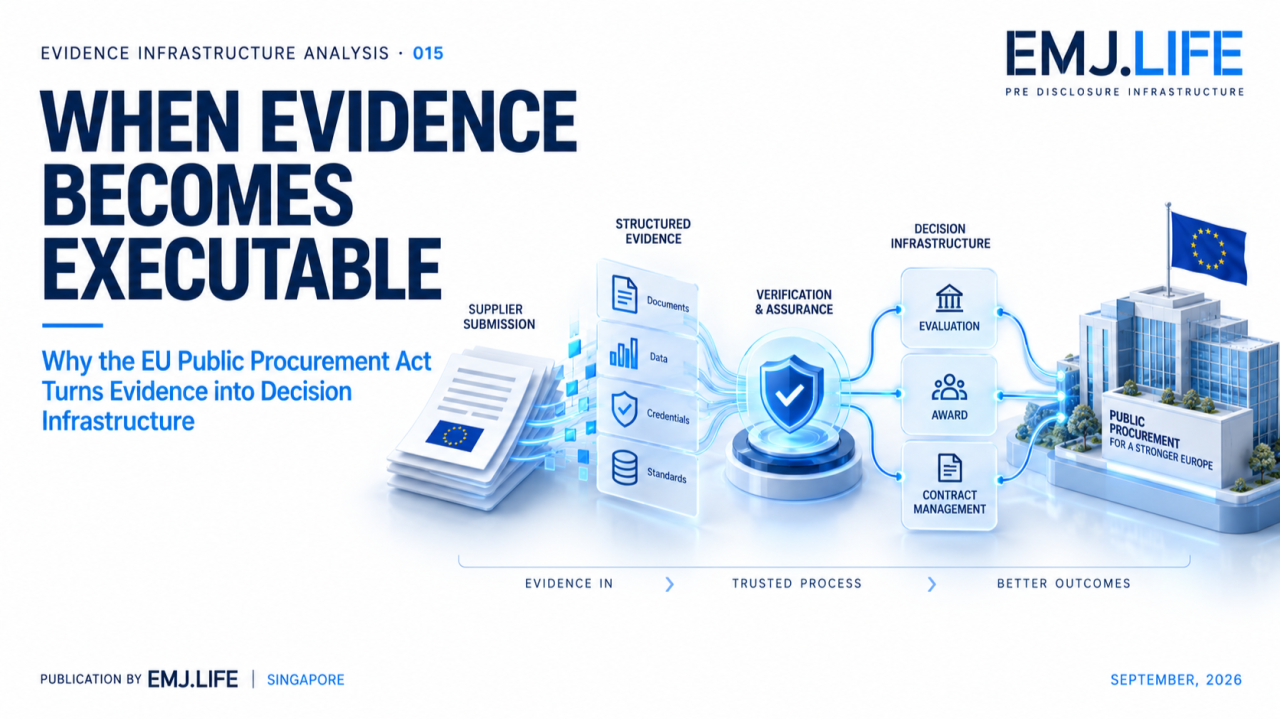
When Evidence Becomes Executable: How the Proposed EU Public Procurement Act Turns Evidence into Decision Infrastructure
EIA-015 examines digital business credentials, electronic eligibility, semantic interoperability and procurement data spaces in the proposed EU Public Procurement Act, showing how evidence enters institutional decisions and what Taiwan industries need to govern before reuse.
重點摘要
Executive Summary / LeadEvidence Infrastructure Analysis 015 追問一個比文件數位化更深的問題:當證據不只被人閱讀,而能由系統直接檢索、驗證、判定狀態並推動採購程序時,證據會如何成為決策基礎設施。分析起點是歐盟執委會在 2026 年 9 月 9 日提出的 Public Procurement Act 提案。該提案試圖以單一規則取代三套 2014 年採購指令,並提出互通網路、協調語意標準、數位企業憑證、電子資格服務、一次提供原則,以及歐盟與國家採購資料空間。 這些設計把採購的基本路徑從「提交文件,由承辦人閱讀」推向「形成結構化證據,由系統查詢與驗證,再把狀態交給具權限的決策者」。EIA-015 將此路徑表示為 Evidence Formation → Structured Representation → Credential → Retrieval → Verification → Eligibility State → Institutional Decision。關鍵不在自動化速度,而在每一次狀態轉換能否保留來源權威、主體綁定、有效期間、語意、驗證結果、用途限制與稽核軌跡。 本篇所稱 Executable Evidence、Evidence Execution Governance 與 Decision Infrastructure,是 EMJ.LIFE 的獨立分析用語,不是歐盟執委會提案中的法定術語,也不表示提案已成為生效法律。可執行證據不是讓 AI 自主作成採購決定,而是讓受治理、可驗證的證據狀態,依預先定義的規則觸發、限制或暫停一項制度工作流。
Evidence Infrastructure Analysis 015 asks a question deeper than document digitisation: what happens when evidence is no longer only read by people, but can be retrieved, verified, assigned a state and used by a system to advance or constrain a procurement procedure? The immediate institutional reference is the European Commission proposal for a Public Procurement Act published on 9 September 2026. The proposal would replace three 2014 procurement directives with a single regulation and introduces an interoperability network, harmonised semantic standards, digital business credentials, an electronic eligibility service, the once-only principle, and Union and national public procurement data spaces. These designs move procurement from a document-submission model toward a governed state-transition model. The operational sequence becomes Evidence Formation → Structured Representation → Credential → Retrieval → Verification → Eligibility State → Institutional Decision. The policy value does not arise merely from faster automation. It depends on whether every transition retains source authority, binding to the correct company or product, temporal validity, stable semantics, verification results, permitted use, prohibited claims and an auditable history. Executable Evidence, Evidence Execution Governance and Decision Infrastructure are independent EMJ.LIFE analytical terms used in this edition. They are not legal terms adopted by the European Commission, and their use does not imply that the proposal has been enacted. Executable Evidence does not mean that an AI system makes an autonomous procurement award. It means that structured, connected and governed evidence, when verified into an authorised state, may trigger, constrain or pause a defined institutional workflow while accountable people retain the decision authority assigned by law and procedure.
企業與產業背景
Company & Industry ContextEIA-002 已把公共採購界定為證據基礎設施問題:採購要求不是在招標公告出現時才開始,而是由資格、產品、來源、履約、環境與社會證據能否在生命週期中形成、更新、交換與查驗所決定。EIA-015 接續這個分析,但把焦點從「證據是否存在」移到「已驗證狀態是否能參與決策」。EIA-002 因此列為本篇的前序來源資料,不是獨立外部驗證。 歐盟現行採購架構以 2014/24/EU 等指令為基礎,由會員國轉置;2026 年提案則擬整併公共合約、公用事業採購與特許經營規則為一項可直接適用的 Regulation。提案仍須經歐洲議會與理事會立法程序,最終文字、實施時程與技術規格均可能改變。可確認的制度方向,是執委會把採購簡化、策略性採購、第三國市場准入、數位互通與採購全生命週期資料放在同一改革架構中。 這個方向並非從零開始。eForms 已把採購公告定義成可由軟體產生的結構化欄位;European Single Procurement Document 允許企業以標準自我聲明初步證明排除與遴選條件;Public Procurement Data Space 以資料來源、語意整合、分析與使用者介面四層連接 TED 與國家資料。新提案進一步把 digital business credentials、company profiles 與 electronic eligibility service 放入共同數位生態系,使資格證據可能在不同程序間被重用。 採購因而成為 Evidence → Verification → Decision 的制度鏈。文件仍可存在,但治理單位需要管理的是文件所承載的可計算狀態:誰簽發、綁定哪個企業或產品、適用哪個期間、依哪個版本判定、何時失效、哪個採購程序可以使用,以及何種變更會要求重新驗證。
EIA-002 framed public procurement as an evidence-infrastructure problem. Procurement requirements do not begin when a notice is published. They depend on whether eligibility, product, origin, performance, environmental and social evidence can be formed, maintained, exchanged and verified across a lifecycle. EIA-015 continues that argument but changes the focal question from whether evidence exists to whether a verified evidence state can participate in a decision. EIA-002 is therefore preserved as analytical predecessor and source data. It is not counted as independent external validation. The present EU procurement framework is built on instruments including Directive 2014/24/EU, implemented through national law. The 2026 proposal would consolidate rules for public contracts, utilities procurement and concessions into a directly applicable regulation. It remains a Commission proposal subject to the European Parliament and Council legislative process. Final provisions, implementation dates, delegated measures and technical specifications can change. What the official materials establish now is the direction of travel: simplification, strategic procurement, third-country access, digital interoperability and full-lifecycle procurement data are being addressed within one reform architecture. That direction builds on existing components. eForms represent procurement notices as structured fields designed for software generation. The European Single Procurement Document provides a standardised preliminary self-declaration for exclusion and selection conditions. The Public Procurement Data Space connects source data, semantic integration through the eProcurement ontology, analytics and client access. The new proposal places digital business credentials, company profiles and an electronic eligibility service within a common ecosystem so that eligibility evidence could be retrieved and reused across procedures. Procurement can therefore be understood as an Evidence → Verification → Decision chain. Documents may remain, but the controlled object becomes the computable state carried by a document or credential: who issued it, which company, facility or product it binds to, what period it covers, which rule version was applied, when it expires, which procurement procedure may use it and which change requires re-verification.
挑戰與重要性
Challenge / Why It Matters第一項挑戰是把結構化誤認為真實。欄位完整、格式有效或憑證可讀,只能證明資料符合技術條件,不能單獨證明其內容正確、最新或適用。若供應商把錯誤排放數據轉成合格憑證,系統可能更快速、更一致地重複使用同一錯誤。自動驗證因此必須區分 syntax validation、issuer validation、subject binding、temporal validity 與 substantive verification。 第二項挑戰是 once-only 原則的有效期間。企業只提供一次資料可以降低行政負擔,但「建立一次」不能變成「永久有效」。稅務狀態、制裁名單、所有權、產品證書、環境績效、財務能力、分包商與實際履約狀況都會變動。合理治理應是 establish once, verify appropriately, reuse under controlled validity,亦即一次形成、依風險重新查驗、在受控有效期內重用。 第三項挑戰是語意漂移。相同欄位名稱可能在不同國家、產業或程序中代表不同法律判準;同一證據物件也可能只支撐資格預審,不能支撐得標、付款或績效結論。若系統把 technical interoperability 當成 legal equivalence,資料跨境移動時就會改變主張邊界。語意標準必須連同法源、方法、版本與可用決策節點一起保存。 第四項挑戰是責任分配。當資格狀態由多個登錄、憑證與規則引擎組合而成,錯誤可能來自簽發機構、供應商、資料空間、採購平台、驗證服務或採購機關。治理設計需要回答誰可發布狀態、誰可撤銷、誰承擔更新義務、誰覆核例外,以及爭議時能否重建完整路徑。自動化沒有消除責任,只是把責任移到更早的資料形成與規則設定階段。 第五項挑戰是把 Eligibility State 誤寫成 Institutional Decision。符合資格不等於最優投標,不被排除不等於履約能力已受保證,通過環境標準也不等於生命週期影響最低。系統可以限制不合格路徑、提示缺漏或提供排序所需證據,但採購機關仍須依適用規則、比例原則、競爭與程序正義作成決定。
The first challenge is confusing structure with truth. Complete fields, a valid format or a readable credential establish technical conformity, not substantive accuracy, currency or applicability. If a supplier converts an incorrect emissions value into a technically valid credential, an automated ecosystem can reuse the error faster and more consistently. Verification must therefore distinguish syntax validation, issuer validation, subject binding, temporal validity and substantive verification. The second challenge concerns the validity period of once-only evidence. Asking a company to provide information once can reduce administrative burden, but establish once cannot mean valid forever. Tax standing, sanctions, ownership, product certificates, environmental performance, financial capacity, subcontractors and delivery performance all change. A safer operating principle is: establish once, verify appropriately, reuse under controlled validity. The re-verification interval should reflect risk, legal effect and the volatility of the underlying fact. The third challenge is semantic drift. The same field name can represent different legal tests across countries, sectors or stages. The same evidence object may support preliminary eligibility but not award, payment or performance. If technical interoperability is treated as legal equivalence, a claim can change as data moves across borders. Semantic standards must therefore travel with legal authority, method, version, applicable decision node and claims boundary. The fourth challenge is responsibility. An eligibility state may be assembled from registries, credentials, data spaces, procurement platforms and verification services. An error may originate with the issuer, supplier, data intermediary, rules engine or contracting authority. Governance must identify who can publish, correct or revoke a state; who has a duty to update it; who reviews exceptions; and whether a contested decision can be reconstructed. Automation does not remove responsibility. It relocates responsibility into earlier evidence-formation and rule-setting stages. The fifth challenge is turning Eligibility State into Institutional Decision. Eligible does not mean best tender. Not excluded does not guarantee performance capacity. Passing an environmental condition does not establish the lowest lifecycle impact. A system may block an invalid route, flag missing evidence or supply inputs to an evaluation, but the contracting authority must still decide under applicable rules, proportionality, competition and procedural fairness.
行動、方案與執行
Action / Solution / Implementation可執行證據的最小治理模型需要八項條件。Evidence Identity 為每個證據物件提供穩定識別;Source Authority 保存簽發者與法定或契約權限;Subject Binding 把證據綁定到正確企業、設施、產品、批次或人員;Temporal Validity 記錄生效、到期、撤銷與查核時間;Semantic Stability 鎖定欄位定義、分類與方法版本;Verification State 區分未查核、機器驗證、人工覆核、爭議與失效;Decision Binding 限定證據可影響哪個程序節點;Auditability 保存取得、轉換、查詢、規則執行與人工介入。 一筆可執行證據紀錄至少應包含 evidence_id、issuer_id、subject_id、evidence_type、schema_version、method_version、effective_from、effective_until、verification_method、verification_state、permitted_decisions、prohibited_claims、revocation_endpoint、decision_owner 與 provenance_log。資料的每次更正或撤銷應新增事件與版本,不得覆寫歷史狀態。系統應能回答某次投標截止當下看見了哪個版本,而不是只顯示今天的最新值。 工作流可分為七步。第一,企業或權威來源形成證據;第二,把內容轉成受控結構;第三,由具權限機構簽發或背書憑證;第四,採購平台依程序與主體檢索;第五,驗證服務檢查簽章、來源、有效期與必要條件;第六,規則引擎產生 eligibility state;第七,採購機關依權限作成、拒絕或升級制度決定。任何一步缺少主體綁定、版本、期限或權限時,正確結果應是 Hold 或 Escalate,不是由 AI 補出最接近答案。 Decision Binding 是防止過度自動化的核心。一項證據可被授權觸發「接受進入資格審查」,卻不得自動觸發「判定得標」;可把過期證書標示為待補件,卻不得推定供應商欺詐;可依契約條件暫停付款,卻仍需保留通知、申復與覆核程序。每一條規則都應同時保存觸發條件、禁止推論、例外權限、人工覆核責任與驗證時點。 在生命週期中,Eligibility、Tender、Award、Contract、Performance、Monitoring 與 System-Level Analysis 需要不同證據。資格階段重視主體與排除條件;評選階段需要技術與價格可比性;履約階段需要交付、驗收、來源與績效紀錄;付款階段需要契約里程碑與授權;系統分析則需要去識別、可比較且保留資料品質限制的整體資料。上游證據可重用,但每個下游節點都必須重新確認用途權限。
A minimum governance model for executable evidence requires eight conditions. Evidence Identity gives each object a stable reference. Source Authority records the issuer and the statutory, regulatory or contractual basis for its role. Subject Binding connects the evidence to the correct enterprise, facility, product, batch or individual. Temporal Validity records effective date, expiry, revocation and verification time. Semantic Stability locks the field definition, classification and method version. Verification State distinguishes unverified, machine-validated, human-reviewed, disputed, expired and revoked states. Decision Binding specifies which procedural node the evidence is authorised to influence. Auditability preserves acquisition, transformation, query, rule execution and human intervention. An implementable record should include evidence_id, issuer_id, subject_id, evidence_type, schema_version, method_version, effective_from, effective_until, verification_method, verification_state, permitted_decisions, prohibited_claims, revocation_endpoint, decision_owner and provenance_log. A correction or revocation should append an event and create a new version rather than overwrite the earlier state. The system must be able to answer what a contracting authority saw at a past tender deadline, not only show the latest value today. The workflow can be divided into seven steps. First, an enterprise or authoritative source forms evidence. Second, the information is represented in a controlled structure. Third, an authorised body issues or attests a credential. Fourth, the procurement platform retrieves it for a defined procedure and subject. Fifth, a verification service checks signature, authority, validity and necessary conditions. Sixth, a rules engine produces an eligibility state. Seventh, the contracting authority makes, refuses or escalates an institutional decision under its assigned powers. If identity, version, validity or authority is missing, the correct result is Hold or Escalate, not an AI-generated nearest answer. Decision Binding prevents excessive automation. Evidence may be authorised to trigger admission into an eligibility review but not to trigger award. An expired certificate may trigger a request for supplementation but not a fraud finding. A contract milestone may suspend payment under defined conditions while notification, challenge and review rights remain available. Every executable rule should retain its trigger, prohibited inference, exception authority, review owner and verification point. Different lifecycle stages require different evidence. Eligibility emphasises identity and exclusion conditions. Tender and award need comparable technical and price evidence. Contract performance needs delivery, acceptance, origin and outcome records. Payment requires authorised milestones and approvals. Monitoring and system-level analysis require comparable data with disclosed quality limits. Upstream evidence may be reused, but every downstream node must re-check authority for the intended use.
證據、成果與影響
Evidence / Results / Impact本篇證據鏈分為三層。第一層是 sustainabilitynewsnetwork.net 的 EIA-015 正式原文,用來確認系列身分、作者、發布日期、原始分析與用語邊界;它是同步來源,不計入外部證據。第二層是 EIA-002「When Procurement Becomes an Evidence Infrastructure Problem」,用來保存前序分析與問題設定;因同屬系列出版,它只作為來源資料,不計入 15 筆獨立外部來源。 第三層共 19 筆外部官方來源。歐盟執委會的 Public Procurement Act 提案頁、COM(2026) 590 主文、附件、subsidiarity grid、impact assessment、executive summary、新聞稿與問答,分別支撐提案狀態、改革選項、數位生態系、電子資格、憑證與資料空間設計。這些紀錄出自同一改革程序,雖可作為不同證據物件,不應被描述成 8 個彼此獨立的制度背書。 現行 2014/24/EU、eForms 2019/1780、ESPD 2016/7 與 PPDS Communication 支撐既有採購、結構化公告、自我聲明、once-only 與資料空間背景。European Court of Auditors、Council of the EU、European Parliament 與執委會 2025 evaluation 支撐競爭減弱、複雜性、跨境參與、策略性採購與監測缺口的改革背景。WTO GPA 支撐國際採購市場准入邊界;台灣 Government Procurement Act 支撐台灣採購機關、外國供應商、技術規格、公告與電子投標的現行法制基線。 每筆來源都保存標題、機構、角色、出版日期、查核日期時間與支撐範圍。來源支撐的是法源、提案內容、既有制度與跨境基線,不表示任何機構採納 Executable Evidence、Evidence Execution Governance、Decision Infrastructure 或本篇對台灣市場的編輯分析。
The evidence chain has three layers. The first is the canonical EIA-015 publication on sustainabilitynewsnetwork.net. It establishes series identity, author, publication date, original analysis and terminology boundary. It is the synchronisation source and is not counted as external evidence. The second is EIA-002, When Procurement Becomes an Evidence Infrastructure Problem. It preserves the analytical predecessor and problem definition. Because it is part of the same publication series, it is source data and not part of the mandatory count of independent external sources. The third layer contains 19 official external records. The European Commission proposal landing page, COM(2026) 590, its annexes, subsidiarity grid, impact assessment, executive summary, press release and questions-and-answers support the proposal status, policy options, common digital ecosystem, electronic eligibility, credentials and data-space architecture. These are distinct evidence objects within one reform process. Their number must not be misrepresented as eight institutionally independent endorsements. Directive 2014/24/EU, eForms Regulation 2019/1780, the 2016 European Single Procurement Document and the PPDS Communication support the current procurement, structured-notice, self-declaration, once-only and data-space background. Records from the European Court of Auditors, Council of the EU, European Parliament and the Commission's 2025 evaluation support the reform context concerning competition, complexity, cross-border participation, strategic procurement and monitoring. The WTO Agreement on Government Procurement supports the international market-access boundary. Taiwan's Government Procurement Act supports the domestic baseline for procurement entities, foreign suppliers, technical specifications, notices and electronic tendering. Every evidence record preserves title, institution, source role, publication date, access date and time, and claims supported. The sources support legal authority, proposal content, existing infrastructure and cross-border context. They do not show institutional adoption of Executable Evidence, Evidence Execution Governance or Decision Infrastructure, and they do not independently validate this edition's Taiwan market interpretation.
產業與制度意涵
Industry & Institutional Implications對採購機關而言,制度能力會從管理檔案轉為管理證據狀態與決策權限。承辦人需要知道系統為何顯示 eligible、pending、expired 或 revoked,並能在同一介面回到簽發來源、規則版本與查核時間。採購平台的品質不再只看上線率與欄位完整度,也要看錯誤狀態能否被撤銷、爭議能否被處理、以及人工決定能否被稽核。 對供應商而言,競爭能力會逐步包含 evidence readiness。公司若能持續維護法人、所有權、財務、產品、環境、社會、資安、來源與履約證據,可能降低重複填表;但若資料缺少穩定主體識別、版本與有效期,數位化可能使缺口更快暴露。中小企業需要可負擔的憑證與更正機制,否則高度自動化反而可能形成新的進入障礙。 對軟體、資料與確信服務提供者而言,市場將需要 credential issuer、schema registry、verification service、revocation service、provenance ledger 與 human review console 等功能。技術供應商不得把規則引擎輸出包裝成法律意見;確信服務也需要清楚界定它驗證的是內容、控制、簽章、來源或特定決策用途。 對治理與稽核而言,真正的控制標的是 Evidence → Verification → Decision 之間的每次狀態轉換。內稽與外部查核應抽樣測試錯誤資料、過期憑證、撤銷事件、主體錯綁、規則更新與人工例外,確認系統會停止、留痕並通知責任人。高自動化若沒有可逆性與申復程序,只會把單點錯誤放大為制度排除。
For contracting authorities, institutional capability shifts from managing files to managing evidence states and decision authority. Procurement staff need to know why a system displays eligible, pending, expired or revoked and must be able to navigate to the issuer, rule version and verification time. Platform quality is no longer measured only by uptime and field completion. It also depends on whether an erroneous state can be revoked, a dispute can be processed and a human decision can be audited. For suppliers, competitiveness increasingly includes evidence readiness. A company that continuously maintains legal-entity, ownership, financial, product, environmental, social, cybersecurity, origin and performance evidence may reduce repetitive submissions. A company whose information lacks stable identity, version and validity may see gaps exposed more quickly. Small and medium-sized enterprises need affordable credential, correction and appeal mechanisms; otherwise automated eligibility can create a new barrier to entry. For software, data and assurance providers, the market may require credential issuers, schema registries, verification and revocation services, provenance ledgers and human-review consoles. A technology provider must not package a rules-engine state as legal advice. An assurance provider must define whether it verified content, controls, signature, source authority or suitability for a particular decision. For governance, internal audit and external review, the control object is every transition between Evidence, Verification and Decision. Testing should include incorrect data, expired credentials, revocation, subject mismatch, rule change and human exception. A reliable system stops, records and alerts an accountable owner when a condition fails. Automation without reversibility and challenge rights can turn a single error into an institutional exclusion.
SNN 編輯與揭露前證據基礎設施觀點
SNN Editorial / Pre-Disclosure Evidence Infrastructure PerspectiveSNN editorial analysis:2026 年歐盟執委會提出以單一 Public Procurement Act Regulation 取代三套 2014 採購指令,並新增共同數位生態系、digital business credentials、electronic eligibility service、協調語意標準及歐盟與國家採購資料空間;這項歐洲制度變動若經立法與技術規格落地,將透過歐洲公共買方的資格欄位、跨國客戶與系統商的供應商契約、出口投標文件、銀行融資條件及確信程序傳導,具體轉化為台灣電子、半導體、醫療設備、交通、能源與數位服務市場對法人身分、產品來源、環境績效、資安、有效期、撤銷狀態及履約紀錄的結構化資料要求。這條「外部制度變動、傳導機制、台灣市場影響」鏈不是說歐盟提案已直接成為台灣法律,也不表示台灣企業已被普遍要求使用歐盟憑證,而是指出參與歐洲採購或其供應鏈的台灣業者,可能先在商業資格、投標介面與查核成本上感受到制度傳導。 台灣電子與半導體供應商應在每次歐洲客戶資格更新前保存適用規則版本、供應商合約、工廠與產品主檔、憑證有效期及撤銷查詢紀錄,並由法遵與業務負責人共同核對可支撐的投標主張。台灣銀行應在每次採購相關授信或履約保證核發前驗證企業資格資料、合約文件、制裁與所有權查核結果及其查核日期,並保存採用或拒絕該證據的決策日誌。台灣公共採購機關與系統商應在每次資格規則或資料交換格式改版後測試主體綁定、過期憑證、撤銷通知、人工申復與稽核紀錄,只有測試結果經責任單位簽核後才可更新正式規則。 揭露前證據基礎設施(Pre-Disclosure Evidence Infrastructure)可把企業、設施、產品、批次、憑證、方法、有效期、合約、履約與人工決定連成同一可追溯鏈,讓同一證據在投標、融資、客戶問卷與永續揭露間重用時仍保留用途邊界。對台灣市場的具體價值不是追求更多數位欄位,而是降低重複提交、避免失效證據持續流通、縮短資格爭議定位時間,並讓中英文投標與揭露指向同一受治理證據狀態。 台灣企業可先以一個歐洲客戶、一項產品與一個採購程序建立小型測試,區分 machine-verifiable、human-reviewed、expired、revoked 與 disputed 狀態,並測量補件率、錯誤拒絕率、重新驗證時間與申復完成時間。此段為 SNN.TW editorial interpretation,不是歐盟或台灣主管機關已驗證的市場事實,也不構成法律、投標、融資或確信意見。
SNN editorial analysis: On 9 September 2026, the European Commission proposed replacing three 2014 procurement directives with a single Public Procurement Act regulation and introducing a common digital ecosystem, digital business credentials, an electronic eligibility service, harmonised semantic standards, and Union and national procurement data spaces. If this European institutional change survives legislation and technical implementation, it can transmit through eligibility fields used by European public buyers, supplier contracts imposed by multinational customers and systems integrators, export tender documentation, bank financing conditions and assurance procedures. It can then translate into concrete structured-data requirements in Taiwan's electronics, semiconductor, medical-device, transport, energy and digital-service markets for legal identity, product origin, environmental performance, cybersecurity, validity, revocation and contract-performance records. This complete institutional-change, transmission-mechanism and Taiwan-market-impact chain does not mean that the Commission proposal has directly become Taiwan law, and it does not establish that Taiwan enterprises are already subject to a universal EU credential requirement. It identifies a plausible commercial and operational transmission path for Taiwan suppliers participating in European procurement or its supply chains. Before each European customer eligibility update, a Taiwan electronics or semiconductor supplier should retain the applicable rule version, supplier contract, facility and product master data, credential validity and revocation-query record, and compliance and sales owners must verify the tender claims supported by those objects. Before each procurement-related credit or performance-guarantee decision, a Taiwan bank should verify the enterprise eligibility data, contract document, sanctions and ownership result and verification timestamp, and it must preserve the decision log explaining acceptance or rejection of that evidence. After each eligibility-rule or exchange-schema update, a Taiwan contracting authority or systems provider should test subject binding, expired credentials, revocation alerts, human appeal and audit records, and the responsible department must approve the test result before production deployment. Pre-Disclosure Evidence Infrastructure can connect enterprises, facilities, products, batches, credentials, methods, validity periods, contracts, performance and human decisions on one traceable chain. When the same evidence is reused across tendering, finance, customer questionnaires and sustainability disclosure, its permitted use and claims boundary remain visible. The concrete value for Taiwan is not a larger number of digital fields. It is lower duplicate-submission cost, fewer expired records circulating as current, faster diagnosis of eligibility disputes, and Chinese and English outputs that refer to the same governed evidence state. A Taiwan enterprise can begin with one European customer, one product and one procurement procedure. It can distinguish machine-verifiable, human-reviewed, expired, revoked and disputed states and measure supplementation rate, false rejection, re-verification time and appeal completion time. This paragraph and section are SNN.TW editorial interpretation, not an EU or Taiwan authority's verified market finding, and they do not constitute legal, tendering, financing or assurance advice.
未來展望
Future Outlook後續最重要的觀察點是提案在歐洲議會與理事會協商後保留哪些數位架構、第三國規則、歐洲偏好、綠色採購與資料治理條款。只有提案編號與發布日期不足以判斷最終義務;研究必須追蹤修正案、最終 Regulation、適用日、授權與實施法案、共同規格、憑證信任清單、撤銷機制、資料空間接入及救濟程序。 實作可進行四類壓力測試。第一,讓有效憑證在決策前失效,確認系統停止並通知。第二,把正確憑證綁到錯誤法人或產品,確認 subject binding 能阻擋。第三,變更 schema 或規則版本,確認歷史決策仍可重建。第四,讓供應商提出爭議與補件,確認人工覆核不會覆寫原始紀錄。 EIA-015 的核心不是預測所有採購都會由機器決定,而是指出證據一旦能執行,就需要比文件管理更嚴格的權限、時效、語意與問責。真正成熟的 Decision Infrastructure 應能加快可重複的查驗,同時在證據不足、狀態衝突或權限不明時可靠地停止。
The next observation point is the legislative negotiation. Research should track which provisions on the digital ecosystem, third-country access, European preference, green procurement and data governance remain after the European Parliament and Council process. A proposal number and publication date do not establish a final obligation. The evidence record needs amendments, the final regulation, application dates, delegated and implementing acts, common specifications, credential trust lists, revocation mechanisms, data-space access and remedies. Implementation should also be stress-tested. First, allow a credential to expire immediately before a decision and confirm that the workflow stops and alerts the owner. Second, bind a valid credential to the wrong company or product and confirm that subject binding blocks it. Third, change a schema or rule version and confirm that historical decisions remain reconstructable. Fourth, let a supplier challenge and supplement a record and confirm that human review appends a new event rather than erasing the original state. EIA-015 does not predict that machines will make every procurement decision. It shows that once evidence can participate in execution, authority, time, semantics, reversibility and accountability must be governed more strictly than ordinary document storage. A mature Decision Infrastructure accelerates repeatable verification while reliably stopping when evidence is insufficient, states conflict or authority is unclear.
來源、證據鏈與責任編輯
來源媒體:sustainabilitynewsnetwork.net · 原文作者:Anderson Yu · 原文發布:
外部論述與制度來源
以下外部公告、法規、研究或新聞用於支撐本文論述,並與原始出版分開呈現。
- canonical EIA-015 source publication and analytical boundarysustainabilitynewsnetwork.net / EMJ.LIFEWhen Evidence Becomes Executable ↗出版日期 2026-09-15 · 查核時間 2026-09-15 17:59 (UTC+8)
Canonical series identity, original English analysis, author, publication date and terminology boundary.
- EIA-002 source data and analytical predecessor; not independent external validationsustainabilitynewsnetwork.net / EMJ.LIFEWhen Procurement Becomes an Evidence Infrastructure Problem ↗出版日期 2026-07-14 · 查核時間 2026-09-15 17:59 (UTC+8)
Supports the predecessor analysis that public procurement depends on operational evidence formation, maintenance, exchange and verification.
- Primary institutional proposal recordEuropean Commission, DG GROWProposal for a regulation on public contracts and concessions ↗出版日期 2026-09-09 · 查核時間 2026-09-15 17:59 (UTC+8)
Supports identification COM(2026) 590 and the proposal status, scope, author and publication date.
- Primary proposed legal and architecture sourceEuropean CommissionCOM(2026) 590: Proposal for a Regulation on public contracts and concessions ↗出版日期 2026-09-09 · 查核時間 2026-09-15 17:59 (UTC+8)
Supports the proposed single regulation, digital ecosystem, electronic eligibility, business credentials, semantic standards, data spaces, strategic procurement and third-country provisions.
- Primary proposed technical and legal annex sourceEuropean CommissionCOM(2026) 590 Annexes 1-8 ↗出版日期 2026-09-09 · 查核時間 2026-09-15 17:59 (UTC+8)
Supports definitions, schedules and detailed annex material accompanying the proposed Public Procurement Act.
- Primary subsidiarity and proportionality sourceEuropean CommissionSWD(2026) 590 Subsidiarity grid ↗出版日期 2026-09-09 · 查核時間 2026-09-15 17:59 (UTC+8)
Supports the Commission's subsidiarity, EU-level action and proportionality rationale for the proposal.
- Primary policy-options and impact sourceEuropean CommissionSWD(2026) 591 Impact assessment ↗出版日期 2026-09-09 · 查核時間 2026-09-15 17:59 (UTC+8)
Supports the problem definition, baseline, policy options and assessed effects behind the procurement reform.
- Primary impact-assessment summary sourceEuropean CommissionSWD(2026) 592 Executive summary of the impact assessment ↗出版日期 2026-09-09 · 查核時間 2026-09-15 17:59 (UTC+8)
Supports the concise intervention logic, expected objectives and stated digital fragmentation problem.
- Official policy announcement sourceEuropean Commission Press CornerPublic Procurement Act: Commission proposes simpler, more digital and strategic EU rules ↗出版日期 2026-09-09 · 查核時間 2026-09-15 17:59 (UTC+8)
Supports the Commission announcement, proposal status and stated simplification, digitisation and strategic-procurement objectives.
- Official explanatory sourceEuropean Commission Press CornerQuestions and answers on the Public Procurement Act ↗出版日期 2026-09-09 · 查核時間 2026-09-15 17:59 (UTC+8)
Supports the Commission's explanatory boundary for the proposal, its procedures, digital elements and intended implementation.
- Primary data-space architecture sourceEuropean Commission, DG GROWThe Public Procurement Data Space ↗出版日期 2024-09-24 · 查核時間 2026-09-15 17:59 (UTC+8)
Supports the PPDS launch, voluntary connection and four-layer source, integration, analytics and client architecture.
- Primary PPDS policy sourceEuropean Commission / EUR-LexPublic Procurement: A data space to improve public spending, boost data-driven policy-making and improve access to tenders for SMEs ↗出版日期 2023-03-16 · 查核時間 2026-09-15 17:59 (UTC+8)
Supports the procurement data-space policy, interoperability, analytics and SME-access context.
- Primary current procurement-law sourceEuropean Union / EUR-LexDirective 2014/24/EU on public procurement ↗出版日期 2014-03-28 · 查核時間 2026-09-15 17:59 (UTC+8)
Supports the existing EU public procurement framework, electronic communication, selection, exclusion and award structure.
- Primary structured-notice sourceEuropean Union / EUR-LexCommission Implementing Regulation (EU) 2019/1780 establishing eForms ↗出版日期 2019-10-25 · 查核時間 2026-09-15 17:59 (UTC+8)
Supports software-generated standard procurement notices, structured fields, data reuse and the once-only design direction.
- Primary electronic self-declaration sourceEuropean Union / EUR-LexCommission Implementing Regulation (EU) 2016/7 establishing the European Single Procurement Document ↗出版日期 2016-01-06 · 查核時間 2026-09-15 17:59 (UTC+8)
Supports the standardised preliminary self-declaration for exclusion grounds and selection criteria.
- Independent EU audit-context sourceEuropean Court of AuditorsSpecial report 28/2023: Public procurement in the EU ↗出版日期 2023-12-04 · 查核時間 2026-09-15 17:59 (UTC+8)
Supports the evidence on reduced competition, single bidding, direct awards, SME participation, cross-border participation and monitoring weaknesses.
- Independent institutional reform-context sourceCouncil of the European UnionCouncil conclusions on the European Court of Auditors' report on public procurement ↗出版日期 2024-05-24 · 查核時間 2026-09-15 17:59 (UTC+8)
Supports the Council response to the audit findings and its call for an EU-wide strategic action plan.
- Independent parliamentary reform-context sourceEuropean ParliamentEuropean Parliament resolution on public procurement ↗出版日期 2025-09-09 · 查核時間 2026-09-15 17:59 (UTC+8)
Supports Parliament's position on simplifying, modernising and using procurement strategically while preserving competition and access.
- Primary evaluation-context sourceEuropean Commission, DG GROWCommission publishes evaluation of EU Public Procurement Directives ↗出版日期 2025-10-14 · 查核時間 2026-09-15 17:59 (UTC+8)
Supports findings on complexity, flexibility, competition, cross-border participation and uneven strategic procurement.
- Primary international market-access sourceWorld Trade OrganizationAgreement on Government Procurement ↗出版日期 2014-04-06 · 查核時間 2026-09-15 17:59 (UTC+8)
Supports the international procurement market-access, non-discrimination, transparency and procedural framework relevant to covered procurement.
- Primary Taiwan procurement-law sourceLaws & Regulations Database of the Republic of China (Taiwan) / Public Construction CommissionGovernment Procurement Act ↗出版日期 2019-05-22 · 查核時間 2026-09-15 17:59 (UTC+8)
Supports Taiwan's current procurement-entity, foreign-supplier, technical-specification, notice, electronic tender and review baseline.