
ENGLISH EDITION · 全球新聞
Trump Order Challenges State-Level Climate Laws and Litigation
A U.S. executive order seeking to restrict state climate policies has intensified the conflict between federal energy strategy and state-level regulation.
This English edition is available for independent reading and search discovery.
Executive Summary / Lead
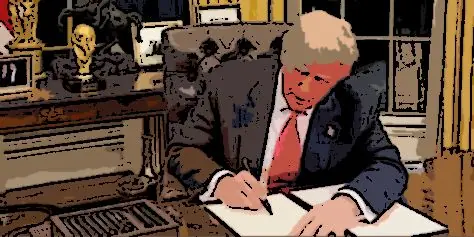
Former U.S. President Donald Trump has signed a controversial executive order aimed at restricting states’ ability to legislate and litigate on climate change policies. The order emphasizes the need to “unleash America’s energy potential” and “end excessive state interference.” However, the move has drawn fierce criticism from legal experts, environmental groups, and the sustainable business community, with concerns that it could severely undermine nationwide decarbonization, net-zero goals, and ESG initiatives.
Company & Industry Context
Climate Litigation Tug-of-War: A Local vs. Federal Showdown
The executive order comes against the backdrop of increasing climate lawsuits filed by states against oil and gas companies. These lawsuits accuse energy corporations of deliberately concealing the environmental impact of fossil fuels, and seek to hold them financially responsible for environmental restoration and societal damages.
Challenge / Why It Matters
In 2024, lawsuits from New Jersey and New York were dismissed by federal courts, while similar cases from California, Connecticut, and Honolulu, Hawaii, were allowed to proceed. The Supreme Court also rejected an appeal by 19 Republican-led states that sought to eliminate local governments’ authority to bring such cases, effectively upholding the states’ legal space for climate action.
Action / Solution / Implementation
Executive Order’s Intent: Energy Dominance vs. Local Autonomy
Titled the “Preventing State Overreach on American Energy” order, the directive singles out New York and Vermont’s climate accountability laws, California’s carbon trading program, and other state-level climate lawsuits. It claims these policies are “ideologically driven illegal barriers” that harm the U.S. economy, raise energy costs, and threaten national security.
The order authorizes newly appointed Attorney General Pam Bondi to investigate all state-level climate, carbon, and ESG regulations within 60 days. She is to assess their “negative impact on American energy development” and propose federal legislative or administrative actions to “prevent their enforcement.”
A Step Backward for Sustainability? Impact Across Five Key Areas
The order could significantly disrupt five core pillars of sustainable development:
Evidence / Results / Impact
Private Sector and Nonprofits Respond: Innovation Under Pressure
Despite this federal policy rollback, most companies and research institutions remain committed to sustainability. Some are adopting the following strategies in response:
Global Perspective: A Step Away from Climate Leadership?
In the context of global climate efforts such as the Paris Agreement and the United Nations Sustainable Development Goals (SDGs), Trump’s move is seen as a potential signal of the U.S. backtracking - again - on international climate commitments. Allies such as the EU, Japan, and Canada have already expressed concerns over the U.S.’s policy inconsistency, and investors may respond by downgrading the U.S. risk profile due to increased policy uncertainty.
Industry & Institutional Implications
Looking Ahead: Can Innovation Emerge from Conflict?
SNN Editorial / Pre-Disclosure Evidence Infrastructure Perspective
As the tug-of-war between federal and state governments intensifies, and as conservative politics clash with green transitions, American society finds itself at a critical crossroads. While the Trump administration seeks to reverse climate progress, its actions may inadvertently galvanize local innovation, industry leadership, and grassroots mobilization.
Future Outlook
Many observers believe this policy battle marks the beginning of a new chapter in defining sustainable economics, green competitiveness, and climate justice in the United States. The central question remains: Will America choose short-term energy expansion or invest in a resilient, low-carbon future?
Sources, evidence chain and editorial responsibility
Topic hub: 永續制度與揭露