
全球新聞
用垃圾蓋城堡
一名來自加拿大蒙特婁的男子,選擇用最直觀、也最震撼的方式,回應全球塑膠廢棄物危機——把垃圾直接變成建築。
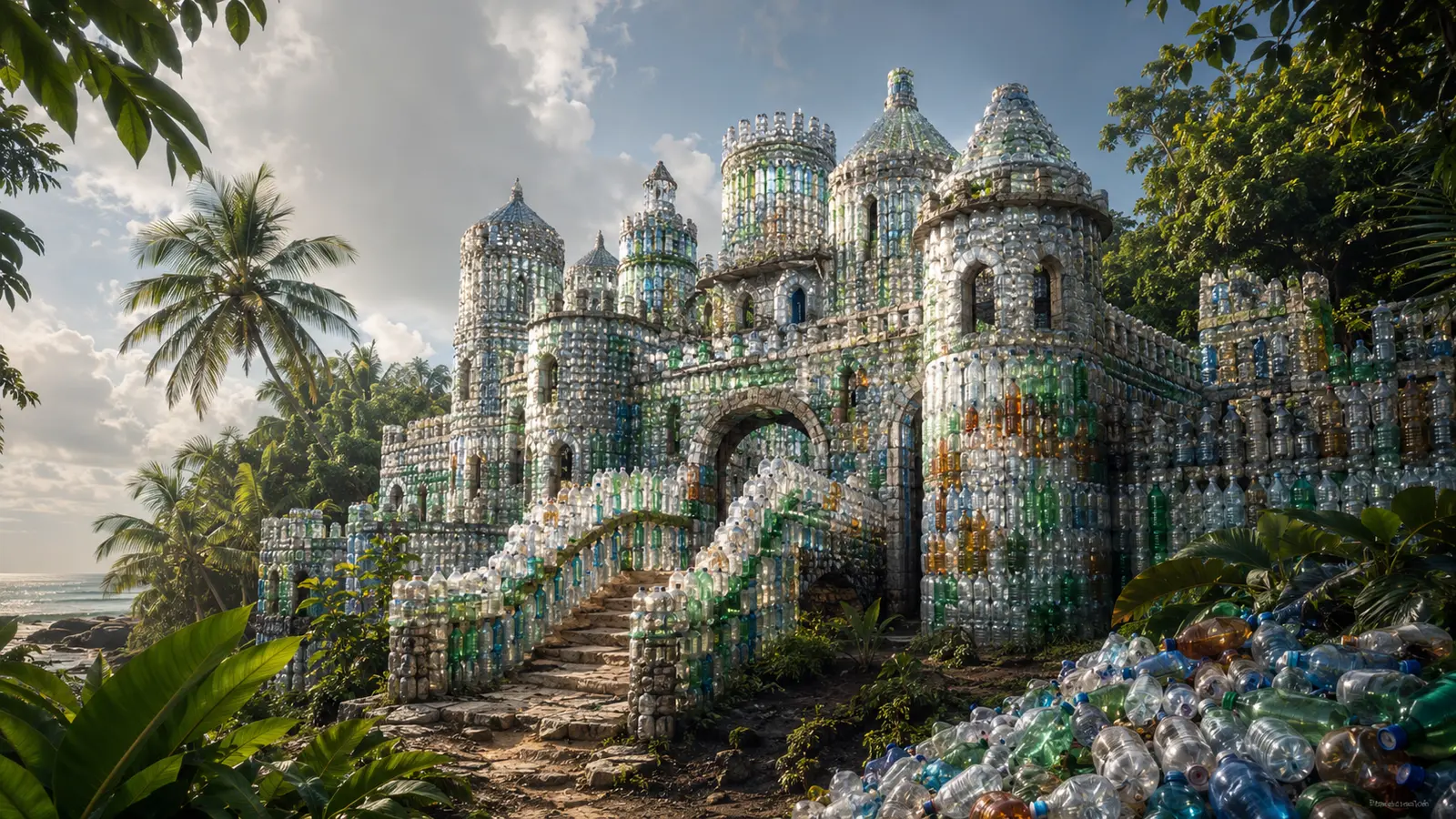
A Canadian environmentalist has chosen one of the most literal and striking responses to the global plastic waste crisis: turning discarded bottles directly into buildings
A Canadian environmentalist has chosen one of the most literal and striking responses to the global plastic waste crisis: turning discarded bottles directly into buildings. Robert Bezeau, known as the “Plastic King,” has spent more than a decade in Panama’s Bocas del Toro archipelago transforming plastic waste into architectural landmarks, including the world’s largest plastic bottle castle and an entire village built from discarded materials.
重點摘要
Executive Summary / Lead一名來自加拿大蒙特婁的男子,選擇用最直觀、也最震撼的方式,回應全球塑膠廢棄物危機——把垃圾直接變成建築。
A Canadian environmentalist has chosen one of the most literal and striking responses to the global plastic waste crisis: turning discarded bottles directly into buildings. Robert Bezeau, known as the “Plastic King,” has spent more than a decade in Panama’s Bocas del Toro archipelago transforming plastic waste into architectural landmarks, including the world’s largest plastic bottle castle and an entire village built from discarded materials.
企業與產業背景
Company & Industry Context被稱為「塑膠國王」(Plastic King)的 Robert Bezeau,十多年前在巴拿馬博卡斯德爾托羅群島(Bocas del Toro)展開一項前所未見的環保實驗,最終打造出世界最大、完全由塑膠瓶構成的城堡與村落。
In 2012, while working with the Bocas Recycling Program to clean beaches and local communities, Bezeau was stunned to see more than one million plastic bottles collected in just 18 months. The growing mountains of recyclables led him to question whether recycling alone could meaningfully address plastic pollution.
挑戰與重要性
Challenge / Why It Matters2012 年,Bezeau 參與當地的 Bocas Recycling Program,協助清理海灘與社區廢棄物。然而短短一年半內,他們竟回收超過一百萬個塑膠瓶,堆積成難以消化的回收高牆。這讓他開始質疑,單靠「回收」是否真能解決塑膠污染問題。
That realization sparked an unconventional idea - instead of recycling the bottles, why not reuse them as construction materials?
行動、方案與執行
Action / Solution / Implementation於是,他提出一個大膽構想:與其將塑膠瓶送入回收流程,不如直接「再利用」,把它們變成建築材料。這個想法最終催生了名為「靈感城堡」(Castillo Inspiración)的四層樓建築,高約 14 公尺,使用約 4 萬個塑膠瓶打造而成。
The concept eventually materialized as Castillo Inspiración, a four-story structure standing approximately 14 meters tall and built using around 40,000 plastic bottles.
證據、成果與影響
Evidence / Results / Impact城堡以鋼筋與混凝土為結構核心,塑膠瓶則作為牆體填充與隔熱材料,不僅能抵禦熱帶氣候,也在陽光下呈現宛如彩色玻璃的視覺效果。整棟建築內部設有四間客房、公共用餐空間、屋頂觀景平台,並搭配大量教育展示,向訪客說明塑膠污染對環境的長期影響。
The castle is supported by concrete and steel, while the bottles function as insulation and wall infill, protecting the building from tropical conditions and creating a distinctive stained-glass-like appearance in the sunlight. Inside, the structure includes four guest rooms, communal dining areas, a rooftop viewing platform and educational displays that highlight the environmental consequences of plastic waste.
產業與制度意涵
Industry & Institutional ImplicationsBezeau 強調,他所推廣的是「升級再造」(Upcycling),而非傳統回收。相較於回收過程可能產生塑膠微粒、再度進入生態系,升級再造是在不改變塑膠化學結構的前提下,延長材料使用壽命,被視為更低衝擊的循環解方。
Bezeau advocates for “upcycling” rather than traditional recycling, arguing that reusing plastic without altering its chemical structure reduces the risk of microplastic leakage into ecosystems and extends the material’s functional life.
SNN 編輯與揭露前證據基礎設施觀點
SNN Editorial / Pre-Disclosure Evidence Infrastructure Perspective此項計畫也獲得國際肯定。Bezeau 於數年後獲頒 Energy Globe Award,但他並未止步於單一建築。2021 年起,他進一步打造「塑膠瓶村落」,多棟住宅同樣以回收瓶作為隔熱層,外覆混凝土,兼顧居住安全與環境效益。至 2022 年為止,整個村落累計使用約 20 萬個塑膠瓶,大幅改善當地廢棄物問題。
His work has received international recognition, including an Energy Globe Award. However, Bezeau has continued to expand the project. Since 2021, he has developed a Plastic Bottle Village, featuring multiple residential buildings that use plastic bottles as insulation beneath concrete exteriors. By 2022, the village had incorporated an estimated 200,000 plastic bottles, significantly reducing local waste accumulation.
未來展望
Future Outlook在全球塑膠污染治理仍高度仰賴回收體系的背景下,Bezeau 的行動為「再利用型循環經濟」提供了極端卻具象的示範。他直言,真正的解方仍在政策端,尤其是包裝設計與使用規範的源頭管理,否則人類終將被自己製造的塑膠所吞噬。
As global plastic management strategies continue to focus heavily on recycling systems, Bezeau’s project offers a tangible - if radical - example of reuse-driven circular economy principles. He argues that lasting solutions must ultimately come from policy reforms, particularly in packaging design and regulation, warning that without upstream intervention, plastic waste will remain an existential threat of humanity’s own making.
來源、證據鏈與責任編輯
主題中心:企業與供應鏈
SNN.TW 原始刊登紀錄 ↗