
全球新聞
農業光伏技術崛起:實現糧食生產與再生能源雙贏
隨著全球積極推動淨零排放,各產業紛紛尋找減碳解決方案,而農業因佔全球碳排放總量的22%,成為關注焦點。為了降低農業活動的碳足跡,並確保全球糧食供應的穩定,農業光伏(Agrivoltaics) 技術近年來備受矚目。
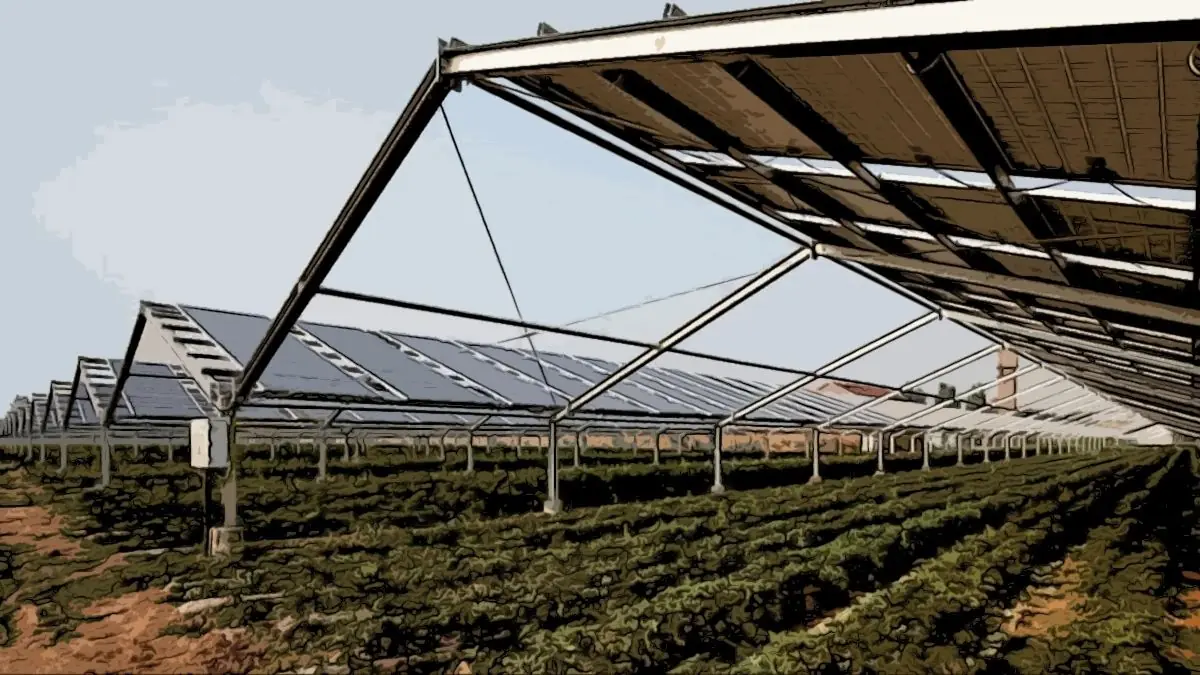
The rise of agricultural photovoltaic technology: achieving a win-win situation for food production and renewable energy
As the global transition to net-zero emissions accelerates, industries are seeking new decarbonisation solutions. Agriculture, which accounts for approximately 22 percent of global carbon emissions, has become a central focus. Agrivoltaic technology is gaining attention as a way to reduce agriculture's carbon footprint while supporting a stable global food supply.
重點摘要
Executive Summary / Lead隨著全球積極推動 淨零排放 ,各產業紛紛尋找減碳解決方案,而 農業 因佔全球碳排放總量的 22% ,成為關注焦點。為了降低農業活動的碳足跡,並確保全球糧食供應的穩定, 農業光伏(Agrivoltaics) 技術近年來備受矚目。
農業光伏技術的核心概念是在 農田、溫室或畜牧場 上方架設太陽能光伏(PV)面板,使 糧食生產與再生能源發電 能夠在同一片土地上共存,不僅能為農民帶來額外收入,還可減少碳排放,實現永續農業與清潔能源利用的雙贏。
As the global transition to net-zero emissions accelerates, industries are seeking new decarbonisation solutions. Agriculture, which accounts for approximately 22 percent of global carbon emissions, has become a central focus. Agrivoltaic technology is gaining attention as a way to reduce agriculture's carbon footprint while supporting a stable global food supply.
The core concept of agricultural photovoltaic technology is to erect solar photovoltaic (PV) panels above farmland, greenhouses or livestock farms, so that food production and renewable energy power generation can coexist on the same land. It not only brings additional income to farmers, but also reduces carbon emissions, achieving a win-win situation between sustainable agriculture and clean energy utilization.
企業與產業背景
Company & Industry Context此外,農業光伏技術的推廣也有效回應了外界對 太陽能發電「占用耕地」的批評。批評者擔憂大規模太陽能設施可能影響糧食生產,但根據最新統計,英國目前的太陽能發電場僅佔全國土地總面積的 0.15% ,遠低於農業用地的 70% ,顯示光伏發電對土地資源的影響其實相對有限。
The expansion of agrivoltaics also responds to criticism that solar power occupies farmland. Critics worry that large solar installations could affect food production, but recent statistics indicate that solar farms currently cover only 0.15 percent of the United Kingdom's total land area, far below the approximately 70 percent devoted to agriculture. This suggests that the land-use impact of photovoltaic generation remains comparatively limited.
挑戰與重要性
Challenge / Why It Matters農業光伏的多重優勢:提升糧食安全與能源供應
目前,農業光伏技術的應用模式日益多元,從 畜牧場光伏系統 、 果樹園遮蔭式光伏 到 溫室屋頂光伏 等不同類型的系統,都已陸續進入實驗與商業應用階段。其中, 畜牧場光伏系統 因為安裝與管理相對簡單,且能有效降低成本,成為農民最熱門的選擇之一。
農業光伏帶來的三大關鍵優勢
🔹 促進生物多樣 性:
傳統農業採用大面積單一作物種植(單一栽培),容易導致土壤退化與病蟲害風險。但透過農業光伏技術,土地可用於多元用途,減少農藥與化肥的依賴,進而提升生態系統的健康度。
Multiple advantages of agrivoltaics: improving food security and energy supply
Agrivoltaic applications are becoming increasingly diverse, ranging from livestock-farm photovoltaic systems and shaded orchard installations to greenhouse-rooftop systems. These models are moving through experimental and commercial deployment. Livestock-farm systems have become especially popular because installation and management are comparatively straightforward and can reduce operating costs.
Three key advantages brought by agricultural photovoltaics
🔹 Promote biodiversity:
Traditional agriculture uses large areas of single crop cultivation (monoculture), which easily leads to soil degradation and risks of pests and diseases. However, through agricultural photovoltaic technology, land can be used for multiple purposes, reducing dependence on pesticides and chemical fertilizers, thereby improving the health of the ecosystem.
🔹 Improve agricultural productivity:
Photovoltaic panels can provide appropriate shade for crops or livestock, reducing the impact of extreme heat on crops and livestock. For example, in the hot summer, crops are prone to dehydration and even death due to direct sunlight and high temperatures, but moderate shading can actually increase crop survival rates. At the same time, livestock in the livestock farm can rest under the photovoltaic panels, reducing stress caused by intense heat and improving production efficiency.
行動、方案與執行
Action / Solution / Implementation🔹 提升農業生產 力:
光伏面板可為農作物或牲畜提供適當的遮蔭,減少極端高溫對作物與牲畜的影響。例如,在 炎熱的夏季 ,農作物容易因 陽光直射與高溫 而脫水甚至枯死,但適度的遮蔽反而能提升作物存活率。同時,畜牧場的牲畜可在光伏板下休息,減少因酷熱造成的壓力,提高生產效率。
🔹 降低維護與運營成 本:
在畜牧場內安裝太陽能光伏系統,牲畜可在場內自由活動,並自然控制草長,減少人工修剪牧草的需求,進而降低光伏場的維護成本。此外,農民可利用光伏發電供應農場內的 灌溉系統、照明與電動設備 ,減少對化石燃料的依賴,降低能源開支。
然而,農業光伏技術若未妥善規劃,仍可能對農作物產量造成影響。例如,部分作物需要充足日照,若太陽能板遮擋過多光線,可能影響農作物的生長速度與產量。因此,農業光伏系統的設計需考量 當地氣候條件、作物種類與授粉昆蟲(如蜜蜂)的需求 ,才能確保最佳效益。
新型光伏材料發展:提升農業光伏的適應性
為了解決光伏遮蔽影響作物生長的問題,科學家正致力於開發 新型光伏材料 ,以提升農業光伏系統的適應性。目前,主要研究方向包括 有機半導體 與 鈣鈦礦(Perovskite)太陽能電池 。
🔹 Reduce maintenance and operating costs:
When photovoltaic systems are installed on livestock farms, animals can move freely through the site and naturally control grass growth, reducing the need for manual mowing and lowering maintenance costs. Farmers can also use the electricity generated to power irrigation systems, lighting and farm equipment, reducing dependence on fossil fuels and lowering energy expenditure.
However, agrivoltaic technology can still have an impact on crop yields if not properly planned. For example, some crops require sufficient sunlight. If solar panels block too much light, the growth rate and yield of crops may be affected. Therefore, the design of agricultural photovoltaic systems needs to consider local climate conditions, crop species and the needs of pollinating insects (such as bees) to ensure optimal benefits.
Development of new photovoltaic materials: improving the adaptability of agricultural photovoltaics
In order to solve the problem of photovoltaic shading affecting crop growth, scientists are working on developing new photovoltaic materials to improve the adaptability of agricultural photovoltaic systems. Currently, the main research directions include organic semiconductors and perovskite solar cells.
證據、成果與影響
Evidence / Results / Impact🔹 有機半導 體:
與傳統的矽晶太陽能電池不同,有機半導體主要由 碳與氫等有機分子 組成,可根據需求調整光線穿透率,使作物獲得充足光線,同時產生電力。
🔹 鈣鈦礦(Perovskite)太陽能電 池:
鈣鈦礦材料結合 有機與無機特性 ,具備 更高的光電轉換效率 ,並可透過技術調整光線穿透率,使其更適用於農業光伏應用。
目前,全球研究團隊已開發數千種潛在的光伏材料組合,如何挑選最適合 不同作物與氣候條件 的材料,成為業界亟需解決的課題。
數位工具助攻:提升農業光伏技術應用效率
為加速農業光伏技術的發展,研究人員開發了一款 開源模擬工具 ,幫助決策者比較不同光伏材料的效能,以尋找最適合農業應用的選擇。
🔹 Organic semiconductors:
Different from traditional silicon crystal solar cells, organic semiconductors are mainly composed of organic molecules such as carbon and hydrogen. The light transmittance can be adjusted according to needs, so that crops can receive sufficient light and generate electricity at the same time.
🔹 Perovskite solar cells:
Perovskite materials combine organic and inorganic properties, have higher photoelectric conversion efficiency, and can adjust the light transmittance through technology, making them more suitable for agricultural photovoltaic applications.
At present, global research teams have developed thousands of potential photovoltaic material combinations. How to select the most suitable materials for different crops and climate conditions has become an urgent issue for the industry to solve.
Digital tools assist: Improving the application efficiency of agricultural photovoltaic technology
To accelerate the development of agrivoltaic technology, researchers have developed an open-source simulation tool to help decision-makers compare the performance of different photovoltaic materials to find the most suitable option for agricultural applications.
🔹 This tool combines geographical data and optical simulation to predict the power generation efficiency and light transmittance of various photovoltaic materials.
產業與制度意涵
Industry & Institutional Implications🔹 該工具結 合地理數據與光學模 擬,可預測各類光伏材料的發電效率與光線穿透率。
🔹 可模擬光線如何穿透材料、反射回空氣,以及材料的電壓與功率輸出,並轉換為實際應用場景,以評估材料在現實環境中的表現。
🔹 研究人員可透過該工具計算每種光伏材料在不同地區 的每平方米年發電 量,並評估其是否能確保作物的正常生長,以進一步提升農業光伏系統的可行性。
🔹 It can simulate how light penetrates materials, reflects back to the air, as well as the voltage and power output of materials, and converts them into actual application scenarios to evaluate the performance of materials in real environments.
🔹 Researchers can use this tool to calculate the annual power generation per square meter of each photovoltaic material in different areas and evaluate whether it can ensure the normal growth of crops to further enhance the feasibility of agricultural photovoltaic systems.
The future of agricultural photovoltaic technology
SNN 編輯與揭露前證據基礎設施觀點
SNN Editorial / Pre-Disclosure Evidence Infrastructure Perspective農業光伏技術的未來展望
農業光伏技術的發展,有望成為 全球農業減碳 的重要解決方案之一。隨著 數位工具與新型光伏材料 的進步,農業光伏系統將可達到更高效的運作模式,不僅能降低農業碳足跡,還能提高糧食生產能力,實現經濟與環境永續的雙贏。
The development of agricultural photovoltaic technology is expected to become one of the important solutions for global agricultural carbon reduction. With the advancement of digital tools and new photovoltaic materials, agricultural photovoltaic systems will be able to achieve a more efficient operation mode, which will not only reduce agricultural carbon footprints, but also increase food production capabilities and achieve a win-win situation for economic and environmental sustainability.
未來展望
Future Outlook隨著各國加速推動 2050 年淨零排放 目標,農業光伏技術的應用勢必將持續擴展。透過 科技創新與政策支持 ,農業部門將能在確保糧食供應的同時,有效減少碳排放,推動全球邁向更綠色、永續的未來。
As countries accelerate their efforts to achieve net-zero emissions goals by 2050, the application of agricultural photovoltaic technology is bound to continue to expand. Through technological innovation and policy support, the agricultural sector will be able to effectively reduce carbon emissions while ensuring food supply, and push the world towards a greener and more sustainable future.
來源、證據鏈與責任編輯
主題中心:氣候與能源轉型
SNN.TW 原始刊登紀錄 ↗