
全球新聞
谷歌減碳承壓
Google雖在2025年將營運排放年減2%,但受AI資料中心擴張帶動,用電量暴增37%、供應鏈排放更年增25%,凸顯科技巨頭在AI成長、電網脫碳與範疇三排管理之間的結構性張力。
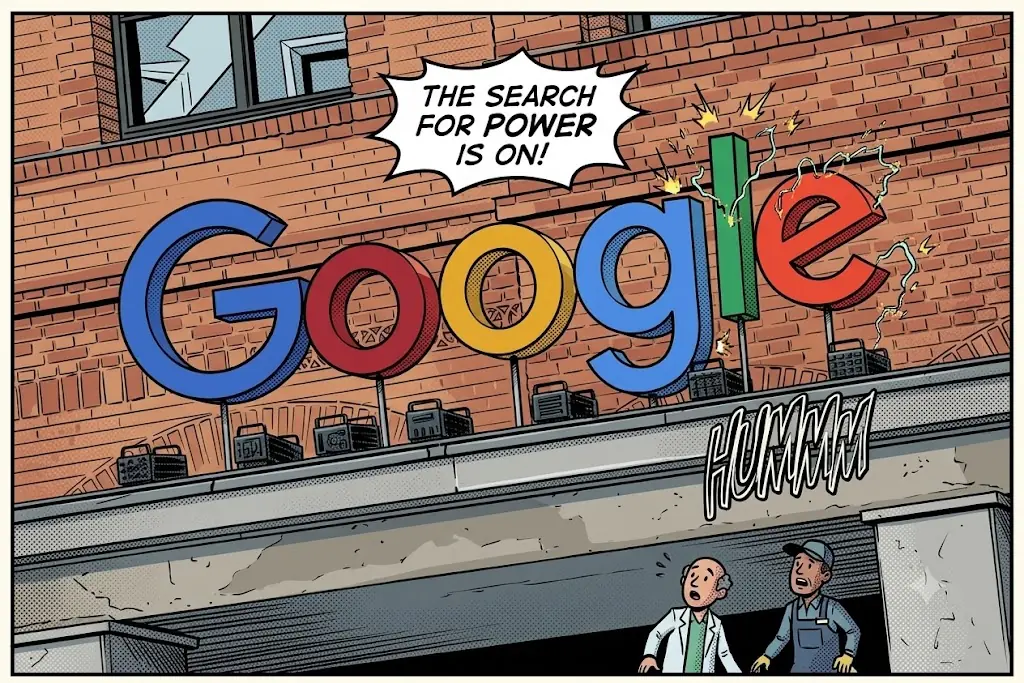
Google under pressure to reduce carbon emissions
Although Google will reduce operating emissions by 2% annually in 2025, driven by the expansion of AI data centers, electricity consumption surged by 37% and supply chain emissions increased by 25% annually, highlighting the structural tension between the technology giant's AI development, power grid decarbonization, and three-tier management.
重點摘要
Executive Summary / LeadGoogle雖在2025年將營運排放年減2%,但受AI資料中心擴張帶動,用電量暴增37%、供應鏈排放更年增25%,凸顯科技巨頭在AI成長、電網脫碳與範疇三排管理之間的結構性張力。
Google在2025年成功小幅壓低自身營運排放,但其最新環境報告也清楚揭示,人工智慧基礎設施的快速擴張,正使科技業的減碳路徑變得更加複雜。Google在第11份年度《環境報告》中指出,儘管去年營運排放量年減2%,公司整體用電需求卻在同一年大幅成長37%,創下歷來最大增幅,反映AI資料中心與算力基礎建設正迅速推高能源消耗。對Google而言,這不僅是能源採購問題,更已成為企業氣候治理、供應鏈管理與長期資本配置的核心議題。
Although Google will reduce operating emissions by 2% annually in 2025, driven by the expansion of AI data centers, electricity consumption surged by 37% and supply chain emissions increased by 25% annually, highlighting the structural tension between the technology giant's AI development, power grid decarbonization, and three-tier management.
Google has successfully reduced its operating emissions slightly in 2025, but its latest environmental report also clearly reveals that the rapid expansion of artificial intelligence infrastructure is making the technology industry’s carbon reduction path more complicated. Google pointed out in its 11th annual "Environmental Report" that although operating emissions decreased by 2% last year, the company's overall electricity demand increased significantly by 37% in the same year, the largest increase in history, reflecting that AI data centers and computing infrastructure are rapidly driving up energy consumption. For Google, this is not only an energy procurement issue, but has also become a core issue of corporate climate governance, supply chain management and long-term capital allocation.
企業與產業背景
Company & Industry ContextGoogle坦言,當前企業正面臨「超高速成長」與「環境管理」之間的直接張力。公司指出,AI基礎設施的建設速度目前仍快於全球電網去碳化的進程,意味著即便企業持續加碼潔淨能源採購,也未必能立即完全抵銷算力擴張帶來的新增排放壓力。這種結構性矛盾,正是當前AI經濟下大型科技公司共同面對的現實:資料中心需求加速成長,但潔淨電力、輸配電容量與低碳基礎設施的供給,尚未同步擴張。
Google admitted frankly that the company is currently facing a direct tension between "hyper-rapid growth" and "environmental management." The company pointed out that the construction speed of AI infrastructure is still faster than the decarbonization process of the global power grid, which means that even if companies continue to increase clean energy procurement, they may not be able to immediately completely offset the new emission pressure brought by the expansion of computing power. This structural contradiction is exactly the reality faced by large technology companies in the current AI economy: demand for data centers is accelerating, but the supply of clean power, transmission and distribution capacity, and low-carbon infrastructure has not yet expanded simultaneously.
挑戰與重要性
Challenge / Why It Matters在潔淨能源布局方面,Google仍是全球最積極的企業買家之一。報告顯示,Google在2025年簽署超過12GW的新增潔淨能源協議;若全部上線,發電量約足以支撐希臘全國一年的用電需求。若拉長時間來看,自2010年至2025年間,Google累計簽署逾240項潔淨電力採購協議,對應總容量接近35GW。公司估計,這些專案最終可提供相當於超過2,800萬戶美國家庭的年用電量,約等同紐約州、德州與賓州所有家庭用電總和。Google並表示,2025年已連續第九年達成以再生能源採購對應100%用電需求的目標。
然而,對投資人與永續部門而言,真正值得關注的不是再生能源採購總量本身,而是其能否跟上AI驅動的負載成長速度。Google指出,去年資料中心相關基礎設施帶動其整體電力需求大增37%,是公司史上最大單年負載成長。在此背景下,Google仍能讓營運排放下降2%,顯示其資料中心效率與電力採購策略具一定韌性。根據報告,Google資料中心基礎設施的附加能耗(overhead energy)比業界平均低83%,顯示其在冷卻、電力管理與機房效率方面仍維持顯著優勢。
In terms of clean energy deployment, Google is still one of the most active corporate buyers in the world. The report shows that Google will sign more than 12GW of new clean energy agreements in 2025; if all of them come online, the power generation capacity will be enough to support the electricity demand of Greece for a year. If you look at it over time, from 2010 to 2025, Google has signed more than 240 clean power purchase agreements, corresponding to a total capacity of nearly 35GW. The company estimates that these projects will eventually provide the equivalent of the annual electricity consumption of more than 28 million U.S. households, which is approximately the same as the electricity consumption of all households in New York, Texas and Pennsylvania combined. Google also said that in 2025, it has achieved the goal of purchasing 100% of its electricity demand with renewable energy for the ninth consecutive year.
行動、方案與執行
Action / Solution / ImplementationGoogle的策略也反映大型科技公司氣候行動的重心正在改變。過去企業採購綠電,往往以再生能源憑證或年度對沖為主;如今,隨著AI算力競爭升溫,企業正轉向更深度介入電力系統,包括透過長期購電協議(PPA)、離網或在地供電安排、公用事業合作,以及更前瞻的核能、增強型地熱(enhanced geothermal)與聚變能源投資,來確保未來可取得穩定、低碳且可負擔的電力。Google表示,公司除了持續投資支撐資料中心所在區域的潔淨電力,也正推動核能與增強型地熱等先進能源技術,並布局聚變能源等長期選項。這意味著,能源採購已不再只是採購部門的議題,而是攸關資料中心擴產、地方電網承載能力與企業成長正當性的董事會級決策。
However, for investors and sustainability departments, what really deserves attention is not the total amount of renewable energy purchased itself, but whether it can keep up with the speed of load growth driven by AI. Google pointed out that data center-related infrastructure drove its overall power demand to surge by 37% last year, which was the largest single-year load growth in the company's history. Against this background, Google can still reduce operational emissions by 2%, demonstrating the resilience of its data center efficiency and power procurement strategies. According to the report, the overhead energy consumption of Google's data center infrastructure is 83% lower than the industry average, showing that it still maintains significant advantages in cooling, power management, and computer room efficiency.
Google’s strategy also reflects the changing focus of big tech companies on climate action. In the past, companies often purchased green power based on renewable energy certificates or annual hedging. Now, as competition for AI computing power heats up, companies are turning to more deeply involved in the power system, including through long-term power purchase agreements (PPA), off-grid or on-site power supply arrangements, utility cooperation, and more forward-looking investments in nuclear energy, enhanced geothermal (enhanced geothermal) and fusion energy to ensure stable, low-carbon and affordable electricity in the future. Google said that in addition to continuing to invest in clean electricity to support the areas where data centers are located, the company is also promoting advanced energy technologies such as nuclear energy and enhanced geothermal energy, and laying out long-term options such as fusion energy. This means that energy procurement is no longer just an issue for the procurement department, but a board-level decision related to the expansion of data center capacity, the carrying capacity of local power grids, and the legitimacy of corporate growth.
證據、成果與影響
Evidence / Results / Impact報告同時強調,Google希望將AI定位為減碳工具,而不只是排放來源。公司表示,2025年透過硬體、軟體、運算效率提升及潔淨能源採購,共避免超過5,800萬公噸二氧化碳當量排放;若沒有這些措施,其以目標導向方法計算的碳足跡可能高出五倍。此外,Google指出,2025年其九項面向外部客戶、城市與合作夥伴的解決方案,共協助減少約4,100萬公噸二氧化碳當量,約為Google自身排放量的三倍。這些應用包括利用Google Earth協助太陽能與風電選址、透過Nest智慧溫控降低住家能耗,以及Google Maps燃油效率路線規劃等。Google也提到,其AI系統已應用於野火、洪水、地震與極端天氣偵測,並將生物聲學模型Perch與野生動物辨識工具SpeciesNet納入自然與生物多樣性應用場景。
The report also emphasizes that Google hopes to position AI as a carbon reduction tool, not just a source of emissions. The company stated that it will avoid more than 58 million metric tons of carbon dioxide equivalent emissions in 2025 through hardware, software, computing efficiency improvements and clean energy procurement; without these measures, its carbon footprint calculated using a goal-oriented approach may be five times higher. In addition, Google pointed out that its nine solutions for external customers, cities and partners will help reduce a total of approximately 41 million metric tons of carbon dioxide equivalent in 2025, which is approximately three times Google’s own emissions. These applications include using Google Earth to assist with solar and wind power site selection, reducing home energy consumption through Nest smart temperature control, and Google Maps fuel-efficient route planning. Google also mentioned that its AI system has been applied to wildfires, floods, earthquakes and extreme weather detection, and has incorporated the bioacoustic model Perch and the wildlife identification tool SpeciesNet into natural and biodiversity application scenarios.
產業與制度意涵
Industry & Institutional Implications不過,真正暴露Google減碳壓力的,是供應鏈排放的快速上升。報告顯示,Google 2025年供應鏈排放年增25%,成為整體碳足跡中最值得警惕的項目。公司將這一增幅歸因於AI基礎設施擴張所帶動的硬體設備、建設材料與製造需求增加,同時也與亞太供應鏈所在區域仍高度依賴高碳電網有關。Google進一步指出,土地限制、建設成本攀升與政策障礙,也都使供應鏈脫碳進展受限。這代表,即便Google能透過自有營運效率與潔淨電力採購控制範疇一與範疇二排放,範疇三排放仍可能因AI伺服器、晶片、網通設備與資料中心建設而持續上升。
However, what really exposes Google’s pressure to reduce carbon emissions is the rapid rise in supply chain emissions. The report shows that Google’s supply chain emissions will increase by 25% annually in 2025, making it the most vigilant item in the overall carbon footprint. The company attributes this increase to the increased demand for hardware equipment, construction materials and manufacturing driven by the expansion of AI infrastructure, and also to the fact that the Asia-Pacific supply chain region is still highly dependent on high-carbon power grids. Google further pointed out that land restrictions, rising construction costs and policy obstacles have also limited progress in decarbonizing the supply chain. This means that even if Google can control Scope 1 and Scope 2 emissions through its own operational efficiency and clean power procurement, Scope 3 emissions may continue to rise due to the construction of AI servers, chips, network equipment and data centers.
SNN 編輯與揭露前證據基礎設施觀點
SNN Editorial / Pre-Disclosure Evidence Infrastructure Perspective這也是目前整個科技業面臨的共同難題。AI運算的碳足跡,已不再只來自資料中心用電本身,而是逐漸延伸至上游製造、建材、半導體設備、伺服器供應鏈與區域電網結構。對ESG投資人而言,Google這份報告的意義在於,它證明大型科技公司在營運端仍有能力透過效率與綠電採購壓低直接排放,但也同時揭露,若缺乏更完整的供應鏈轉型與低碳電網配套,AI擴張所帶來的整體碳足跡未必會同步下降。
This is also a common problem faced by the entire technology industry. The carbon footprint of AI computing no longer only comes from the data center electricity consumption itself, but gradually extends to upstream manufacturing, building materials, semiconductor equipment, server supply chains and regional power grid structures. For ESG investors, the significance of Google’s report is that it proves that large technology companies are still able to reduce direct emissions through efficiency and green power procurement on the operational side. However, it also reveals that without a more complete supply chain transformation and low-carbon grid supporting facilities, the overall carbon footprint caused by AI expansion may not decrease simultaneously.
未來展望
Future Outlook從治理角度來看,Google的2025年環境報告也向市場傳遞一個更明確的訊號:AI策略、能源政策與氣候治理已高度耦合。未來企業若要說服監管機關、投資人與地方社群接受資料中心擴建,就不能只強調技術創新或營收成長,而必須同步提出可信的電力取得方案、供應鏈減碳路徑與在地電網影響管理機制。對Google而言,這份報告既展示其作為全球潔淨能源買家的規模優勢,也暴露了當前全球能源轉型速度仍不足以完全承接AI浪潮的現實。
From a governance perspective, Google's 2025 environmental report also sends a clearer signal to the market: AI strategy, energy policy and climate governance are highly coupled. In the future, if companies want to convince regulatory agencies, investors, and local communities to accept data center expansion, they cannot only emphasize technological innovation or revenue growth, but must simultaneously propose credible power acquisition plans, supply chain carbon reduction paths, and local power grid impact management mechanisms. For Google, this report not only demonstrates its scale advantage as a global buyer of clean energy, but also exposes the reality that the current global energy transformation is still not fast enough to fully embrace the AI wave.
來源、證據鏈與責任編輯
主題中心:氣候與能源轉型
SNN.TW 原始刊登紀錄 ↗