全球新聞
歐盟正式排除皮革適用 EUDR,2030 檢討前自願追溯成信任焦點
牛皮已正式排除於歐盟毀林法規,但 2030 年將重新檢討。品牌、製革廠與供應商仍需保存動物移動、農場、屠宰與批次鏈結,避免同一頭牛的牛肉與皮革責任斷裂。
EU Formally Exempts Leather from EUDR, Making Voluntary Traceability a Trust Test Ahead of the 2030 Review
Leather is formally outside the EU deforestation law, with a 2030 review ahead. Brands, tanneries and suppliers still need animal-movement, farm, slaughter and batch links to avoid splitting responsibility for the same cattle.
重點摘要
Executive Summary / Lead歐盟排除牛皮適用 EUDR 的變更已在監督期無異議後生效。牛肉仍受規範,皮革則暫時不須履行相同法定盡職調查,但法規要求 2030 年重新檢討皮革地位。
The EU change removing bovine hides from EUDR has taken effect after the scrutiny period closed without objection. Beef remains covered while leather temporarily avoids the same statutory due diligence, but the regulation requires a 2030 review of leather’s status.
企業與產業背景
Company & Industry Context製革業主張皮革是低價值副產品,可避免牛皮成為廢棄物;批評者則指出皮革與牛肉來自同一動物,排除後可能把同一供應系統拆成兩套責任。
Tanneries argue that hides are a low-value by-product that would otherwise be wasted. Critics say leather and beef come from the same animal, so the exemption can split responsibility inside one production system.
挑戰與重要性
Challenge / Why It Matters直接供應商通常較容易識別,間接牧場與動物轉運則形成盲點。若皮革批次只連到屠宰場,卻沒有農場座標、動物移動、風險篩選與排除決定,就難以證明自願追溯能取代法定要求。
Direct suppliers are usually easier to identify than indirect farms and animal transfers. A batch linked only to a slaughterhouse, without farm coordinates, movement records, screening and exclusion decisions, cannot demonstrate that voluntary traceability replaces statutory controls.
行動、方案與執行
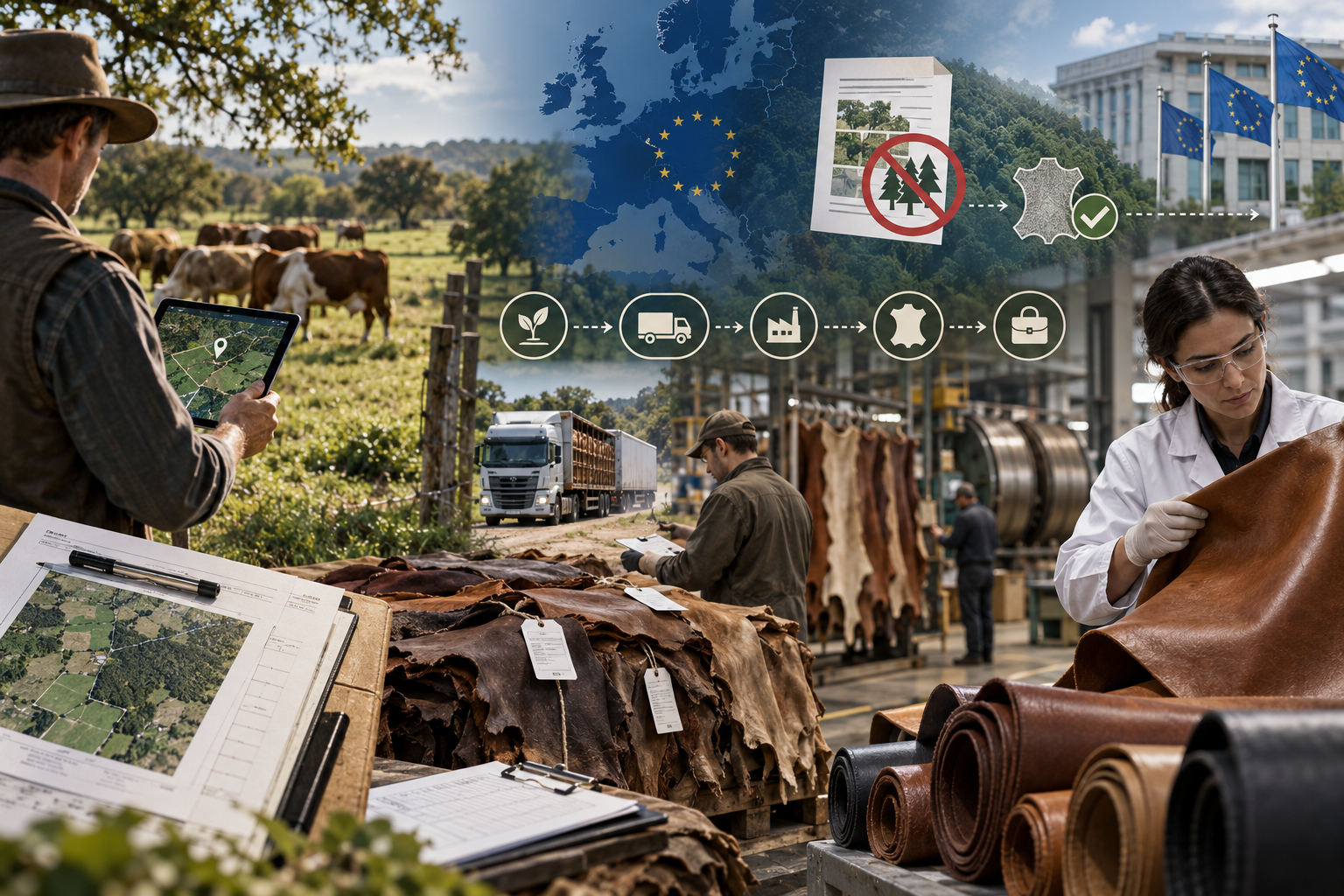
Action / Solution / Implementation品牌與製革廠應以批次識別碼連接動物移動文件、農場與屠宰場、採購訂單、數量平衡、風險分類、衛星或供應商查核結果及改善紀錄。採購條款要保留拒收、暫停和追溯失敗處理。
Brands and tanneries should link animal-movement documents, farms, slaughterhouse, purchase order, mass balance, risk classification, satellite or supplier checks and remediation to a batch identifier. Procurement terms should preserve rejection, suspension and failed-trace procedures.
證據、成果與影響
Evidence / Results / Impact三筆固定來源證據記錄 EUDR 風險框架、排除決定與正式生效後的產業回應。它們支持制度變化與爭議邊界,但不證明所有皮革供應鏈均與毀林無關。
Three fixed-scope reports cover the EUDR risk structure, the exclusion decision and industry response after entry into force. They support the institutional change and controversy but do not prove that every leather supply chain is deforestation-free.
產業與制度意涵
Industry & Institutional Implications時尚品牌、汽車內裝商、製鞋業、屠宰場、製革廠與銀行需決定是否維持高於法規的自願追溯。2030 檢討前的證據品質將影響市場信任與再納管風險。
Fashion brands, automotive-interior buyers, footwear companies, slaughterhouses, tanneries and banks must decide whether voluntary tracing should exceed the legal floor. Evidence quality before 2030 will shape market confidence and re-inclusion risk.
SNN 編輯與揭露前證據基礎設施觀點
SNN Editorial / Pre-Disclosure Evidence Infrastructure PerspectiveSNN editorial analysis:外部變化是歐盟把皮革移出 EUDR 法定範圍但保留 2030 檢討;傳導機制是歐洲品牌改以契約和聲譽要求管理皮革來源,影響台灣鞋材、汽車內裝、皮件、貿易與授信。第一,台灣品牌與採購主管應在每批下單前保存原皮批次、屠宰場、直接及間接牧場、動物移動文件、地理座標與風險篩選,缺件即停止接單。第二,製革與材料供應商應由品質主管在每次分批、混批或轉運時核對數量平衡、加工紀錄、倉單、出貨單及追溯斷點,季度抽樣回溯至農場。第三,銀行與查核機構應在融資續約及 2030 檢討前查驗政策版本、供應商排除清單、衛星或現場查核、改善結案與客訴紀錄,將追溯失敗納入契約條件。這是編輯分析,不代表豁免等於零毀林風險。
SNN editorial analysis: The external change is the EU removal of leather from EUDR while retaining a 2030 review. The transmission mechanism is the replacement of statutory controls with European brand contracts and reputational requirements, affecting Taiwan footwear materials, automotive interiors, leather goods, trade and credit. First, before every order, Taiwan brand and procurement leaders should retain hide batch, slaughterhouse, direct and indirect farm, animal-movement documents, coordinates and risk screening, stopping acceptance when records are missing. Second, at every split, mix or transfer, tannery quality owners should reconcile mass balance, processing records, warehouse receipts, delivery notes and traceability breaks, sampling back to farm each quarter. Third, at financing renewal and before the 2030 review, banks and assurance providers should inspect policy version, excluded-supplier lists, satellite or site checks, remediation closure and complaints, making traceability failure a covenant condition. This is editorial analysis and does not equate exemption with zero deforestation risk.
未來展望
Future Outlook後續應追蹤自願標準互認、間接牧場覆蓋、2030 檢討方法與品牌採購條款,並比較皮革與牛肉是否仍能共享同一動物來源紀錄。
Future review should follow voluntary-standard interoperability, indirect-farm coverage, the 2030 methodology and brand contract terms, testing whether leather and beef retain a shared animal-origin record.
來源、證據鏈與責任編輯
來源媒體:Eco-Business · 原文作者:Elisângela Mendonça, Mongabay.com · 原文發布:
外部論述與制度來源
以下外部公告、法規、研究或新聞用於支撐本文論述,並與原始出版分開呈現。
- Primary current event and industry-response evidence.Eco-BusinessAfter EU deforestation exemption, leather industry seeks to rebuild trust ↗出版日期 2026-09-23 · 查核時間 2026-09-23 10:24 (UTC+8)
Formal exemption, 2030 review, value-chain debate and traceability gaps.
- Independent confirmation of the policy change.ReutersEU removes leather from anti-deforestation law after industry pressure ↗出版日期 2026-05-04 · 查核時間 2026-09-23 10:24 (UTC+8)
Commission decision and rationale for removing leather.
- Independent regulatory baseline for commodity risk controls.ReutersEU brands just four countries high risk under deforestation law ↗出版日期 2025-05-22 · 查核時間 2026-09-23 10:24 (UTC+8)
Country-risk classification and due-diligence structure under EUDR.
主題中心:永續制度與揭露