
全球新聞
全球海洋連續百日創高溫,台灣海運、漁業與保險面臨觸發式風險紀錄需求
非極區海洋在 6 月 2 日至 9 月 10 日連續 100 天創同期高溫,El Niño 進一步放大風險。台灣相關產業需把海溫、路線、漁獲、設備與理賠觸發連成證據鏈。
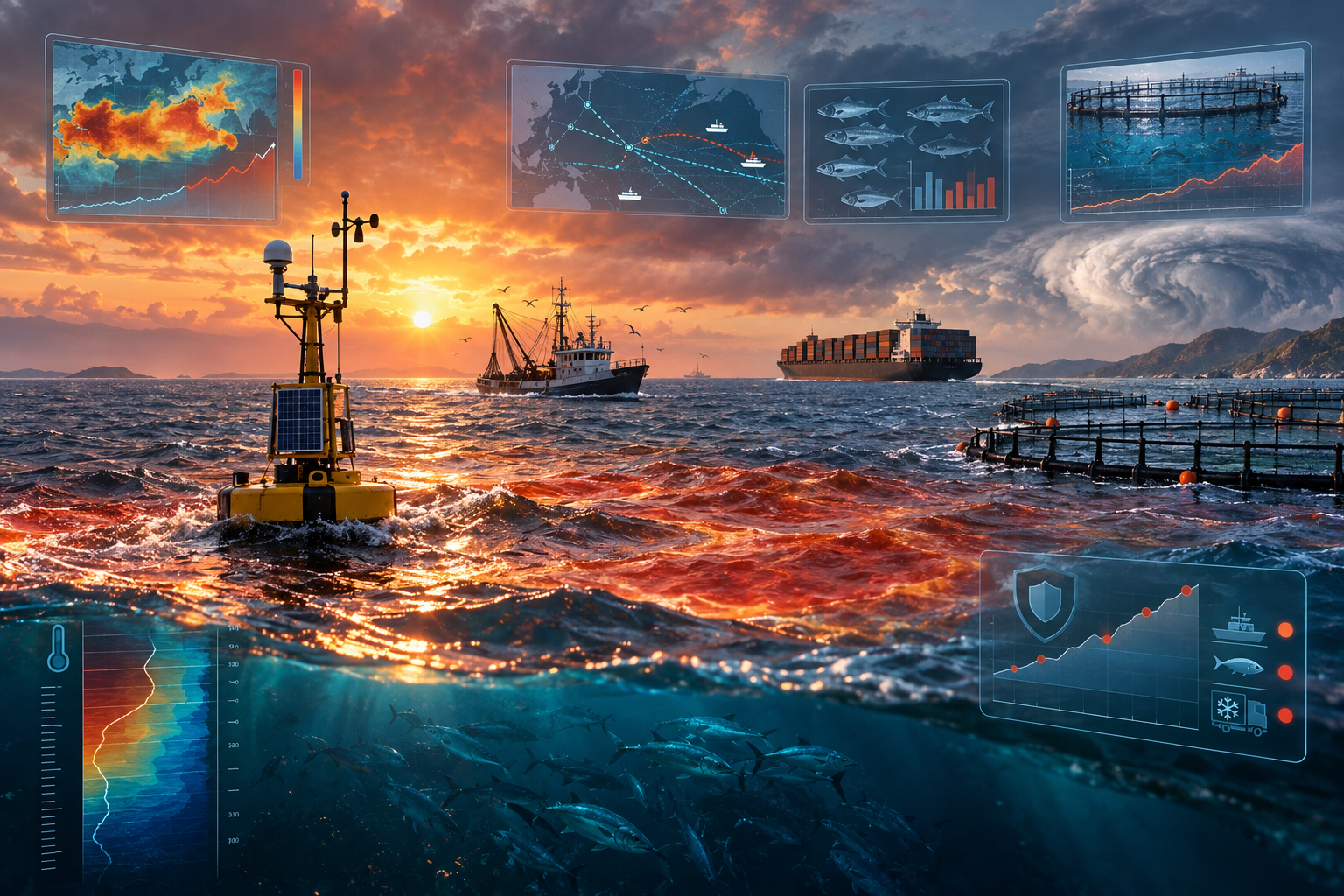
Global Ocean Heat Sets a 100-Day Record, Raising Demand for Trigger-Based Risk Records in Taiwan Shipping, Fisheries and Insurance
Non-polar oceans recorded 100 consecutive record-hot days from 2 June to 10 September as El Niño intensified risks. Taiwan sectors need linked records for temperature, routes, catch, equipment and insurance triggers.
重點摘要
Executive Summary / Lead全球非極區海洋在 6 月 2 日至 9 月 10 日連續 100 天創下有紀錄以來的同期最高平均海表溫度。8 月 22 日讀值達 21.10°C,氣候變遷背景與增強中的 El Niño 共同放大風險。
The non-polar global ocean posted record average sea-surface temperatures for 100 consecutive days from 2 June through 10 September. A reading of 21.10°C was recorded on 22 August, with climate change and a strengthening El Niño compounding the risk.
企業與產業背景
Company & Industry Context海洋高溫會改變上升流、營養鹽、魚群分布、珊瑚壓力和熱帶氣旋條件,並透過漁獲、港口、航線、冷鏈、養殖和旅遊傳入企業營運。
Ocean heat can alter upwelling, nutrients, fish distribution, coral stress and cyclone conditions, transmitting through catch, ports, routes, cold chains, aquaculture and tourism.
挑戰與重要性
Challenge / Why It Matters全球平均海溫不能直接證明單一漁場損失或航次延誤。企業若沒有特定海域、深度、時間、測站或衛星資料,以及漁獲、設備和路線基準,就可能把相關性寫成確定因果。
A global temperature average cannot prove loss at one fishery or delay on one voyage. Without location, depth, time, station or satellite provenance and catch, equipment and route baselines, companies may present correlation as certain causation.
行動、方案與執行
Action / Solution / Implementation風險管理應把海溫異常、氣象警報、漁場座標、捕撈努力、死亡率、航線、燃料、冷鏈溫度、港口等待和保單觸發連到同一事件期間,並保留模型與資料版本。
Risk systems should connect temperature anomalies, weather alerts, fishing coordinates, effort, mortality, route, fuel, cold-chain temperature, port waiting and insurance triggers to one event period while retaining model and data versions.
證據、成果與影響
Evidence / Results / Impact三筆固定來源證據涵蓋百日觀測、WMO 展望與跨地區影響。它們支持全球性風險升高,但不取代台灣周邊海域的在地監測或個別損失歸因。
Three fixed-scope reports cover the 100-day observation, WMO outlook and cross-regional implications. They support higher global risk but do not replace local monitoring around Taiwan or loss attribution for a specific asset.
產業與制度意涵
Industry & Institutional Implications漁業、養殖、航運、港口、冷鏈、觀光和保險將以不同速度感受衝擊。可驗證的觸發紀錄可避免事後以單一全球指標推導所有損失。
Fisheries, aquaculture, shipping, ports, cold chains, tourism and insurance will experience different timing and severity. Verifiable triggers prevent a single global indicator from being used to infer every loss after the fact.
SNN 編輯與揭露前證據基礎設施觀點
SNN Editorial / Pre-Disclosure Evidence Infrastructure PerspectiveSNN editorial analysis:外部變化是全球海洋熱異常連續百日並疊加 El Niño;傳導機制是海況與生態變化改變漁獲、養殖存活、航線和保險損失,影響台灣遠洋漁業、海運、食品與金融。第一,漁業與養殖營運者應由場長或船長在每日作業後保存海溫、溶氧、座標、捕撈努力、死亡率、飼料與處置紀錄,超過物種門檻即啟動移位或減量。第二,航運與冷鏈主管應在每次氣象警報或改道時核對航線版本、港口等待、燃料、貨艙溫度、交付時間與客戶通知,抵港後完成偏差報告。第三,保險與銀行風險團隊應在承保、理賠及季度覆核時比對保單觸發、測站或衛星資料、資產座標、營運基準與損失單據,不得僅以全球均溫歸因。這是條件式台灣傳導分析,不代表已發生特定損失。
SNN editorial analysis: The external change is a 100-day global ocean heat anomaly compounded by El Niño. The transmission mechanism is the effect of sea conditions and ecosystem shifts on catch, aquaculture survival, routes and insured loss, affecting Taiwan distant-water fisheries, shipping, food and finance. First, after each operating day, farm managers or vessel masters should retain temperature, dissolved oxygen, coordinates, fishing effort, mortality, feed and response records, moving or reducing activity when species thresholds are crossed. Second, whenever an alert or rerouting occurs, shipping and cold-chain leaders should reconcile route version, port wait, fuel, cargo temperature, delivery time and customer notice, completing a variance report on arrival. Third, at underwriting, claim and quarterly review, insurers and bank risk teams should compare policy triggers, station or satellite records, asset coordinates, operating baseline and loss documents, avoiding attribution from a global average alone. This is conditional Taiwan transmission analysis, not a claim that a specific loss has occurred.
未來展望
Future Outlook後續應追蹤 El Niño 強度、區域海洋熱浪、珊瑚與魚群指標、港口與養殖損失,並區分觀測、預報與歸因。
Further review should track El Niño strength, regional marine heatwaves, coral and fish indicators, port and farm losses, separating observation, forecast and attribution.
來源、證據鏈與責任編輯
來源媒體:Eco-Business · 原文作者:Elizabeth Claire Alberts, Mongabay.com · 原文發布:
外部論述與制度來源
以下外部公告、法規、研究或新聞用於支撐本文論述,並與原始出版分開呈現。
- Primary event and measurement evidence.Eco-BusinessRecord ocean heat persists for 100 days as El Niño intensifies ↗出版日期 2026-09-22 · 查核時間 2026-09-23 10:24 (UTC+8)
100-day sea-surface-temperature record and ecological implications.
- Independent forecast and hazard context.ReutersUN urges the world to ready for extreme heat risk from El Nino ↗出版日期 2026-06-02 · 查核時間 2026-09-23 10:24 (UTC+8)
WMO El Niño outlook and risks to heat, food and water security.
- Independent evidence on event duration and sector exposure.ReutersClimate Focus: El Nino heats up on Environment Day ↗出版日期 2026-06-05 · 查核時間 2026-09-23 10:24 (UTC+8)
Persistence probability and cross-regional weather implications.
主題中心:企業與供應鏈