
全球脈動
CDP估企業面臨3,970億美元水風險,供應鏈與資本配置開始看見流域限制
SNN.TW 編輯報導SNN.TW Editorial Reporting
CDP分析逾6,500家企業的水揭露,企業預期未來水風險財務影響達3,970億美元,其中450億美元位於上游供應鏈。企業需把流域、許可、計量與財務決策連成可核驗證據。
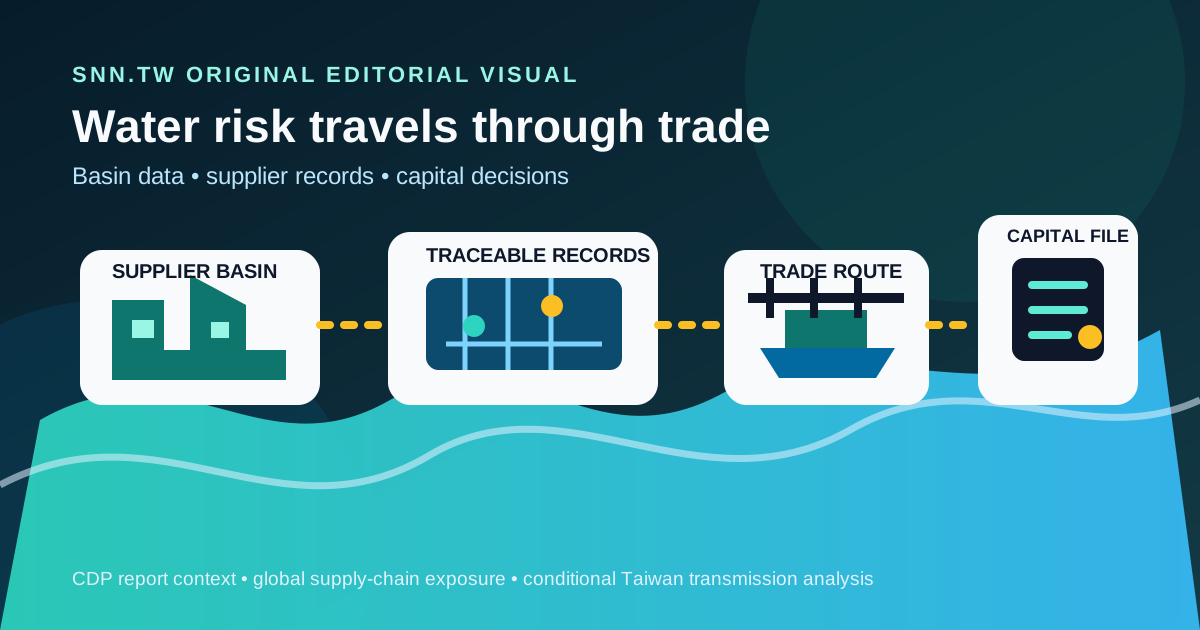
CDP Estimates USD 397 Billion in Corporate Water Risk as Basin Constraints Reach Supply Chains and Capital
CDP analysis of water disclosures from more than 6,500 companies identifies USD 397 billion of anticipated financial impacts, including USD 45 billion upstream. Companies now need verifiable links among basins, permits, measurements and financial decisions.
重點摘要
Executive Summary / LeadCDP於2026年9月21日發布水、貿易與資本分析,依逾6,500家企業的水揭露資料,企業預期未來水相關財務影響約3,970億美元,已發生影響約14億美元。Eco-Business於10月2日將此報告帶入全球貿易與供應鏈脈絡。這些數字來自企業揭露與CDP分析,不等於每項風險都已轉成實際損失。
CDP released its Water, Trade and Capital analysis on September 21, 2026. Based on water disclosures from more than 6,500 companies, it identifies about USD 397 billion of anticipated future financial impacts and USD 1.4 billion of impacts already reported. Eco-Business brought the findings into a global trade and supply-chain context on October 2. These figures reflect company disclosures and CDP analysis, not proof that every identified risk has become an actual loss.
企業與產業背景
Company & Industry Context供應鏈重組通常把勞動、能源、運輸與地緣政治列入選址,但水無法像設備或訂單一樣搬移。CDP指出,企業預期影響中約450億美元發生在上游供應鏈,總部位於全球北方的企業所揭露上游水風險約六成位於全球南方。資料中心、半導體、農業、食品、紡織與關鍵材料都會同時受到流域供給、取水規範、污染與極端氣候影響。
Supply-chain restructuring often considers labour, energy, transport and geopolitics, but water cannot move with equipment or orders. CDP identifies about USD 45 billion of anticipated impacts upstream and says around 60 percent of upstream water risks disclosed by companies headquartered in the Global North are located in the Global South. Data centres, semiconductors, agriculture, food, textiles and critical materials are exposed to basin availability, withdrawal rules, pollution and climate extremes.
挑戰與重要性
Challenge / Why It Matters超過三分之一向CDP揭露的企業仍沒有系統化評估及管理水風險的程序。供應商問卷若只有年度總用水,卻缺少廠址座標、流域、取水許可、季節性基準、廢水品質與停水紀錄,就無法判斷特定訂單的曝險。聯合國統計另顯示,2024年全球僅56%的生活廢水獲得安全處理,工業廢水資料仍稀少,說明企業內部紀錄也須標明資料缺口。
More than one third of companies disclosing to CDP still lack a process to systematically assess and manage water risk. A supplier questionnaire with annual consumption but no facility coordinates, basin, withdrawal permit, seasonal baseline, wastewater quality or interruption history cannot establish exposure for a specific order. United Nations statistics also show that only 56 percent of domestic wastewater was safely treated in 2024 and industrial wastewater data remain scarce, so corporate records must identify data gaps rather than conceal them.
行動、方案與執行
Action / Solution / Implementation企業應先把工廠與重要供應商對應到流域及取水來源,再將許可條件、水表讀值、製程用水基準、回收率、廢水檢測及中斷情境連到採購和資本支出。採購合約可加入流域資料更新、異常通報、替代供應與現場查驗條款。財務團隊則應把缺水停工、法規限制、水價變動、設備改造與保險成本分別納入現金流情境,不能以單一全球風險分數取代資產層級證據。
Companies should first map facilities and critical suppliers to basins and water sources, then connect permit conditions, meter readings, process baselines, recycling rates, wastewater tests and interruption scenarios to procurement and capital spending. Contracts can require basin-data updates, incident notices, alternative supply and site verification. Finance teams should separately model drought downtime, regulatory restrictions, water-price changes, equipment upgrades and insurance costs instead of substituting one global risk score for asset-level evidence.
證據、成果與影響
Evidence / Results / Impact三筆法律上與編輯上分離的來源完成Evidence Gate。Eco-Business是區間內媒體發現錨點,公開標題、摘要、作者與時間。CDP正式新聞稿與報告頁是第一手分析資料,確認3,970億美元預期影響、450億美元上游曝險、逾6,500家企業樣本及程序缺口。聯合國統計司的SDG 6資料獨立核對全球水壓力、廢水處理與跨境治理背景。這套證據支持水風險的重要性,不證明特定企業已發生全部預估損失。
Three legally and editorially separate records complete the Evidence Gate. Eco-Business is the interval discovery anchor and publicly identifies the headline, summary, author and date. The CDP press release and report page are first-party analysis records confirming USD 397 billion of anticipated impacts, USD 45 billion upstream, the sample of more than 6,500 companies and the process gap. The United Nations Statistics Division independently cross-checks the water-stress, wastewater-treatment and transboundary-governance context. The evidence supports materiality, but does not prove that a named company has incurred every estimated loss.
產業與制度意涵
Industry & Institutional Implications水風險從環境議題進入選址、採購、信用與保險後,企業揭露將更接近資產和交易層級。供應商可能被要求提供流域座標、許可有效期、計量資料與中斷備援;銀行與投資人則需要區分已發生損失、預期風險、資本支出與尚未量化的依賴。企業若只報告集團總用水,可能無法回答客戶特定產品、特定工廠及特定期間的韌性問題。
As water risk enters siting, procurement, credit and insurance decisions, disclosure will move closer to assets and transactions. Suppliers may need to provide basin coordinates, permit validity, meter data and continuity plans. Banks and investors must distinguish realised losses, anticipated risk, capital expenditure and unquantified dependencies. A group-wide water total may no longer answer customer questions about resilience for a particular product, factory and reporting period.
SNN 編輯與揭露前證據基礎設施觀點
SNN Editorial / Pre-Disclosure Evidence Infrastructure PerspectiveSNN editorial analysis:全球水風險揭露制度與市場要求正從直接營運擴大到供應鏈及資本配置;這項全球制度變動會透過客戶採購條款、融資盡職調查與缺水停工成本傳導到台灣半導體、電子組裝、紡織與銀行,使台灣市場必須把流域位置、取水許可和供應商用水資料連到訂單及授信。第一,台灣半導體與電子製造商的採購及廠務主管應在每季供應商評估和新廠投資前,核對廠址流域座標、取水許可、水表讀值、製程基準、停水情境與供應商問卷,若水壓或許可條件改變即重算產能風險。第二,台灣紡織與食品出口商的品牌及品質主管應在每批訂單、合約續約與驗收前,比對原料來源、供應商水風險評分、廢水檢測報告、交付紀錄和替代產地核准,未通過流域驗證不得把供應鏈列為具韌性。第三,台灣銀行、基金與保險團隊應在授信撥款、季度覆核及保單續約時,檢查借款人取水許可、資產座標、歷史中斷紀錄、資本支出預算、情境模型與董事會決議,若缺水觸發點或保費變更即更新現金流及抵押品假設。這是揭露前證據基礎設施的條件式台灣傳導分析,不代表CDP估算已在台灣形成既成損失,也不是對個別證券的投資建議。
SNN editorial analysis: The global institutional and market change is water-risk disclosure moving from direct facilities to supply chains and capital allocation. This global requirement can flow through customer procurement clauses, lender due diligence and drought-related downtime to Taiwan semiconductor, electronics-assembly, textile and banking sectors, requiring the Taiwan market to connect basin location, withdrawal permits and supplier water data to orders and credit decisions. First, before each quarterly supplier review and new-facility investment, procurement and facilities managers at Taiwan semiconductor and electronics manufacturers should reconcile basin coordinates, withdrawal permits, meter readings, process baselines, outage scenarios and supplier questionnaires, and must recalculate capacity risk whenever pressure or permit conditions change. Second, before each order, contract renewal and shipment acceptance, brand and quality managers at Taiwan textile and food exporters should compare raw-material origin, supplier water-risk scores, wastewater test reports, delivery records and alternative-site approvals, and must not classify the chain as resilient before basin verification passes. Third, at loan disbursement, quarterly review and policy renewal, Taiwan bank, fund and insurance teams should inspect borrower permits, asset coordinates, disruption histories, capital budgets, scenario models and board resolutions, and must update cash-flow and collateral assumptions when a drought or premium trigger changes. This Pre-Disclosure Evidence Infrastructure interpretation does not mean the CDP estimate is an established Taiwan loss, and it is not advice on an individual security.
未來展望
Future Outlook後續應追蹤企業是否補足流域級供應鏈盤點、取水許可、工業廢水、資本支出與財務影響的關聯資料,也應觀察銀行及保險業是否把水壓力納入授信與承保觸發條件。任何工廠遷移、供應商更換、許可調整或極端乾旱,都應啟動新版基準與情境重算,而不是沿用集團平均數。
Future review should track whether companies connect basin-level supplier mapping, withdrawal permits, industrial wastewater, capital spending and financial impacts. It should also test whether banks and insurers use water stress in credit and underwriting triggers. A facility move, supplier change, permit revision or severe drought should activate a new baseline and scenario calculation rather than preserve a group average.
來源、證據鏈與責任編輯
來源媒體:Eco-Business · 原文作者:Rhick Lars Albay · 原文發布:
外部論述與制度來源
以下外部公告、法規、研究或新聞用於支撐本文論述,並與原始出版分開呈現。
- Discovery media anchorEco-BusinessWater risks threaten trade as companies face US$397 billion exposure: CDP ↗出版日期 2026-10-02 · 查核時間 2026-10-05 09:18 (UTC+8)
Interval discovery anchor for the CDP water-risk report, author, publication timing and public summary.
- First-party primaryCDPCompanies Expect Nearly US$400bn Hit From Water Impacts ↗出版日期 2026-09-21 · 查核時間 2026-10-05 09:18 (UTC+8)
USD 397 billion anticipated impacts, USD 45 billion upstream, more than 6,500 company disclosures and the share lacking systematic processes.
- Independent cross-checkUnited Nations Statistics DivisionClean water and sanitation, Sustainable Development Goal 6 ↗出版日期 2026-07-14 · 查核時間 2026-10-05 09:18 (UTC+8)
Independent context for water stress, wastewater treatment, industrial data gaps and transboundary water governance.
主題中心:永續制度與揭露