
全球脈動
石榴皮淨水材
新加坡國立大學National University of Singapore化學系研究團隊開發出一種由廢棄石榴皮製成的奈米級碳材料,可有效去除水中的工業污染物對硝基酚(4-NP),為農業廢棄物再利用與水污染治理提供新方案。
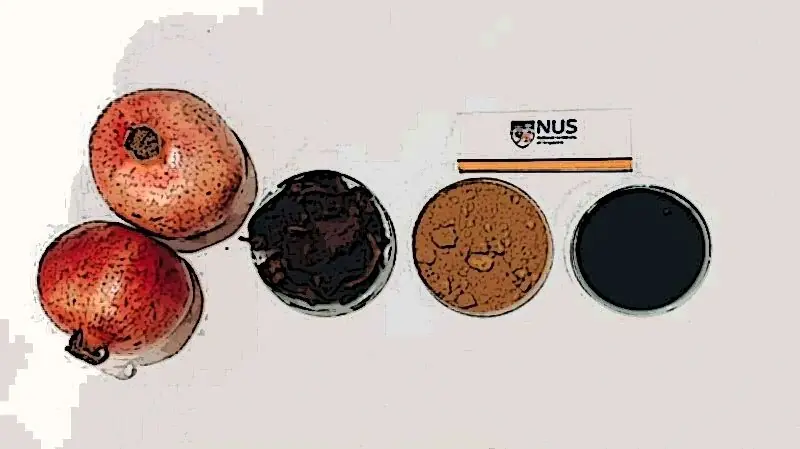
Pomegranate-Peel Nanomaterial Removes Toxic Pollutants from Water
Researchers from the National University of Singapore have developed a nanoscale carbon material derived from discarded pomegranate peels that can efficiently remove the toxic industrial pollutant 4-nitrophenol (4-NP) from contaminated water.
重點摘要
Executive Summary / Lead新加坡國立大學National University of Singapore化學系研究團隊開發出一種由廢棄石榴皮製成的奈米級碳材料,可有效去除水中的工業污染物對硝基酚(4-NP),為農業廢棄物再利用與水污染治理提供新方案。
Researchers from the National University of Singapore have developed a nanoscale carbon material derived from discarded pomegranate peels that can efficiently remove the toxic industrial pollutant 4-nitrophenol (4-NP) from contaminated water.
企業與產業背景
Company & Industry Context該研究由Sam Li領導,成果已發表於《Environmental Nanotechnology, Monitoring & Management》。
The study, led by Sam Li, was published in Environmental Nanotechnology, Monitoring & Management. 4-NP is widely used in pesticide, pharmaceutical, and dye production and is known for its persistence in aquatic environments due to its high solubility and chemical stability.
挑戰與重要性
Challenge / Why It Matters研究指出,4-NP廣泛用於農藥、藥品與染料製造,但因其高溶解性與化學穩定性,容易進入河川與湖泊並長期存在,對生態系與人體健康造成風險。
Conventional treatment methods such as chemical oxidation and biological processes can be effective but are often costly, energy-intensive, or difficult to scale,
行動、方案與執行
Action / Solution / Implementation目前常見的去除方法如化學氧化或生物處理雖然有效,但成本高、能耗大且可能產生二次污染物,因此難以大規模應用。
sometimes generating secondary waste. Carbon-based adsorption materials offer an alternative, but many rely on chemical activation steps that limit their sustainability.
證據、成果與影響
Evidence / Results / Impact相比之下,碳基吸附材料雖較簡單,但傳統製程通常需要化學活化,環境負擔仍高。
In this study, the team converted pomegranate peels collected from local markets into biochar through controlled heating at 600°C. The material was then processed into nanoparticles using ball milling and ultrasonication in water, avoiding the use of chemical activating agents.
產業與制度意涵
Industry & Institutional Implications研究團隊以新加坡市場收集的石榴皮為原料,先在600°C條件下製成生物炭,再透過球磨與超音波技術將其轉化為奈米顆粒,整個過程不需使用化學活化劑,大幅降低環境負擔。所得材料具有高表面積與多孔結構,可有效吸附4-NP等小分子污染物。
The resulting nanobiochar has a high surface area and porous structure, enabling efficient adsorption of small organic pollutants. In laboratory tests, it removed more than 94% of 4-NP within 90 minutes under optimized conditions.
SNN 編輯與揭露前證據基礎設施觀點
SNN Editorial / Pre-Disclosure Evidence Infrastructure Perspective實驗結果顯示,該奈米生物炭在90分鐘內可去除超過94%的4-NP污染物,即使經過三次循環使用後,仍可維持約85.76%的去除效率,展現良好的再利用潛力。
The material also demonstrated reusability. After regeneration with sodium hydroxide washing, it retained 85.76% removal efficiency after three cycles.
未來展望
Future Outlook研究團隊目前正進一步測試其於實際廢水中的表現,並評估量產與導入現有水處理系統的可行性。若成功應用,該技術有望同時實現廢棄農業資源再利用與工業廢水治理的雙重效益。
The researchers are now testing its performance in real wastewater and exploring pathways for scaling and integration into existing treatment systems.
來源、證據鏈與責任編輯
主題中心:氣候與能源轉型
SNN.TW 原始刊登紀錄 ↗