
台灣焦點
以數據驅動低碳研發,日立先端科技推動製造業研發邁向精準與永續並行
日立先端科技以 AI、材料資訊學與 Physical AI 支援台灣先進材料開發,並與工研院 MACSiMUM 平台形成合作路徑;研發效率改善能否轉化為實際節能與減碳,仍須以台灣場域數據驗證。
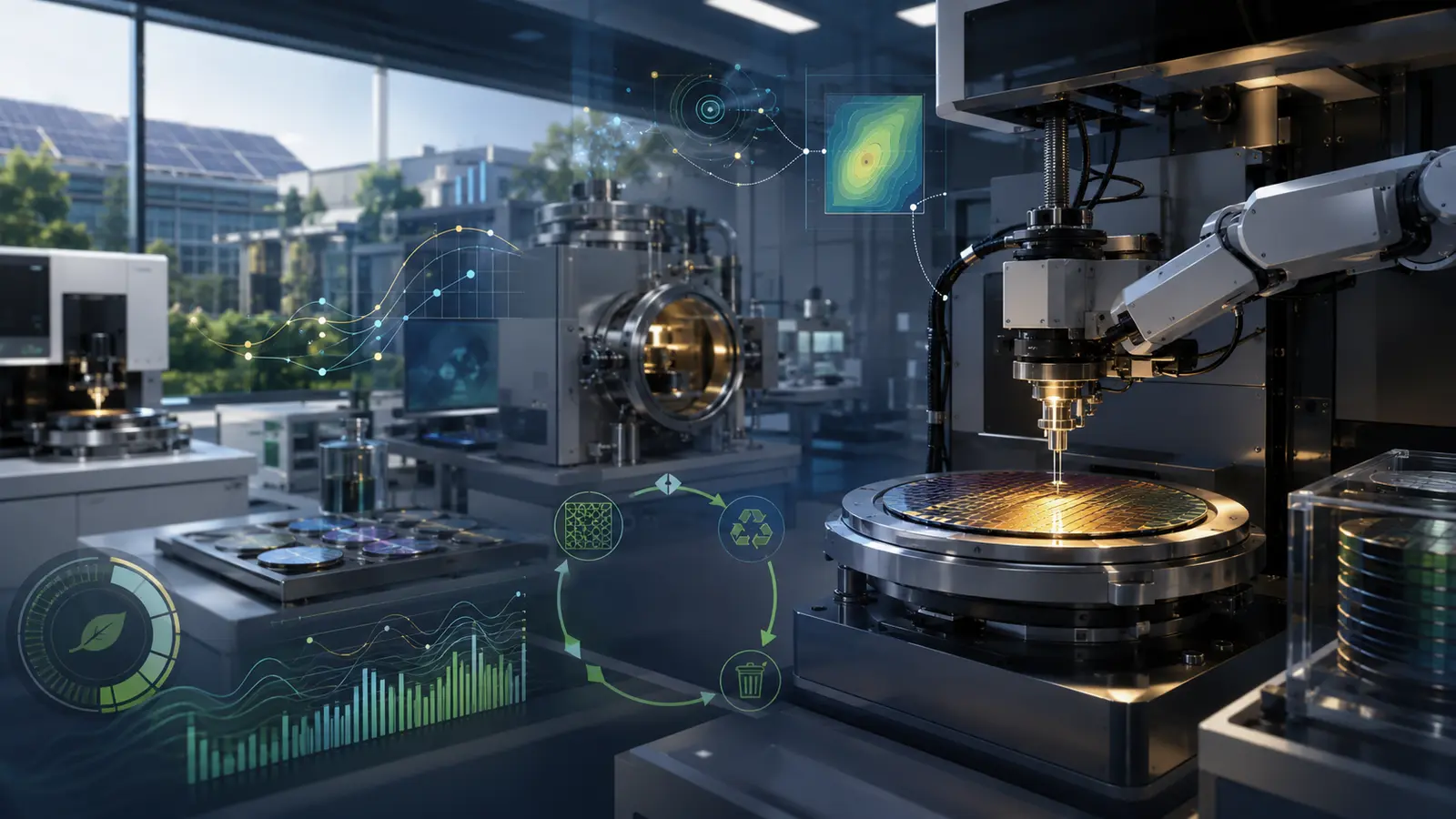
The competitive logic of the manufacturing industry is shifting from scale and speed to "efficient" and "precise" R&D
Hitachi High-Tech is applying AI, materials informatics and Physical AI to advanced-materials development in Taiwan alongside ITRI's MACSiMUM platform; Taiwan-specific data is still needed to verify whether R&D efficiency gains translate into energy and emissions reductions.
重點摘要
Executive Summary / Lead在淨零轉型與資源壓力持續升高的背景下,製造業的競爭邏輯正從規模與速度,轉向「效率」與「精準」研發。日立先端科技透過整合Informatics x Physical AI架構,將材料研發由傳統試錯模式,轉型為以數據預測為核心的決策流程,不僅縮短開發時間,也同步降低能源消耗與材料浪費,逐步形塑兼顧產業競爭力與環境永續的研發新典範。
在不確定時代,研發效率成為永續關鍵
Against the backdrop of a net-zero transition and continuously rising resource pressures, the competitive logic of the manufacturing industry is shifting from scale and speed to "efficient" and "precise" R&D. By integrating the Informatics x Physical AI framework, Hitachi High-Tech transforms materials R&D from a traditional trial-and-error model into a data-prediction-core decision-making process. This not only shortens development time but also simultaneously reduces energy consumption and material waste, gradually shaping a new paradigm of R&D that balances industrial competitiveness with environmental sustainability.
企業與產業背景
Company & Industry Context隨著AI、高效能運算與先進製程快速發展,半導體產業對能源與資源的需求持續攀升,台電預估,未來十年間半導體產業用電量將成長超過一倍。在淨零轉型壓力下,企業競爭力不再只是提升產能,更在於如何以更少的實驗、更低的能源消耗與更高的研發成功率創造價值。這也使數據驅動的研發模式,逐漸成為製造業邁向永續的重要路徑。
過去仰賴大量試驗與時間累積的研發模式,不僅耗費資源,也難以快速回應市場變化。日立先端科技為製造業提出解決方案,從精密計測與分析設備出發,逐步發展出以數據為核心的研發支援體系。透過將實驗室與產線中分散的觀測數據進行整合與分析,企業得以累積可持續運用的知識基盤,進一步強化決策品質,降低不必要的試錯成本。
With the rapid development of AI, high-performance computing, and advanced manufacturing processes, the semiconductor industry's demand for energy and resources continues to climb. Taipower estimates that the semiconductor industry's electricity consumption will more than double over the next decade. Under the pressure of a net-zero transition, corporate competitiveness is no longer just about boosting capacity, but rather about how to create value with fewer experiments, lower energy consumption, and higher R&D success rates. This has made data-driven R&D models an increasingly crucial path for the manufacturing industry to move toward sustainability.
The past R&D model, which relied heavily on extensive testing and accumulated time, not only consumed immense resources but also struggled to respond quickly to market changes. Hitachi High-Tech provides solutions for the manufacturing industry. Starting from precision metrology and analytical equipment, it has progressively developed a data-centric R&D support system. By integrating and analyzing scattered observational data from laboratories and production lines, enterprises can build a sustainable knowledge foundation, further enhancing decision-making quality and reducing unnecessary trial-and-error costs.
挑戰與重要性
Challenge / Why It MattersPhysical AI:連結實體數據與預測決策的關鍵架構
過去,數據只是實驗與製程的附屬產物;但現在,真正領先的關鍵,在於企業能否賦予數據決策能力,甚至在問題發生前就精準指出答案的方向。為了回應這一核心命題,日立先端科技立足於Hitachi, Ltd.強大的Lumada 3.0平台動能上,推出直擊產業現場的重量級解決方案——HMAX Industry。
這不只是工具的升級,而是一場關於「Physical AI」的運作範式革新,其核心獨特性可歸納為一道致勝公式: Physical AI=計測/分析/解析設備 × Informatics AI 。
In the past, data was merely a byproduct of experiments and manufacturing processes. Today, however, the key to true leadership lies in whether an enterprise can empower data with decision-making capabilities, or even accurately point toward solutions before problems occur. To answer this core proposition, Hitachi High-Tech, leveraging the powerful momentum of Hitachi, Ltd.'s Lumada 3.0 platform, has introduced a heavyweight solution directly targeting the industrial frontline - HMAX Industry.
This is more than just a tool upgrade; it is a paradigm revolution in the operation of "Physical AI." Its core uniqueness can be summarized by a winning formula:
Physical AI = Metrology / Analysis / Analytical Equipment × Informatics AI
行動、方案與執行
Action / Solution / Implementation這道公式揭示了一個現實:單一技術的優勢已不足以支撐競爭力,真正的價值來自「物理數據取得力」與「AI運算力」的乘數效應。日立先端透過這兩股力量深度耦合:一方面 精準 擷取:運用領先業界的高精度計測/分析/解析設備,從實體世界中抓取最關鍵的底層數據;另一方面智慧預判:透過Informatics核心模組即時建模,將龐雜的原始資訊轉化為具備預測能力的「數位資產」與「戰略情報」。
當「觀測」、「理解」到「預測與優化」被整合進同一個架構,系統將形成一個自我強化的閉環。企業決策從此擺脫「經驗導向」的盲點,邁向高度科學化與自動化,這種跨越虛擬與現實邊界的Physical AI,正是日立先端為製造業定義的數位轉型升級範式。
作為Physical AI的分析核心,Informatics主要展現在三個相互連動的應用領域:
三者共同作用,使研發由線性試驗轉向動態調整的預測系統。企業不再需要進行大量重複性實驗,而是透過數據分析先行篩選最具潛力的方向,再進行精準驗證,從而降低時間、能源與材料投入。
建立「數據生命週期」,支撐低碳研發路徑
在實務應用上,日立先端科技進一步提出「數據生命週期」(Data Lifecycle)概念,將物理現場數據與AI預測能力無縫銜接,協助企業在數位孿生環境中優化研發路徑:
This formula reveals a reality: the advantage of a single technology is no longer enough to sustain competitiveness; the true value comes from the multiplier effect of "physical data acquisition power" and "AI computing power." Hitachi High-Tech deeply couples these two forces:
When "observation," "understanding," and "prediction and optimization" are integrated into the same architecture, the system forms a self-reinforcing closed loop. Corporate decision-making is thereby liberated from the blind spots of "experience-driven" models, moving toward high scientific rigor and automation. This Physical AI, which bridges the boundaries between the virtual and physical worlds, is precisely the digital transformation upgrade paradigm defined by Hitachi High-Tech for the manufacturing industry.
As the analytical core of Physical AI, Informatics manifests primarily across three interconnected application areas:
Working together, these three elements shift R&D from a linear trial to a dynamically adjusted predictive system. Enterprises no longer need to conduct massive amounts of repetitive experiments. Instead, they can pre-screen the most promising directions through data analysis before conducting precise validation, thereby reducing investments in time, energy, and materials. Centered on Hitachi, integrating equipment-acquired data with MI/CI/PI and AI technologies achieves comprehensive data value creation from data collection to process optimization.
In practical applications, Hitachi High-Tech further proposes the concept of a "Data Lifecycle," seamlessly bridging physical field data with AI predictive capabilities to help companies optimize R&D paths within a digital twin environment:
Hitachi High-Tech utilizes CI to screen out the optimal material combinations from a massive pool of compounds, narrowing the scope of experimentation. It then uses MI to build models that optimize process conditions, boosting efficiency and cutting down experiment counts.
證據、成果與影響
Evidence / Results / Impact引領材料研發的綠色數位轉型
日立先端科技正引領材料開發邁入「淨零研發」新時代。其核心CI技術,榮獲2024年度「日本材料學會技術獎」。此獎項在材料科學與工程領域具有極高份量,專門頒給對「新技術開發」或「現有技術革新」有顯著實質貢獻的團體。日立先端能獲此殊榮,象徵其AI材料研發技術已從理論研究成功轉化為具備『實際產業價值』的頂尖工具,能有效協助企業突破研發瓶頸,實現材料開發的數位轉型。
以日本金屬塗層大廠NOF為例,在防鏽材料開發中,過去高度依賴資深人員的「神之手」調配比例。導入日立先端的MI後,實驗次數與時間成本降低50%以上,更找到了資深人員「從沒想過」的新配方。「我們不是取代工程師,而是讓他的判斷被放大,並且留下來,幫助後來的年輕工程師。」日立先端科技表示。一位參與導入的技術主管形容:「以前像在黑暗中摸索,現在像是先看到地圖再出發。」
Hitachi High-Tech is leading materials development into a new era of "Net-Zero R&D." Its core CI technology won the 2024 "Technology Award of the Society of Materials Science, Japan." Holding immense weight in the field of materials science and engineering, this award is dedicated to organizations making substantial, outstanding contributions to "new technology development" or "existing technology innovation." Achieving this honor signifies that Hitachi High-Tech's AI materials R&D technology has successfully transitioned from theoretical research into a top-tier tool with "actual industrial value," effectively helping companies break through R&D bottlenecks and achieve digital transformation in materials development.
Take Japanese metal coatings giant NOF as an example. In developing anti-rust materials, they used to rely heavily on the "divine hands" of senior personnel to blend proportions. After introducing Hitachi High-Tech's MI, experimental frequency and time costs dropped by more than 50%, and they even discovered a new formula that senior staff had "never thought of." "We are not replacing engineers; we are amplifying their judgment and leaving it behind to help future young engineers," stated Hitachi High-Tech. A technical manager involved in the implementation described it: "Before, it felt like groping around in the dark; now, it's like seeing the map before we set off."
產業與制度意涵
Industry & Institutional Implications與此同時,日立先端科技在內部製造流程中亦展現強大自律,將其每單位銷售額的化學物質大氣排放改善率提升至67.4%,遠超預期目標。這象徵著日立先端科技不僅提供頂尖的數位研發工具,更在實際生產中實踐環境友善承諾,為材料產業打造從『虛擬研發』到『實體製造』的全方位永續解決方案。
從效率提升到永續競爭力的新產業模式
Meanwhile, Hitachi High-Tech has also demonstrated robust self-discipline in its internal manufacturing processes, boosting its atmospheric chemical emissions improvement rate per unit of sales to 67.4%, far exceeding expected targets. This symbolizes that Hitachi High-Tech not only delivers cutting-edge digital R&D tools but also walks the talk on environmental friendliness in actual production, tailoring an all-around sustainability solution for the materials industry from "virtual R&D" to "physical manufacturing."
SNN 編輯與揭露前證據基礎設施觀點
SNN Editorial / Pre-Disclosure Evidence Infrastructure Perspective日立先端科技與台灣工業技術研究院材化所合作,將Informatics(CI/MI/PI)解決方案深度導入工研院建置的MACSiMUM數位平台。透過其精密分析與數據組織能力,協助台灣材化業者在研發初始即精準定錨,大幅減少實驗次數與成本。
Hitachi High-Tech has partnered with the Material and Chemical Research Laboratories of Taiwan's Industrial Technology Research Institute (ITRI) to deeply integrate its Informatics (CI/MI/PI) solutions into the MACSiMUM digital platform built by ITRI. Through its precise analytical and data organization capabilities, it helps Taiwanese material and chemical companies achieve precise anchoring right at the beginning of R&D, drastically reducing experiment counts and costs.
未來展望
Future Outlook當材料研發從「試出答案」走向「預測答案」,效率的提升不再只是成本優化,更直接關係到能源使用、資源配置與碳排管理的整體表現。日立先端科技以「Autonomy Enabler(自主化賦能者)」為定位,將設備、數據與AI整合為可持續運作的決策系統,不僅協助企業縮短研發週期,也同步降低對環境的負擔。在全球產業邁向淨零與高效並行的新階段,這樣的數位研發模式,正逐步成為製造業打造永續競爭力的關鍵基石。
As materials R&D shifts from "testing for answers" to "predicting answers," efficiency gains are no longer just about cost optimization; they directly impact the overall performance of energy use, resource allocation, and carbon emissions management. Positioning itself as an "Autonomy Enabler," Hitachi High-Tech integrates equipment, data, and AI into a continuously operational decision-making system. This not only helps enterprises shorten their R&D cycles but also simultaneously alleviates the burden on the environment. At a new stage where global industries move toward the parallel goals of net-zero and high efficiency, this digital R&D model is progressively becoming a vital cornerstone for the manufacturing industry to forge sustainable competitiveness.
來源、證據鏈與責任編輯
來源媒體:SNN.TW · 原文作者:SNN.TW 編輯台 · 原文發布:
外部論述與制度來源
以下外部公告、法規、研究或新聞用於支撐本文論述,並與原始出版分開呈現。
- 台灣企業官方主錨點日立先端科技股份有限公司通過AI·Informatics支援臺灣尖端材料開發的高速化和高度化 ↗出版日期 2026-04-21 · 查核時間 2026-08-27(時間未記錄)
日立先端科技以 AI、材料資訊學與 HMAX Industry 支援台灣先進材料開發;減少研究階段實驗次數與縮短開發週期可降低電力及用水消耗;Physical AI 將設備物理數據、領域知識與先進 AI 結合
- 台灣機構合作證據工業技術研究院經濟部推動材料開發數位轉型 工研院與日立集團強強聯手 開拓材料領域新局面 ↗出版日期 2024-05-20 · 查核時間 2026-08-27(時間未記錄)
工研院 MACSiMUM 材料化學數位平台與日立先端科技及日立製作所合作;日立先端科技台灣提供以材料資訊學為基礎的分析環境平台服務;合作目標包括減少實驗次數、降低研發成本並加速台灣新材料開發
- 應用案例證據株式會社日立先端科技日立先端科技與 NOF METAL COATINGS 運用材料資訊學,強化研究開發業務的技術水準並提升相關作業流程效率 ↗出版日期 2025-08-19 · 查核時間 2026-08-27(時間未記錄)
NOF METAL COATINGS 導入材料資訊學解決方案;部分研究主題的實驗執行次數與使用時間縮減超過 50%;資料導向研發可補充資深技術人員經驗並形成新候選方案
- 技術獎項證據Hitachi High-Tech CorporationCompound Discovery Support Service Chemicals Informatics Received the 2024 Technology Award from the Society of Materials Science, Japan ↗出版日期 2025-06-03 · 查核時間 2026-08-27(時間未記錄)
Chemicals Informatics 獲日本材料學會 2024 年度技術獎;該服務以 AI、公開資料與模擬支援材料候選探索;官方說明其可減少傳統文獻搜尋與大量實驗所需時間及成本
- 環境績效證據Hitachi High-Tech CorporationPrevention of Pollution ↗出版日期 2025-03-31 · 查核時間 2026-08-27(時間未記錄)
FY2024 每單位銷售額化學物質大氣排放改善率為 67.4%;相關數據的報導邊界為日立先端科技在日本的製造據點與集團製造公司;FY2024 標示數據取得 SOCOTEC Certification Japan 的獨立確信
- 台灣能源情境證據台灣電力公司電力就是城市競爭力!發展AI半導體產業更應支持電力建設 ↗出版日期 2026-03-02 · 查核時間 2026-08-27(時間未記錄)
台灣半導體與 AI 產業擴產推升電力需求;台電評估至 2030 年新增用電將突破 500 萬瓩;2026 至 2035 年系統用電年平均增量將超過過去十年兩倍
主題中心:氣候與能源轉型
SNN.TW 原始刊登紀錄 ↗