
全球脈動
從污染到能源:塑膠廢料躍升奈米發電材料
一項最新研究揭示,透過將消費後的塑膠廢料與聚偏二氟乙烯(PVDF)結合,原本在回收過程中視為難題的「塑膠不相容性」,反而成為提升機械能轉換效率的關鍵。這項創新不僅為塑膠污染提供潛在解方,更可能推動新一代永續能源裝置的發展。
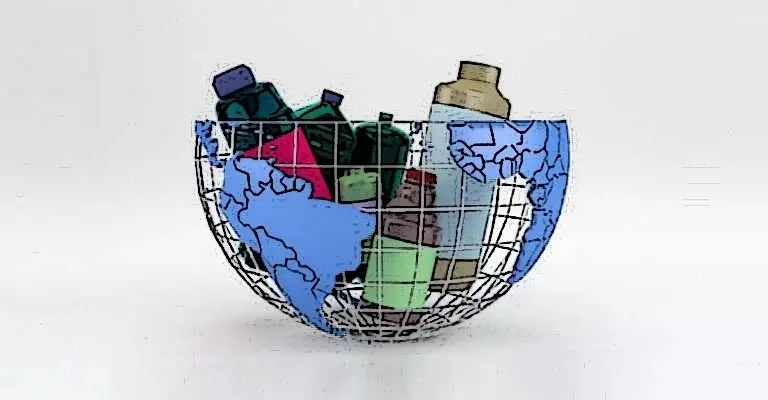
Plastic Waste Becomes Nanogenerator Material for Cleaner Energy
A recent study has revealed that combining post-consumer plastic waste with polyvinylidene fluoride (PVDF) can turn the traditionally problematic issue of plastic incompatibility into a key advantage for enhancing mechanical energy conversion efficiency. This innovation not only offers a potential solution to plastic pollution but also paves the way for the development of a new generation of sustainable energy devices.
重點摘要
Executive Summary / Lead一項最新研究揭示,透過將消費後的塑膠廢料與聚偏二氟乙烯(PVDF)結合,原本在回收過程中視為難題的「塑膠不相容性」,反而成為提升機械能轉換效率的關鍵。這項創新不僅為塑膠污染提供潛在解方,更可能推動新一代永續能源裝置的發展。
A recent study has revealed that combining post-consumer plastic waste with polyvinylidene fluoride (PVDF) can turn the traditionally problematic issue of plastic incompatibility into a key advantage for enhancing mechanical energy conversion efficiency. This innovation not only offers a potential solution to plastic pollution but also paves the way for the development of a new generation of sustainable energy devices.
企業與產業背景
Company & Industry Context利用常見包裝材料,打造綠能裝置
研究人員希望能同時處理塑膠污染與能源需求,開發出一種成本低、環境友善的機械能收集系統。關鍵材料之一——聚偏二氟乙烯(PVDF)——是一種已廣泛應用於能源採集裝置的材料,因其具備優異的壓電性與摩擦電性,且質輕、柔韌、穩定。
Turning Common Packaging Plastics into Green Energy Devices
Researchers aimed to address both plastic pollution and rising energy demands by developing a low-cost, environmentally friendly mechanical energy harvesting system. A core material in this system is PVDF, a polymer already widely used in energy harvesting devices due to its excellent piezoelectric and triboelectric properties, along with its lightweight, flexibility, and chemical stability.
挑戰與重要性
Challenge / Why It Matters其中,PVDF的β晶相展現出最佳的壓電性能,可透過加入石墨烯、碳奈米管等填料進一步提升其輸出效率。然而,這類先進材料成本高昂,限制了其商業化應用。
採用廢塑膠混合技術,大幅提升輸出表現
本研究提出一種全新策略:以回收食品包裝等廢棄熱塑性塑膠為填料,與PVDF結合製作奈米發電裝置。研究團隊先以溶液靜電紡絲法製作PVDF纖維薄膜,接著將其與高密度聚乙烯(HDPE)、聚丙烯(PP)、聚苯乙烯(PS)、聚對苯二甲酸乙二酯(PET)等常見塑膠熔融混合,形成具有不相容性特徵的複合材料。
Among PVDF’s crystalline phases, the β-phase exhibits the best piezoelectric performance and can be further enhanced by adding advanced fillers such as graphene or carbon nanotubes. However, the high cost of these advanced materials has been a significant barrier to commercial adoption.
行動、方案與執行
Action / Solution / Implementation這些複合材料被整合進摩擦電式奈米發電機(TENG)中,並配備銅電極與可活動彈簧的PMMA基板,以提升機械接觸頻率與能量轉換效率。
透過示波器、電荷感測器、阻抗分析儀與電子顯微鏡等工具,研究團隊深入分析了裝置的輸出電壓、電流與表面結構。
優異表現與環境潛力
研究結果令人驚艷:其中一款由60% PET與40% PS-HDPE-PP混合物組成的裝置,其開路電壓達800伏特,短路電流達260微安培/平方公分,電荷密度達710奈庫倫/平方公尺,性能明顯優於傳統PVDF奈米顆粒複合材料。
Using Waste Plastics to Dramatically Boost Output Performance
This study proposes a novel strategy: using recycled thermoplastic waste - such as food packaging materials - as fillers to combine with PVDF for the fabrication of nanogenerators. The team first created PVDF nanofiber films using solution electrospinning, and then blended them with common waste plastics like high-density polyethylene (HDPE), polypropylene (PP), polystyrene (PS), and polyethylene terephthalate (PET) through a melting process, forming incompatibility-driven composite materials.
These composites were integrated into triboelectric nanogenerators (TENGs), equipped with copper electrodes and a PMMA (polymethyl methacrylate) substrate with a movable spring mechanism, designed to enhance contact frequency and energy conversion efficiency during mechanical movement.
證據、成果與影響
Evidence / Results / Impact該裝置在多次機械循環下仍能穩定輸出,證明其重複性與操作穩定性。研究指出,這種效能提升主要歸功於塑膠廢料與PVDF之間的表面粗糙度差異與電荷親和力所產生的摩擦電效應。
傅立葉紅外光譜(FTIR)進一步揭示,材料內部的分子交互作用對能量轉換效率具有顯著影響,顯示「不相容性混合」反而有助於提升能源轉換性能。
The researchers conducted detailed analyses of the output voltage, current, and surface morphology using oscilloscopes, charge sensors, impedance analyzers, and scanning electron microscopy (SEM).
Outstanding Performance with Environmental Promise
產業與制度意涵
Industry & Institutional Implications循環經濟與應用前景
此項研究不僅在能源科技上取得重大突破,更展現「廢物再利用」的永續價值。這種由塑膠廢料製成的奈米發電機未來可應用於穿戴式電子裝置、生醫感測器、智慧紡織品與無線監測系統等場景,特別適合需要輕量、無須外部電源的環境。
The results were impressive: one device composed of 60% PET and 40% PS-HDPE-PP mixture achieved an open-circuit voltage of 800 volts, a short-circuit current of 260 μA/cm², and a charge density of 710 nC/m² - performance significantly superior to traditional PVDF nanoparticle-based composites.
SNN 編輯與揭露前證據基礎設施觀點
SNN Editorial / Pre-Disclosure Evidence Infrastructure Perspective研究人員表示,未來將持續優化材料配方與製程技術,並進行長期耐用性與規模化生產測試,目標是將實驗室成果推向實際商業應用。
The device also demonstrated excellent stability and reproducibility under repeated mechanical cycling, confirming its potential for long-term use. The researchers attributed the enhanced performance to triboelectric effects arising from the surface roughness differences and charge affinity between the waste plastics and PVDF.
未來展望
Future Outlook在全球同時面臨能源轉型與塑膠污染雙重挑戰之際,這項結合廢塑膠與先進材料的創新解方,無疑為永續材料科技帶來嶄新想像。
Further analysis using Fourier-transform infrared spectroscopy (FTIR) revealed that molecular interactions within the composite material play a crucial role in energy conversion efficiency, indicating that the intentional use of incompatibility between different plastics can be strategically leveraged for energy harvesting.
來源、證據鏈與責任編輯
主題中心:氣候與能源轉型
SNN.TW 原始刊登紀錄 ↗